

 Français
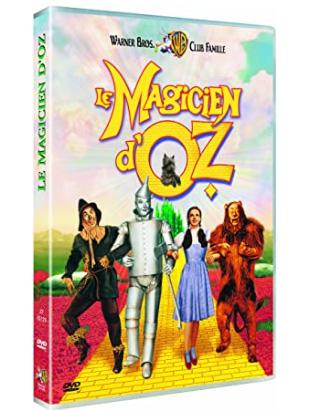
The Wizard of Oz
Synopsis
Dorothy Gale is a young, imaginative farm girl living in Kansas who dreams of a place somewhere over the rainbow. When a fierce tornado strikes her family farm, she and her faithful dog Toto are swept up into the magical, colorful land of Oz. Seeking a way back home, Dorothy travels down the yellow brick road toward the Emerald City accompanied by a Scarecrow, a Tin Man, and a Cowardly Lion. Along her magical journey, she must outwit a wicked witch and discover that there is truly no place like home.
The Making of the Film
Producer Mervyn LeRoy and Metro-Goldwyn-Mayer adapted the timeless fantasy classic from L. Frank Baum beloved 1900 children novel The Wonderful Wizard of Oz. Multiple directors worked on the troubled production before Victor Fleming completed the landmark film. MGM wanted to create a breathtaking Technicolor fantasy that would captivate family audiences worldwide.
Critical Reception
Critics universally acclaimed The Wizard of Oz upon its release, praising its stunning Technicolor visual design, enchanting musical score, and Judy Garland iconic lead performance. Reviewers lauded the film for blending sepia-toned Kansas realism with vibrant magical fantasy worlds. It is universally celebrated as an untouchable masterpiece of cinema.
Public reception was initially modest during its original box-office run due to high production costs, but annual television broadcasts turned it into the most watched film in history. Audiences fell in love with the unforgettable songs and magical characters. Its cultural footprint is monumental.
The film won two Academy Awards: Best Original Song for Over the Rainbow and Best Original Score by Herbert Stothart. Judy Garland received a special Academy Juvenile Award. Its legacy is immortal.
Behind-the-Scenes Stories
Director Victor Fleming drew inspiration from L. Frank Baum literary novel, traditional fairy tales, and surrealist art. He chose massive Technicolor soundstages to construct the elaborate yellow brick road and Emerald City sets. His direction pushed Judy Garland to wear a tight corset and heavy makeup under blistering studio lighting.
Production faced legendary difficulties, including severe health hazards from toxic aluminum powder used for the Tin Man makeup that hospitalized actor Buddy Ebsen, and asbestos snow falling during the poppy field scene. Judy Garland was kept on strict prescription diets by studio executives. Margaret Hamilton suffered severe skin burns during her dramatic witch disappearance exit.
A memorable sequence involves Dorothy opening her farmhouse door in Kansas to reveal the magical land of Oz shot in glorious Technicolor for the first time. The scene is one of the most famous cinematic transitions in history. The technical wizardry stunned audiences.
The casting process went through adjustments as Shirley Temple was originally considered by studio executives for Dorothy, but MGM ultimately cast teenage star Judy Garland, whose extraordinary vocal talent defined the role.
Themes Explored
The film explores home, friendship, self-reliance, courage, intelligence, and heart. It highlights how inner qualities are already possessed rather than granted by external figures. Magic lies within human character.
NULL
Meaning of the Title
The title refers directly to the mysterious, powerful wizard residing in the Emerald City whom Dorothy must visit to find her way back to Kansas. It highlights the central quest of the fantasy adventure.
Original Soundtrack
The original motion picture soundtrack features timeless musical numbers composed by Harold Arlen with lyrics by E.Y. Harburg, most notably the legendary Academy Award-winning anthem Over the Rainbow performed by Judy Garland.
NULL
Films similaires
Other similar films include Alice in Wonderland, Willy Wonka & the Chocolate Factory, and The Chronicles of Narnia.