

 Français
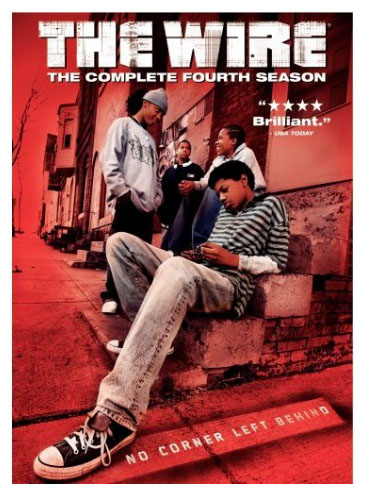
The Wire
Synopsis
Set in Baltimore, Maryland, the complex crime drama series examines the illegal drug trade through the dual perspectives of law enforcement officers and the criminal organizations they investigate. Created by former police reporter David Simon and author Ed Burns, each season explores a different institutional pillar of the city: the drug syndicates, the port docks, the city government, the school system, and the print media. Across five critically acclaimed seasons, the show offers an unflinching, sociological masterpiece detailing systemic urban dysfunction.
The Making of the Film
Creators David Simon and Ed Burns drew heavily on their extensive real-life experiences reporting on Baltimore streets and working inside public schools and police departments. The production was designed to be an uncompromising, realistic sociological study of American urban institutions rather than a traditional cop procedural. Filmmakers utilized authentic Baltimore locations, local non-professional actors, and gritty cinematography to capture unvarnished municipal reality. The project was built to be a sprawling, novelistic television epic.
Critical Reception
Critics offered near-universal critical acclaim, frequently hailing the series as one of the greatest and most profound television achievements in history. Reviewers commended its staggering narrative depth, complex moral ambiguity, brilliant writing, and refusal to offer easy Hollywood resolutions. Some critics noted that its dense, slow-burn plotting required intense concentration from viewers, yet lauded its unprecedented sociological scope. It became the ultimate prestige television darling.
Audiences embraced the series with deep devotion, turning it into a legendary cult classic and critical darling on home video and streaming platforms. Viewers were mesmerized by the intricate chess-like investigations, unforgettable characters like Omar Little and Stringer Bell, and devastating institutional critiques. The show's profound examination of poverty, politics, and urban survival sparked endless academic and cultural discussions. Fans continue to champion its timeless relevance worldwide.
While major mainstream television awards notoriously snubbed the series during its original broadcast run, it earned universal retrospective acclaim and numerous honors from critics' associations. Its script is frequently taught in university sociology and political science courses. The series successfully secured its immortal legacy as a masterclass in television storytelling.
Behind-the-Scenes Stories
Creator David Simon wanted to expose the systemic failures of the American "War on Drugs" through an authentic lens shaped by years of journalism and police work. He insisted on casting real-life Baltimore residents, former criminals, and actual public figures in minor roles to maintain absolute local authenticity. The writers' room included veteran crime reporters and novelists to construct complex institutional arcs.
Shooting across rough Baltimore neighborhoods required extensive community cooperation and security logistics for the cast and crew. Managing intricate multi-season character arcs demanded rigorous script planning years in advance. Maintaining a gritty, unglamorous visual style rejected standard television gloss.
During intense interrogation and wiretap surveillance sequences, actors performed with meticulous precision, utilizing authentic police jargon and procedural accuracy. The iconic character Omar Little became a pop-culture legend thanks to Michael K. Williams's mesmerizing, layered performance. These practical additions created television history.
Dominic West, Lance Reddick, Wendell Pierce, and Michael K. Williams led the legendary cast, supported by Idris Elba and Sonja Sohn. The casting process focused on finding authentic actors with gritty urban credibility. The resulting ensemble delivered peerless dramatic chemistry.
Themes Explored
The series explores systemic institutional failure, the futility of the War on Drugs, urban poverty, political corruption, education decay, and moral compromise. It examines how rigid bureaucracies crush individual human potential in favor of statistical metrics. The narrative ultimately champions tragic realism.
Ending Explained
The final season concludes with a melancholy sense of cyclical inevitability as new figures step into the exact same institutional roles left behind by the fallen. Omar is killed, McNulty and Freamon are forced into early retirement following a fabricated serial killer sting, and the drug trade continues uninterrupted under new leadership. The closing montage mirrors the opening episodes, showing that Baltimore's fundamental systemic problems remain entirely unchanged. The ending offers a powerful, devastatingly realistic reflection on urban governance.
Meaning of the Title
The title "The Wire" refers directly to the electronic wiretap surveillance operations that form the investigative backbone of the entire crime drama. It symbolizes the technological link connecting law enforcement to the criminal underworld. The concise title sets a gritty procedural tone.
Latest News
- The series remains a timeless masterclass in television writing, frequently revisited by critics and political analysts studying urban infrastructure.
Similar Films
Fans of gritty crime dramas and complex television will enjoy The Sopranos (1999), Breaking Bad (2008), Mad Men (2007), and We Own This City (2022), all exploring institutional corruption.