

 Français
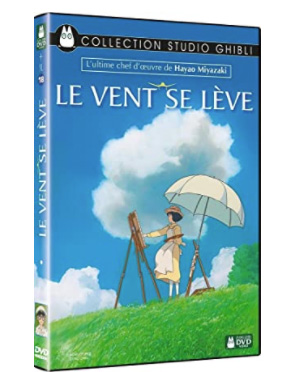
The Wind Rises
Synopsis
This biographical animated drama follows Jiro Horikoshi, the visionary Japanese aeronautical engineer who designed the famous Mitsubishi A6M Zero fighter plane used in World War II. From his childhood fascination with airplanes to his university studies and professional career, Jiro pursues his childhood dream despite facing natural disasters and political turmoil. Along the way, he falls deeply in love with a young woman named Nahoko, whose failing health casts a bittersweet shadow over their romance. The film paints a poignant portrait of artistic passion colliding with the harsh realities of war.
The Making of the Film
The film was conceived and directed by Hayao Miyazaki as his final feature-length animated film before his initial retirement from Studio Ghibli. The inspiration was drawn from Tatsuo Hori's short novel of the same name and the real-life biography of Jiro Horikoshi, blending historical fact with fictionalized romance. Miyazaki wanted to explore the moral complexity of an engineer who loves beauty and flight, yet sees his creations repurposed for destructive military conflict. The project served as a deeply personal reflection on Miyazaki's own relationship with aviation and artistic creation.
Critical Reception
Professional critics heaped widespread acclaim on the film, praising its breathtaking hand-drawn visuals, emotional depth, and mature thematic complexity. Reviewers lauded Miyazaki's courage in exploring the ethical dilemmas of wartime engineering without falling into simplistic moralizing. Critics noted that the depiction of Jiro and Nahoko's tragic romance added a deeply affecting human anchor to the historical narrative. Public reception was immensely strong, making it a box-office success in Japan and earning global praise from animation enthusiasts. The film received an Academy Award nomination for Best Animated Feature, marking a crowning achievement in Miyazaki's legendary career.
Behind-the-Scenes Stories
Director Hayao Miyazaki drew inspiration from classic aviation history, classical literature, and the philosophical writings of Paul Valéry. Production was exceptionally rigorous, with animators spending years hand-drawing the intricate mechanical designs and sweeping flight sequences. During the production of the terrifying Great Kanto earthquake sequence, the sound design team uniquely utilized human voice vocalizations instead of traditional mechanical sound effects for the earthquake rumble. Hideaki Evangelion creator Hideyoshi Anno was chosen to voice the lead protagonist Jiro, bringing a wonderfully understated, professional cadence to the engineer.
Themes Explored
The film explores the pursuit of dreams, the ethics of invention, the tragedy of war, and the bittersweet nature of love in the shadow of mortality.
The final dream sequence brings Jiro together with his late wife and mentor among the wreckage of his airplanes, offering a sense of closure and the realization that despite the devastation, life must go on.
The title is inspired by Paul Valéry's famous line "Le vent se lève, il faut tenter de vivre," symbolizing the resilience of the human spirit amidst turbulent times.
Original Soundtrack
Joe Hisaishi delivered an extraordinary, emotionally resonant orchestral score dominated by the recurring theme "Hikouki-gumo" (Airplane Clouds), elevating the poetic and melancholic tone of the film to unforgettable heights.
The film remains a landmark in animation history, frequently showcased in retrospective exhibitions honoring Hayao Miyazaki's legacy.
Princess Mononoke, Grave of the Fireflies, When Marnie Was There