

 Français
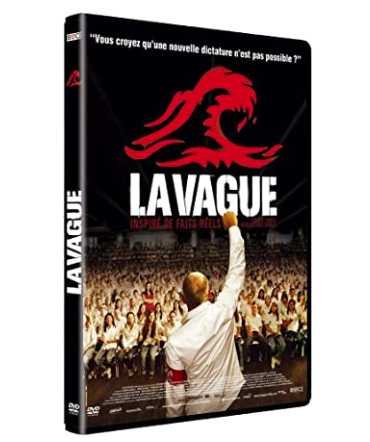
The Wave
Synopsis
In a German high school during a project week about forms of government, an idealistic high school teacher named Rainer Wenger assigns his skeptical students an experiment on autocracy and fascism. Initially intended to demonstrate how easily masses can be manipulated, the classroom experiment rapidly spirals out of control. The students form a strict, unified social movement called "The Wave," complete with a uniform, a salute, and aggressive exclusionary rules. As peer pressure turns into violent fanaticism, Wenger realizes too late that the psychological monster he unleashed threatens to destroy everyone involved.
The Making of the Film
- The film was adapted from Todd Strasser's 1981 novel "The Wave," which was based on the infamous "Third" high school social experiment conducted by Ron Jones at Cubberley High School in Palo Alto, California, in 1967. Director Dennis Gansel chose to update the setting to modern-day Germany to demonstrate how easily democratic societies can still fall prey to fascist tendencies. Inspiration was drawn from historical sociological studies on group psychology, conformity, and totalitarianism. Constantin Film financed the production to spark critical discussions about political manipulation among modern youth.
Critical Reception
Professional critics gave the film positive reviews, praising its gripping pacing, chilling realism, and the strong performances of the young ensemble cast, particularly Jürgen Vogel. Many reviews highlighted how effectively the film demonstrated the seductive nature of group belonging and totalitarianism in a contemporary high school setting. Reviewers commended the sharp script for avoiding heavy-handed preaching while keeping viewers deeply engaged. Overall, it was received as a terrifyingly plausible and thought-provoking psychological drama.
Public reception was enthusiastic and critically praised across Europe, becoming a massive box office hit in Germany and a vital educational tool in schools. Audiences were captivated by the frighteningly fast descent of ordinary teenagers into fanatical totalitarian behavior. Word of mouth propelled the film to widespread cultural relevance, sparking national debates about education and political extremism. Spectators frequently cited the psychological tension and shocking climax as unforgettable highlights.
The film earned numerous prestigious accolades, including the German Film Award in Silver for Best Feature Film and Best Supporting Actor for Frederick Lau. It was screened at various international film festivals to widespread critical acclaim for its social relevance. Its enduring legacy remains cemented as a modern masterclass in cinematic sociology.
Filming Anecdotes
The director drew inspiration from historical documentaries on totalitarian regimes, classic sociological experiments like the Milgram and Stanford prison experiments, and youth culture dynamics. He wanted the visual style to emphasize bright, ordinary high school classrooms that gradually darken and tighten in atmosphere as the authoritarian movement takes over. Cinematic influences ranged from psychological thrillers to gritty European social dramas. These artistic choices helped ground the frightening premise in a terrifyingly believable reality.
Production was characterized by an intense, immersive rehearsal and filming process where young actors experienced the social dynamics of the experiment firsthand. Director Dennis Gansel fostered a collaborative environment, encouraging the young cast to bond closely before depicting the rapid tribalism of "The Wave." Jürgen Vogel brought a charismatic, approachable authority to the teacher role that made his character's initial miscalculation entirely plausible. Crew members often recalled the palpable emotional weight on set during the filming of escalating confrontation scenes.
One particularly memorable sequence involved the students secretly spreading the logo of "The Wave" across the city overnight by spray-painting walls and plastering stickers everywhere. This sequence required intense night shoots across urban locations in Germany to capture the clandestine, cult-like fervor gripping the teenagers. The actors performed with genuine adrenaline, reflecting the intoxicating thrill of forbidden rebellion. Crew members frequently noted that this specific montage illustrated the seductive contagion of extremist movements.
The initial casting process focused on finding fresh, naturalistic young talent who could project ordinary teenage insecurities and vulnerabilities. Jürgen Vogel was cast as teacher Rainer Wenger, bringing effortless charisma and flawed idealism to the lead role. Promising young actors like Max Riemelt, Jennifer Ulrich, and Frederick Lau were chosen to portray students undergoing radical psychological transformations. This talented ensemble created authentic peer dynamics that anchored the chilling narrative.
Themes Explored
- The seductive appeal of conformity, belonging, and discipline in youth culture.
- The psychological fragility of modern democracy against rising fascism.
- Peer pressure, exclusion, and the loss of individuality within extreme groups.
- The heavy responsibility and unintended consequences of educational experiments.
Ending Explained
The climax takes place during a dramatic school assembly where Rainer Wenger calls a final meeting to officially dissolve "The Wave," revealing how far out of hand the fascist experiment has gone. Enraged and brainwashed by the movement, a student named Tim pulls out a real handgun, threatening his classmates before shooting another student in despair and turning the gun on himself. In the aftermath, the police arrive and arrest Wenger, who watches in absolute horror as his pedagogical experiment ends in tragedy. The film concludes on a chilling, sobering note as Wenger is driven away in a police car, realizing the devastating cost of his hubris.
Title Significance
The title refers to the name chosen by the students for their autocratic social movement, symbolizing a powerful, unstoppable wave of conformity and collective identity sweeping through the school.
Original Soundtrack
- The soundtrack features an energetic alternative rock and electronic score composed by Heiko Maile that captured the youthful rebellion and escalating tension of the experiment. Tracks from bands like The Subways and Bloc Party were utilized effectively during social gatherings and campus scenes. The music reinforced the contemporary high-grade atmosphere and the infectious energy driving the students.
Similar Films
- The Experiment (2001)
- The Class (2008)
- 1984 (1984)
- Foxfire (2012)
- Detachment (2011)