

 Français
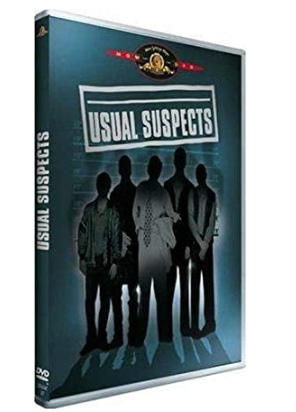
The Usual Suspects
Synopsis
Following a deadly explosion aboard a ship in California, a small group of criminals becomes connected to a mysterious figure known as Keyser Söze. The only surviving witnesses include a badly injured Hungarian gangster and Roger Kint, a seemingly insignificant con man. During police questioning, Kint recounts the events that brought five criminals together for a series of increasingly dangerous operations. As the investigation progresses, the authorities begin to question everything they thought they knew.
The Film's Origins
The Usual Suspects originated from an idea developed by Christopher McQuarrie, who wanted to create a crime thriller built around deception and an unreliable narrator. The title was inspired by the famous phrase about gathering the usual suspects from Casablanca. McQuarrie developed a story in which a group of criminals becomes entangled in the mythology surrounding an almost legendary criminal mastermind. Rather than adapting a novel or a true story, he constructed an original screenplay with a deliberately complex narrative structure. Bryan Singer became interested in directing the project because of its unusual approach to storytelling and its carefully designed revelations. The filmmakers wanted audiences to constantly reconsider the information they were receiving. The character of Keyser Söze was conceived as an almost mythical figure whose reputation was more powerful than his visible presence. The production combined a relatively traditional police interrogation with an increasingly elaborate account of criminal events. This structure allowed the film to deliver one of the most famous narrative twists in modern crime cinema.
Critical Reception
Professional reviews: Critics praised the screenplay for its ingenious construction and its ability to maintain suspense throughout the narrative. Bryan Singer's direction was widely appreciated for creating a dark atmosphere without losing control of the complicated plot. Kevin Spacey's performance attracted particular attention for its subtlety and precision. John Ottman's editing was also recognised as an essential element in the film's success. Some viewers found the narrative deliberately confusing, but its final revelation became one of its most celebrated features.
Audience reception: The film initially attracted attention through positive word of mouth and growing interest in its unexpected conclusion. Audiences were particularly impressed by the way seemingly insignificant details acquired new meaning after the final revelation. Its popularity expanded considerably through repeat viewings and home video releases. It subsequently became a reference point for crime thrillers built around unreliable narrators and major plot twists.
Awards: The Usual Suspects won two Academy Awards in 1996, including Best Supporting Actor for Kevin Spacey and Best Original Screenplay for Christopher McQuarrie. It also received the Saturn Award for Best Action or Adventure Film. John Ottman won the Saturn Award for Best Music. The film received numerous additional awards and nominations from critics' associations and professional organisations. These honours helped establish it as one of the most influential crime thrillers of the 1990s.
Behind-the-Scenes Stories
Director's inspirations: Bryan Singer wanted to create a crime film that would challenge the audience's assumptions about storytelling and character identity. The screenplay drew inspiration from classic film noir, particularly its use of criminal conspiracies and unreliable narrators. Christopher McQuarrie also wanted the mysterious Keyser Söze to function almost like an urban legend. The film's atmosphere deliberately combines familiar crime-film conventions with a narrative that constantly undermines them.
Production difficulties: The production required considerable attention to continuity because many scenes were presented through the recollections of Roger Kint. The filmmakers had to ensure that the visual details of the flashbacks supported the final revelation without making it immediately obvious. The budget was relatively modest compared with major Hollywood productions. The cast and crew also had to maintain secrecy surrounding the screenplay's ending. These constraints encouraged a focused production built around performances and editing rather than expensive action sequences.
A memorable scene: The final sequence, in which Agent Kujan gradually realises the truth about Roger Kint, is one of the most celebrated twists in cinema. Small details visible in the police station suddenly acquire an entirely different meaning. The coffee cup, the bulletin board and the objects in Kujan's office help reveal how Kint constructed his story. The final image of the criminal walking freely away from the police station makes the revelation particularly powerful. The sequence demonstrates how visual storytelling can communicate information without extensive dialogue.
Original casting choices: Gabriel Byrne was cast as Dean Keaton, while Stephen Baldwin, Benicio del Toro and Kevin Pollak played members of the criminal group. Kevin Spacey was selected for the role of Roger Kint, a character whose apparent weakness conceals something far more complicated. Chazz Palminteri played the determined customs agent Dave Kujan. The ensemble was particularly important because the story depends on the chemistry and contrasting personalities of its five central criminals. Their performances helped make the complicated narrative convincing.
Themes Explored
The Usual Suspects explores deception, manipulation and the difficulty of distinguishing truth from fiction. Roger Kint's account of events demonstrates how easily people can be influenced by a convincing narrative. The mysterious Keyser Söze represents the power of reputation and fear, particularly within criminal organisations. The film also examines loyalty, betrayal and the unstable relationships between individuals who share dangerous interests. Identity is another central theme because characters frequently conceal their real motivations behind carefully constructed appearances. The investigation raises questions about the reliability of eyewitness testimony and the limitations of police interrogation. Power is presented as something that can be exercised through intelligence and psychological manipulation rather than physical strength. Ultimately, the film challenges viewers to reconsider the information they receive and the assumptions they make about other people.
Ending Explained
At the end of the film, Agent Dave Kujan gradually realises that Roger Kint has fabricated much of his account. The names, locations and details in the story were assembled from objects visible around the police station. Kujan discovers that the supposedly harmless man has manipulated the investigation from the beginning. By the time the agent understands what has happened, Kint has already left the building. Outside, his apparent physical disability gradually disappears as he walks normally. A photograph received by the police confirms that Kint is actually the mysterious Keyser Söze. The revelation transforms the entire narrative, suggesting that almost every important detail was designed to mislead the investigators. The final shot shows Söze disappearing into the city, leaving his identity and future uncertain. The ending also suggests that his greatest weapon is not violence but the ability to control what others believe. The audience is left questioning whether any part of the original account was truthful.
Meaning of the Title
The title The Usual Suspects refers to the five criminals brought together after a police investigation involving a series of robberies. It also evokes the familiar expression used by authorities when referring to individuals who repeatedly appear in criminal investigations. However, the title takes on a deeper meaning as the story develops. The supposedly ordinary group becomes connected to an extraordinary criminal conspiracy involving Keyser Söze. The word usual is deliberately ironic because the characters and events are far more complicated than they initially appear. The title therefore reflects both the conventions of crime cinema and the film's interest in misleading appearances.
John Ottman composed the original score and also served as the film's editor, creating a particularly close relationship between music and narrative rhythm. The soundtrack uses restrained orchestral passages and suspenseful motifs to reinforce the film's mysterious atmosphere. Rather than overwhelming the dialogue, the music supports the gradual accumulation of tension. Ottman's work was recognised with the Saturn Award for Best Music in 1996. His combined contribution to editing and composition played an important role in shaping the film's distinctive structure.
Fans of The Usual Suspects may enjoy Se7en, which combines a dark criminal investigation with psychological suspense. L.A. Confidential explores corruption and deception within a complex crime narrative. Memento similarly challenges viewers through an unreliable perspective and fragmented storytelling. Primal Fear offers another memorable thriller built around manipulation and an unexpected final revelation.