

 Français
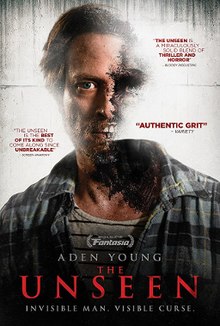
The Unseen
Synopsis
Bob is a former hockey player who walked away from his athletic career at its peak and now works a solitary job in a remote northern pulp mill, hiding a strange and terrifying medical condition: his body is slowly becoming completely invisible. Struggling with isolation and psychological decay, Bob is suddenly forced back into civilization when his estranged wife and troubled teenage daughter reappear in his life, needing his help after a local tragedy. As Bob tries to reconnect with his daughter, he discovers she is exhibiting early signs of the exact same terrifying invisibility affliction. He must race against time to protect her from medical exploitation while dealing with his own vanishing physical form.
The Making of the Film
Writer and director Geoff Redknap conceived the supernatural psychological drama as a dark, atmospheric re-imagining of the classic invisible man mythos, focusing on grief, isolation, and hereditary burden. Redknap, a veteran special effects makeup artist, wanted to ground the fantastical condition in gritty, practical body horror and emotional melancholy rather than digital spectacle. The screenplay was developed to examine blue-collar working-class isolation in rural Canadian forestry towns. The production utilized moody practical effects and haunting northern landscapes.
Critical Reception
Professional critics gave the film positive reviews for its slow-burn atmosphere, grounded emotional approach to body horror, and strong lead performances by Aiden Devine and Camille Sullivan. Reviewers praised Redknap's intelligent decision to treat invisibility not as a superhero power, but as a creeping, agonizing physical disease and metaphor for social erasure. Some critics noted the leisurely pacing, but commended its eerie originality.
Public reception was warm among independent horror and atmospheric thriller enthusiasts who appreciated the artistic indie approach to creature mythos. It earned a stellar cult reputation on festival circuits.
The film earned numerous accolades at independent fantasy and horror film festivals, celebrated for its innovative practical effects and deep emotional resonance.
Anecdotes_du_tournage
Director Geoff Redknap drew inspiration from classic Cronenbergian body horror and quiet northern gothic literature.
Production faced intricate practical special effects challenges, utilizing custom makeup appliances and specialized lighting rigs to visually depict human limbs slowly turning transparent.
During the filming of the emotional forestry scenes, lead actor Aiden Devine performed under grueling cold weather conditions to capture Bob's physical suffering.
The casting process brought together veteran Canadian character actors who brought raw authenticity to the blue-collar setting.
Core Themes Explored
The film explores social invisibility, hereditary illness, paternal sacrifice, isolation, and body horror.
Themes Explored
Invisibility affliction, body horror, fatherhood sacrifice, social isolation, and hereditary disease.
The conclusion shows Bob making the ultimate sacrifice by vanishing entirely into the wilderness to protect his daughter from government and medical capture, ensuring she learns to manage her condition safely. His daughter looks out into the trees, knowing her father remains her unseen protector.
The title refers directly to the medical and social condition of invisibility that plagues the father and daughter throughout the narrative.
The film features a moody, ambient musical score composed by Brian Lauter, utilizing haunting minimalist synths that enhance the chilling isolation.
The Fly, Take Shelter, The Invisible Man, Let the Right One In