

 Français
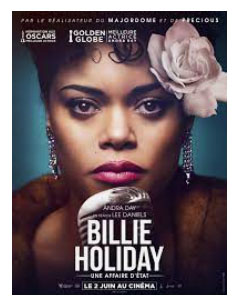
The United States vs. Billie Holiday
Synopsis
In the 1940s, legendary jazz singer Billie Holiday finds herself targeted by the United States federal government in a racially motivated crusade. Spearheaded by Federal Bureau of Narcotics commissioner Harry Anslinger, the government uses her ongoing struggles with drug addiction to silence her political activism. Specifically, federal authorities demand that she stop performing her haunting anti-lynching protest song, "Strange Fruit." As she fights addiction, systemic racism, and constant federal harassment, her defiant voice becomes an immortal symbol of civil rights resistance.
The Making of the Film
Director Lee Daniels collaborated with Pulitzer Prize-winning playwright Suzan-Lori Parks to adapt Johann Hari's bestselling book Chasing the Scream. The project was conceived as a gritty biographical drama exposing the racist origins of the American war on drugs through the persecution of Billie Holiday. Daniels drew inspiration from historical federal investigation files, jazz recordings, and civil rights archives. The production prioritized authentic 1940s jazz club aesthetics, smoky atmosphere, and raw emotional vulnerability.
Critical Reception
Critics offered mixed reviews upon release, often praising Andra Day's towering, career-defining lead performance while critiquing the disjointed narrative structure. Reviewers noted that Lee Daniels brought a raw, unvarnished intensity to the tragic persecution of the legendary jazz singer. Some film critics, however, felt that the screenplay struggled to balance the sprawling political conspiracy with her personal struggles. Despite mixed narrative reviews, Andra Day's vocal and emotional delivery received universal acclaim.
Audiences embraced the biographical drama as a powerful and long-overdue tribute to a persecuted civil rights icon and musical pioneer. Viewers on streaming platforms commended Andra Day's astonishing ability to capture Billie Holiday's distinct vocal rasp and bruised soul. It found a dedicated audience among fans of historical music biopics and civil rights history. Many praised its courage in highlighting how the federal government weaponized the war on drugs against Black artists.
Andra Day won the Golden Globe Award for Best Actress in a Motion Picture – Drama and received an Academy Award nomination for Best Actress. Her breathtaking musical performances and emotional depth earned widespread acclaim from actor guilds. The film's costume design and makeup achievements were also celebrated by industry professionals. These prestigious accolades cemented its legacy as a powerful showcase of musical biography and political resistance.
Behind-the-Scenes Stories
Lee Daniels was deeply inspired by Billie Holiday's courageous refusal to bow to federal censorship and racist intimidation. He wanted to expose the hidden political history behind her iconic anti-lynching protest song, "Strange Fruit." The visual style utilized moody jazz club lighting, sepia-toned period filters, and gritty urban backdrops. The director also drew from historical accounts of the Federal Bureau of Narcotics' obsessive targeting of Black jazz musicians.
Preparing for the demanding lead role required Andra Day to undergo a profound physical and vocal transformation over several months. Shooting took place across historic locations in Montreal styled to replicate 1940s New York and southern touring circuits. The production team collaborated with top jazz arrangers to re-record authentic period arrangements of Holiday's legendary catalog. Despite the heavy emotional weight of the subject matter, the cast maintained a deeply respectful and collaborative atmosphere on set.
During the filming of the haunting live singing sequences, Andra Day famously smoked and drank raw gin on set to match Holiday's weathered vocal texture. Director Lee Daniels encouraged raw, unscripted emotional outbursts during the harrowing federal interrogation scenes. Crew members frequently reported crying behind the cameras during her powerful renditions of "Strange Fruit." The intense commitment of the lead actress gave the production an undeniable aura of authenticity.
Casting directors searched for a powerhouse vocalist who could also deliver complex dramatic acting without imitating the legendary singer too cartoonishly. Andra Day, a celebrated soul singer with no prior acting experience, was convinced by Lee Daniels to take on the monumental role. Trevante Rhodes was cast as Federal agent Jimmy Fletcher, bringing moral conflict to the persecution. The supporting cast of corrupt officials and jazz musicians added vital historical weight.
Themes Explored
The film heavily explores systemic racism, government censorship, and the weaponization of the war on drugs against political activists. It examines the devastating personal toll of addiction, trauma, and constant state surveillance. Another core motif is the immortal power of art and protest music in the fight for civil rights. It also touches upon resilience, exploitation, and the tragic price of speaking truth to power.
Ending Explained
The film concludes with Billie Holiday lying gravely ill in a New York hospital bed while federal agents stand guard outside her door in her final moments. A concluding text epilogue reveals that her harassment by the Federal Bureau of Narcotics continued right up until her tragic death in 1959. Despite government attempts to silence her, her recording of "Strange Fruit" outlived her persecutors and became a sacred anthem of the civil rights movement. The final poignant shots celebrate her immortal musical legacy and fearless defiance.
Meaning of the Title
The title refers directly to the historic legal battle and political persecution orchestrated by the United States government against the legendary jazz singer. It highlights the surreal absurdity of an entire global superpower devoting federal resources to silence one woman and her song. The phrasing establishes an accusatory, historic tone for the biographical narrative. It encapsulates the central conflict between individual civil liberty and authoritarian state oppression.
Similar films include Ray, Walk the Line, Ma Rainey's Black Bottom, and Judas and the Black Messiah, which feature musical biographies, systemic racism, and civil rights struggles.