

 Français
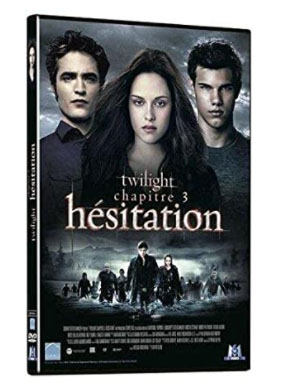
The Twilight Saga: Eclipse
Synopsis
Seattle is being terrorized by a series of mysterious killings, and the Cullens realize that an army of newborn vampires is being created to strike at Bella. As graduation approaches, Bella finds herself torn between her love for Edward and her deep friendship with Jacob. Vampires and werewolves are forced into an uneasy alliance to protect her, even as their old rivalry threatens to resurface. With danger closing in, Bella must make a choice that will shape the rest of her life.
The Making of the Film
The Twilight Saga: Eclipse is based on Stephenie Meyer's 2007 novel of the same name and is the third film in the series. In November 2008, Summit Entertainment secured the rights to the remaining books, and the studio greenlit the film in February 2009. David Slade, known for 30 Days of Night, took over the director's chair from Chris Weitz, who had directed New Moon. Melissa Rosenberg returned as screenwriter, and Wyck Godfrey and Karen Rosenfelt produced. Slade reportedly met with cast members individually two or three times to talk through their characters and the plot. Kristen Stewart, Robert Pattinson and Taylor Lautner reprised their roles, while Bryce Dallas Howard took over the role of Victoria from Rachelle Lefevre. The film was made on a budget of about $68 million and released on June 30, 2010. It was the first Twilight film to be released in IMAX.
Critical Reception
Critical reception was mixed, with about half of the reviews on Rotten Tomatoes being positive. Reviewers noted the introduction of the army of newborn vampires as a new plot thread that gave the film more action than earlier entries. Some critics felt Slade brought a darker, more energetic feel to the series. Others found the love triangle repetitive and the pacing uneven.
Audiences, however, responded in huge numbers. The film opened with about $64.8 million over its first three days and finished with roughly $301 million in North America. Worldwide it earned about $698 million on a $68 million budget, making it one of the top-grossing films of 2010. Fans of the books turned out in force, and its success confirmed the franchise's popularity. The film's performance cemented Summit Entertainment's status as a major studio player.
Behind-the-Scenes Stories
David Slade approached the film with real preparation, interviewing cast members individually to talk about their characters. He and screenwriter Melissa Rosenberg adapted Meyer's novel while keeping the love triangle at its center and adding more action-oriented subplots. Stephenie Meyer and Slade were both present during the shoot alongside the three main stars. The film's tagline, which promised that everything begins with a choice, underlines the central dilemma of the story.
Eclipse was the third film of the series to have a different director, following Catherine Hardwicke for Twilight and Chris Weitz for New Moon. That change of leadership gave each film a slightly different look and tone. The production also brought in a new actress for Victoria, with Bryce Dallas Howard stepping into the part. Filming took place largely in the Vancouver area.
Kristen Stewart, Robert Pattinson and Taylor Lautner returned as Bella, Edward and Jacob. Bryce Dallas Howard joined as Victoria, replacing Rachelle Lefevre, who had played the part in the first two films. Peter Facinelli and Elizabeth Reaser returned as Carlisle and Esme Cullen.
Themes Explored
Eclipse is centered on choice and on what it costs to commit to one path. The love triangle between Bella, Edward and Jacob drives much of the drama, forcing each of them to confront what they want. The film also explores loyalty, as vampires and werewolves must set aside their old enmity to protect someone they both care about. Growing up and the approach of graduation add a note of anxiety about change and the future. Sacrifice and protection run through the story, from the Cullens' defense of Bella to the pack's own willingness to fight.
Ending Explained
In the climax, the Cullens and the wolf pack join forces to defeat the army of newborn vampires, while Victoria and her accomplice are ultimately hunted down and destroyed. In the aftermath, Bella makes her final choice and commits to Edward, accepting his proposal of marriage. Jacob, heartbroken, leaves and is left to process the loss of the woman he loves. The ending resolves the immediate threat but leaves the larger question of Bella's transformation to the next film. It closes the love triangle for now, even if it does not erase the tension between the three.
Meaning of the Title
The title refers to the idea of an eclipse as a moment of darkness that passes between two sources of light. In the story, Bella is caught between two worlds and two loves, just as an eclipse sits between sun and moon. The word also suggests the way one force can overshadow another, as Edward and Jacob each try to claim her future. The title comes directly from Meyer's novel and echoes the naming of the earlier books, which also use celestial imagery.
Original Soundtrack
Howard Shore, best known for scoring The Lord of the Rings films, composed the score for Eclipse. His work gives the film a darker, more orchestral texture than earlier entries in the series. The soundtrack also features contemporary rock acts, with Muse's song Neutron Star Collision among its best-known tracks. Together, the score and the songs helped give the film a moodier atmosphere. The music was an important part of how the franchise kept its connection with its young audience.
Similar Films
Twilight (2008) is the first film in the series and sets up the love triangle. The Twilight Saga: New Moon (2009) continues the story with a darker emotional turn. The Twilight Saga: Breaking Dawn, Part 1 (2011) follows with the wedding and its consequences. Underworld (2003) also stages an epic rivalry between vampires and werewolves. 30 Days of Night (2007), directed by David Slade, shows his earlier take on vampires in a much grimmer register.