

 Français
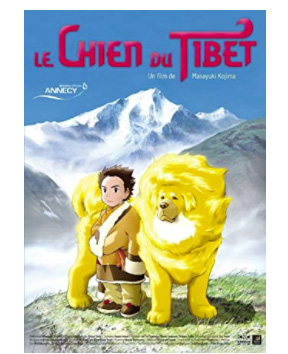
The Tibetan Dog
Synopsis
After the death of his mother, a young boy raised in the city is sent to live with his distant father in the snowy mountains of Tibet. Struggling to adapt to this harsh new world and to bridge the gap with a father he barely knows, he feels lost and alone. His life changes when he crosses paths with a stray golden Tibetan mastiff, and the two slowly form an unbreakable bond. Together, they learn about loyalty, loss and the meaning of family.
The Making of the Film
The Tibetan Dog is an animated film directed by Masayuki Kojima, who is also known for the series "Monster" and the film "Piano Forest". It is based on the novel "Mastiffs of the Plateau" by Chinese author Yang Zhijun, a bestselling work about Tibetan mastiffs. The film is a rare Japanese-Chinese co-production, made by the studio Madhouse together with China Film Group Corporation and Ciwen Pictures. It was presented in competition at the Annecy International Animation Film Festival in 2011. The film was released in Japan in early 2012 and reached France in September of the same year.
Reviews and Reception
Summary of Professional Reviews
Critics found the film visually appealing, particularly its depiction of the Tibetan landscapes and the daily life in a remote mountain region. Reviewers also appreciated the emotional core of the story, built around the relationship between a boy and his father, and between a boy and his dog. At the same time, some felt that the animation was simply functional and that the plot followed familiar coming-of-age conventions. The direction was described as clear and efficient, if not particularly daring.
Audience Reception
The film had a very limited release in France, with a small number of screens and little promotion. As a result, it remained largely unknown to the general public. Those who discovered it later, often through video, frequently described it as touching and sincere. Many viewers highlight the emotional ending as the most memorable part of the story.
Themes Explored
The film explores the difficult relationship between a child and a father who struggles to express his love. It tells a classic story of friendship between a boy and an animal, built on trust and loyalty. The contrast between city life and the isolated Tibetan highlands underlines the challenge of adapting to a new culture and environment. Loss and grief are present from the first scenes and shape the emotional journey of the main character. The film also celebrates nature and the traditions of Tibetan life, which appear as a quiet but powerful presence throughout the story.
Meaning of the Title
The title refers to the Tibetan mastiff, a large and powerful dog breed that is deeply tied to the culture of the Tibetan plateau. The dog is both the boy's companion and a symbol of loyalty, strength and protection. In the original Japanese title, the golden color of the dog is also highlighted, giving it an almost legendary status.
Soundtrack
The theme song "Echoes" is performed by the Tibetan-Chinese singer Alan Dawa Dolma. Her voice gives the film a distinctive atmosphere that fits the mountain setting. The music supports the emotional tone of the story without overwhelming its quiet moments.
Similar Films
- Seven Years in Tibet (1997): a western visitor discovers Tibet and its people.
- Kundun (1997): a portrait of the childhood of the Dalai Lama.
- Hachi: A Dog's Tale (2009): a moving story of loyalty between a man and his dog.
- Eight Below (2006): a survival story involving loyal dogs in a harsh environment.