

 Français
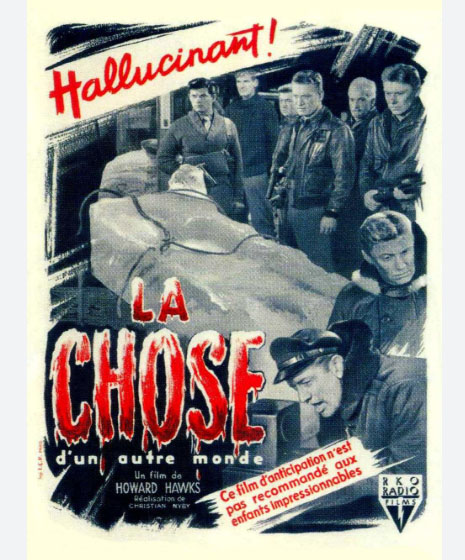
The Thing from Another World
Synopsis
A United States Air Force crew and a team of civilian scientists stationed at an isolated Arctic research outpost discover a crashed extraterrestrial spaceship buried in the ice. They excavate a frozen alien pilot and accidentally thaw it out, unleashing a terrifying, bloodthirsty creature upon the base. Cut off by severe blizzards and radio interference, the crew must figure out how to destroy the monstrous invader before it wipes them all out. Paranoia and tension mount as they realize conventional weapons have little effect on the threat.
The Making of the Film
Producer Howard Hawks spearheaded the project, adapting it from John W. Campbell Jr.'s classic 1938 sci-fi novella Who Goes There? while shifting the focus toward a monstrous physical threat. Although Christian Nyby is credited as director, industry consensus and cast accounts indicate that Howard Hawks heavily directed most of the picture himself. The production captured the rising Cold War anxieties of the early 1950s, channeling widespread fears of unknown foreign infiltration and scientific hubris. The studio built elaborate refrigerated soundstages to simulate the freezing, claustrophobic Arctic conditions.
Critical Reception
Professional critics upon release offered generally favorable reviews, praising its brisk pacing, snappy overlapping dialogue, and genuinely suspenseful atmosphere. Reviewers highlighted the film as a standout entry in early sci-fi cinema, setting a high standard for monster features of the decade. Audiences thrilled at the spine-chilling suspense, making it a commercial success at the box office. Over the decades, it has earned status as a timeless classic that heavily influenced subsequent generations of horror and sci-fi filmmakers.
Behind-the-Scenes Stories
Director Christian Nyby utilized overlapping dialogue techniques popularized by Howard Hawks, allowing actors to speak naturally over one another to create realism. Actor James Arness, who portrayed the terrifying alien monster, wore a bulky suit covered in real mud, rubber, and cat fur to achieve its eerie texture. The cast frequently endured uncomfortable shooting conditions on artificially chilled soundstages where fake snow and breath vapor were constant realities. The memorable final warning broadcast by the reporter became an iconic piece of sci-fi cinema history.
Themes Explored
The story explores the clash between military pragmatism and scientific curiosity when facing an existential unknown threat. It mirrors Cold War paranoia regarding infiltration, isolation, and the absolute necessity of vigilance. Trust among colleagues breaks down rapidly when survival hangs in the balance against a hostile extraterrestrial entity.
Ending Explained
The thrilling climax ends with the crew successfully electrocuting the creature using high-voltage generators in a fiery trap. With the monster destroyed and communication restored, the survivors celebrate their narrow escape from annihilation. The film closes with a famous warning to the world to keep watching the skies for future threats.
Meaning of the Title
The title directly announces the terrifying presence of an extraterrestrial entity arriving from deep space to threaten human existence.
Similar films include The Day the Earth Stood Still, Invasion of the Body Snatchers, and Alien for their foundational sci-fi horror suspense.