

 Français
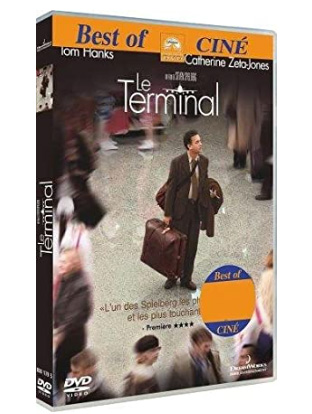
The Terminal
Synopsis
Viktor Navorski arrives at New York's John F. Kennedy International Airport just as a political coup transforms his home country into a state that no longer exists. Because his passport is suddenly invalid, American authorities refuse to let him enter the country or return home. He is forced to live inside the airport terminal while waiting for the political situation to be resolved. Over time, Viktor learns to navigate this strange environment and develops friendships with airport employees. His patience, kindness and resourcefulness gradually transform the lives of those around him.
Film Origins
The idea for The Terminal emerged from a story about a man who became stranded in an international airport because of complicated immigration circumstances. The experience of Mehran Karimi Nasseri, an Iranian refugee who lived for years at Paris Charles de Gaulle Airport, is frequently associated with the film's development. However, Viktor Navorski's story is fictional and differs substantially from Nasseri's real experience. Screenwriters Sacha Gervasi and Jeff Nathanson developed the screenplay from a story by Andrew Niccol and Gervasi. Steven Spielberg was attracted to the possibility of creating a film about a person trapped in a place designed only for temporary visits. He wanted to combine comedy, romance and human drama within a single unusual setting. Tom Hanks was chosen to play Viktor, bringing warmth and comic subtlety to the character. The filmmakers also saw the airport as a miniature society containing people from different backgrounds, professions and social positions. The project offered Spielberg an opportunity to create a character-driven story after the more intense atmosphere of some of his previous films.
Critical Reception
Professional critics generally responded positively to the film's warm humor and humanistic approach. Tom Hanks received praise for creating a sympathetic character whose optimism never becomes entirely sentimental. Stanley Tucci's performance as the airport official was also appreciated for avoiding a simplistic portrayal of authority. Several reviewers admired the production design, especially the convincing recreation of a working international terminal. Some critics felt that the film was too long and that its romantic subplot was less convincing than its central story. Others considered the narrative overly idealistic, but many appreciated its gentle tone.
Audiences responded favorably to the film, attracted by its accessible story and the performances of its well-known cast. The airport setting gave the movie a distinctive atmosphere, while Viktor's resourcefulness provided a succession of humorous and touching situations. The film also appealed to viewers who enjoyed Spielberg's combination of entertainment and emotional storytelling. Its portrayal of friendship among airport workers helped give the story a broad international appeal. Over time, it has remained a popular example of the director's more lighthearted work.
The film received several award nominations, particularly for its performances and technical achievements. It was recognized by various professional organizations for its production design and musical score. John Williams received an Academy Award nomination for his original music. Although the film did not become a major awards winner, its craftsmanship and leading performance were widely acknowledged. Its lasting reputation rests primarily on its emotional accessibility and the strength of its central concept.
Behind the Scenes
Steven Spielberg was attracted to the story because it allowed him to explore human kindness in an unusual environment. The director was also interested in the comic possibilities of a person who understands very little about the rules of a new society but gradually learns to navigate it. The influence of silent-film comedians such as Charlie Chaplin and Buster Keaton can be felt in Viktor's physical resourcefulness. Spielberg also admired the work of Jacques Tati, whose films often find humor in modern environments and everyday routines.
One of the largest production challenges was creating a convincing airport terminal inside a film studio. Production designer Alex McDowell supervised the construction of an enormous set that reproduced the appearance and organization of a functioning international airport. The structure included shops, restaurants, corridors, security areas and passenger facilities. Its scale allowed Spielberg and cinematographer Janusz Kamiński to move the camera freely through the environment. The result gave the film a strong sense of physical realism without requiring the entire production to take place in a real airport.
Viktor's improvised way of earning money by collecting luggage carts is one of the film's most recognizable details. The sequence demonstrates how he gradually learns the routines of the terminal and discovers opportunities that other people overlook. Small practical tasks become part of his survival strategy, transforming an apparently hostile environment into a place where he can function. The scene also illustrates the film's gentle humor and its interest in ordinary human ingenuity.
Tom Hanks was chosen for the central role because of his ability to combine comedy with emotional sincerity. Catherine Zeta-Jones plays Amelia, a flight attendant whose complicated personal life creates a romantic connection with Viktor. Stanley Tucci portrays Frank Dixon, the airport official whose rigid understanding of regulations places him in conflict with the protagonist. The supporting cast includes several actors who play airport employees and help create the impression of a small community.
Themes
The film explores the meaning of home and the emotional experience of being unable to belong to a particular country or place. Viktor is physically present in the United States but is legally excluded from entering it. His situation reveals how political events and administrative systems can suddenly determine an individual's freedom of movement. The airport becomes both a prison and a temporary home.
Human kindness and solidarity are central to the story. Although Viktor initially faces indifference and hostility, he gradually builds relationships with people who work in the terminal. These friendships show that compassion can emerge even in environments governed by rules and procedures. The film suggests that a community is created through mutual support rather than simply through shared nationality.
Another theme is the conflict between bureaucracy and humanity. Frank Dixon represents an administrative system that values regulations and control, while Viktor approaches difficult situations with patience and empathy. The story does not suggest that rules are always unnecessary, but it questions what happens when they become more important than the people they are supposed to serve. The film also explores loneliness, cultural differences and the possibility of finding love in unexpected circumstances.
Ending Explained
Viktor finally receives the opportunity to leave the airport after the political situation affecting his country is resolved. During his time in the terminal, he has developed friendships and changed the lives of several people around him. Frank Dixon attempts to prevent him from completing his personal mission, but Viktor refuses to abandon the promise that brought him to New York. His determination demonstrates that the time spent waiting has not made him forget the reason for his journey. He eventually leaves the airport and reaches the city, where he fulfills his long-standing objective. The ending gives the character a moment of freedom after months of uncertainty and confinement. It also shows that the airport community has become a meaningful part of his life. Viktor's departure is therefore both a victory and an emotional farewell.
Meaning of the Title
The title The Terminal refers directly to the airport terminal where most of the story takes place. A terminal is normally a temporary point of passage, a place where travelers wait before continuing their journeys. For Viktor, however, this transitional space becomes a permanent living environment for an extended period. The word also suggests an ending or final destination, creating an ironic contrast with a character whose journey has been interrupted. The title captures the film's central idea of being caught between departure and arrival.
Soundtrack
The original score was composed by John Williams, whose collaboration with Steven Spielberg has produced some of the most recognizable music in modern cinema. The score combines warm orchestral themes with passages that reflect Viktor's loneliness and gradual adaptation to the airport environment. Williams uses melodic writing to reinforce the film's emotional and romantic elements without overwhelming its comedy. The music helps transform the terminal from a purely functional location into a place filled with human relationships and personal memories.
Similar Films
- Lost in Translation (2003), a story about loneliness and unexpected human connections in an unfamiliar environment.
- The Man Who Fell to Earth (1976), featuring an outsider struggling to navigate an unfamiliar society.
- Up in the Air (2009), a drama exploring airports, travel and the difficulty of forming lasting relationships.
- The Intouchables (2011), a human comedy about friendship across social and cultural differences.