

 Français
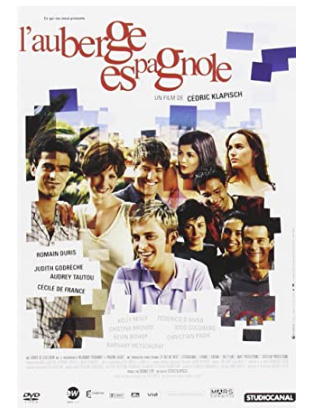
The Spanish Apartment
Synopsis
Xavier, a young French student, travels to Barcelona to complete his studies and improve his Spanish before beginning a career in public administration. He moves into a shared apartment with several students from different European countries, each bringing a distinct personality, language and way of life. Their everyday encounters lead to friendships, misunderstandings, romantic complications and unexpected discoveries. As Xavier experiences life away from home, he begins to question the future that others have planned for him.
Cédric Klapisch drew inspiration from a personal experience involving his younger sister, who studied architecture in Paris before taking part in the Erasmus exchange programme in Barcelona. During a visit, he discovered the lively atmosphere of an apartment shared by young people of different nationalities. The mixture of languages, habits and personalities gave him the central idea for the film. Klapisch wanted to portray Europe through the everyday experiences of students rather than through political speeches or abstract ideas. The screenplay was developed in a relatively short period while another production had been delayed. The director also used locations and casting sessions to help shape the story, allowing the personalities of the actors to influence the characters. The result is a comedy rooted in the spontaneity and uncertainty of student life.
The film was warmly received by many critics, who praised its energy, humor and convincing portrayal of young Europeans living together. Its multicultural setting gave it a distinctive identity, while the overlapping conversations and misunderstandings created a lively comic rhythm. Romain Duris was particularly appreciated for his natural performance as Xavier, a young man who is still trying to understand himself. Critics also highlighted the chemistry between the international cast and the film's affectionate observation of everyday student relationships. Some reviewers considered its episodic structure uneven, but many felt that this looseness suited the subject. Audiences responded enthusiastically, especially in France and among younger viewers who recognized their own experiences in the characters. The film attracted more than two million spectators in France and achieved international distribution. It received several award nominations and established itself as one of Klapisch's best-known films. Its success also helped inspire the later films Russian Dolls and Chinese Puzzle, which continued Xavier's story.
The production was completed quickly because the delay of another Klapisch project created an unexpected opportunity to make the film. The director deliberately allowed the casting process and location scouting to influence the screenplay. Actors playing the Erasmus students were selected in several European countries, including Britain, Denmark, Spain and Germany. Klapisch and Romain Duris met candidates and organized auditions to find a convincing international group. This approach helped create a sense of authenticity among the characters, who come from different cultural backgrounds. The apartment itself became a central character in the film, with its crowded rooms and shared spaces reflecting the disorder of communal student life. The director also sought to preserve the natural rhythm of conversations, including moments when several languages are spoken at once.
Themes Explored
The film explores European identity through friendship, travel and everyday cultural exchange. Its characters discover that living with people from different countries can be both enriching and frustrating. Language becomes a source of humor, misunderstanding and connection. The story also examines independence, adulthood and the difficulty of choosing a professional future. Xavier gradually learns that personal growth often comes from experiences that cannot be planned in advance. The apartment symbolizes a temporary community in which young people can experiment with new identities before entering adult life.
Ending Explained
By the end of the film, Xavier has changed considerably from the uncertain student who arrived in Barcelona. His experiences with his flatmates, his romantic relationships and his time abroad have forced him to reconsider his priorities. He understands that the career originally chosen for him does not necessarily correspond to his own ambitions. The conclusion does not provide a perfect solution to every personal problem, because the characters are still young and their futures remain uncertain. Instead, Xavier returns with a clearer sense of himself and a greater willingness to make independent decisions. The ending emphasizes that the value of the Erasmus experience lies less in academic achievement than in the personal transformation it makes possible.
Meaning of the Title
The title refers to the shared apartment in Barcelona where Xavier and the other students live together. In French, the expression auberge espagnole also evokes a place where everyone brings something of their own. The English title The Spanish Apartment focuses on the physical location, while the original French expression suggests the cultural mixture that defines the story. Each student contributes a different language, personality and perspective to the household. The apartment therefore becomes a small-scale representation of Europe itself.
Original Soundtrack
The soundtrack is closely associated with the youthful and cosmopolitan atmosphere of the film. It brings together contemporary European pop and rock influences that reflect the musical tastes of students at the beginning of the 2000s. The music helps maintain the film's lively rhythm and reinforces the feeling of movement between Barcelona, the apartment and the characters' social lives. Rather than relying on a grand orchestral score, the film uses songs to create a recognizable period atmosphere.
Films about travel, youth and cultural encounters that may appeal to similar viewers include Before Sunrise, L'Auberge Espagnole's sequels Russian Dolls and Chinese Puzzle, The Dreamers, Y Tu Mamá También and Frances Ha. They share an interest in personal discovery, relationships and the uncertainty of growing up.