

 Français
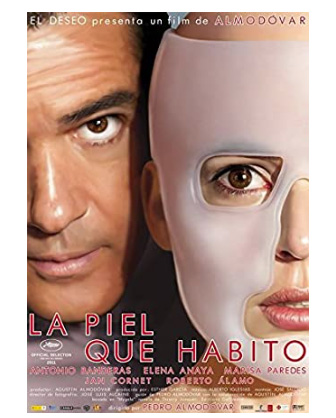
The Skin I Live In
Synopsis
Dr. Robert Ledgard is a brilliant plastic surgeon who has spent twelve years developing an extraordinary artificial skin after his wife was horribly burned in a car accident. In his secluded mansion, he conducts secret experiments on Vera, a mysterious young woman held against her will. As the doctor becomes increasingly obsessed with his creation, disturbing secrets about Vera and their shared past gradually emerge. What begins as a scientific experiment unfolds into a chilling story of revenge, identity, obsession and the limits of human morality.
The The Making of the Film
Pedro Almodóvar developed this disturbing psychological thriller from the novel Mygale, published in 1995 by French writer Thierry Jonquet and also known internationally as Tarantula. The director was attracted by the novel because it combined psychological horror, revenge, transformation and questions about personal identity. He had been considering adapting the story for several years before deciding that the material was right for a film. Rather than producing a straightforward literary adaptation, Almodóvar reshaped the narrative around his own recurring interests in desire, family secrets and complicated human relationships. The project also offered him an opportunity to explore the relationship between medicine, science and moral responsibility. Antonio Banderas was reunited with the director after more than two decades, creating considerable anticipation among audiences familiar with their earlier collaborations. The screenplay was developed with the participation of Agustín Almodóvar, the director's brother and regular production partner. The result deliberately blends melodrama, psychological thriller and elements of body horror into a distinctive cinematic experience.
Critical Reception and Audience Response
Professional Critical Reviews: The film received highly positive reviews from international critics, particularly for its unusual storytelling and striking visual composition. Many reviewers praised Almodóvar's ability to combine psychological tension with elegant cinematography and carefully controlled dramatic revelations. Antonio Banderas was widely appreciated for his restrained and unsettling portrayal of a surgeon consumed by obsession. Elena Anaya also received considerable recognition for the emotional complexity and physical demands of her performance. Some critics found the film deliberately disturbing and challenging, while others admired its refusal to follow conventional thriller formulas.
Audience Reception: Audiences were divided by the film's provocative subject matter, unexpected revelations and disturbing treatment of identity and bodily transformation. Viewers familiar with Almodóvar's cinema generally appreciated its combination of melodrama, dark humour and psychological intensity. Others found certain scenes difficult to watch because of their violence and unsettling implications. Its intricate narrative encouraged discussions about revenge, sexuality and the ethics of medical experimentation. Over time, the film has developed a strong reputation among admirers of unconventional international thrillers.
Awards and Recognition: The film competed for the Palme d'Or at the 2011 Cannes Film Festival. It received the Vulcan Award for its technical and artistic contribution, recognising the quality of its filmmaking craft. It also received nominations and recognition at several European film awards ceremonies. Its cinematography, production design, costumes and original music were particularly appreciated. Alberto Iglesias's musical contribution attracted attention for its sophisticated combination of classical influences and atmospheric tension.
Behind-the-Scenes Anecdotes
Director's Inspirations: Almodóvar drew inspiration from Thierry Jonquet's novel while incorporating visual and thematic references to classic psychological horror cinema. Georges Franju's Eyes Without a Face is often mentioned as an important cinematic reference because of its exploration of facial reconstruction and identity. The director also incorporated his fascination with fashion, painting, sculpture and the visual representation of the human body. The work of artist Louise Bourgeois provided an additional source of inspiration, particularly for the emotional and psychological dimensions of Vera's character.
Production Challenges: The production required a carefully controlled visual environment to make Robert Ledgard's mansion feel both luxurious and threatening. The filmmakers had to create convincing surgical environments and artificial skin effects without compromising the film's elegant visual style. Elena Anaya faced considerable physical and emotional demands because her character spends much of the story confined to a controlled environment. The costumes, makeup and production design also required exceptional attention to detail to communicate the gradual transformation of the characters.
A Memorable Scene: One particularly striking sequence involves Vera using her artistic abilities to create drawings while confined in her room. Her artistic expression becomes a subtle form of resistance against the doctor's control. The visual contrast between her delicate drawings and the disturbing circumstances of her imprisonment reinforces the film's central conflict. Another unforgettable sequence reveals the extent of Robert's experiments and fundamentally changes the audience's understanding of the story.
Originally Considered Casting: Antonio Banderas was not originally attached to the project from its earliest development, but Almodóvar ultimately considered him the ideal performer for Robert Ledgard. Their previous professional relationship gave the director confidence that Banderas could convey the character's intelligence, charm and disturbing lack of empathy. Elena Anaya was selected to play Vera after demonstrating the emotional and physical qualities required for the demanding role. The production also brought back Marisa Paredes, another familiar face from Almodóvar's cinematic universe.
Themes Explored
The film examines the relationship between physical appearance and personal identity, asking whether the body determines who a person truly is. It explores revenge as a destructive force capable of transforming both victims and perpetrators. Scientific ambition is presented as dangerous when intelligence becomes detached from compassion and ethical responsibility. The story also investigates the boundaries of medical experimentation and the question of whether technological progress should always be pursued. Control, imprisonment and psychological domination form another major dimension of the narrative. Gender identity, sexuality and bodily autonomy are explored through deliberately provocative situations. Family trauma and unresolved grief explain much of the characters' behaviour without necessarily excusing their actions. Ultimately, the film questions whether revenge can ever restore what has been lost.
Explanation of the Ending
The ending reveals that Vera is actually Vicente, a young man whose life was destroyed after a confrontation with Robert Ledgard. Following a chain of traumatic events, Robert subjected Vicente to forced gender reassignment surgery and transformed his body against his will. The woman who has been living in the mansion is therefore not simply a mysterious experimental subject but the victim of an extraordinary act of revenge. After managing to kill Robert and Marilia, Vera escapes and returns to the shop where her former life began. She encounters people who knew her before her transformation and finally identifies herself as Vicente. This moment suggests that despite the radical physical changes imposed upon him, his sense of personal identity has survived. The ending deliberately avoids offering an easy resolution, leaving the audience to consider the psychological consequences of such violence. It also completes the film's central exploration of identity, memory and the relationship between the body and the self.
Meaning of the Title
The title The Skin I Live In refers to the physical body as the place in which a person experiences life and constructs an identity. Robert's artificial skin represents his scientific ambition to control and redesign the human body. For Vera, however, the skin becomes a prison imposed upon her rather than a freely chosen part of her identity. The title therefore raises a fundamental question: does changing someone's physical appearance change who they really are? It also suggests that the relationship between the body and the mind is far more complex than appearances might indicate. The word skin carries both a literal meaning, connected to the surgeon's experiments, and a metaphorical meaning, connected to identity and personal freedom.
Original Soundtrack
Alberto Iglesias composed the original score, creating one of the film's most distinctive artistic elements. His music combines sophisticated orchestral writing, classical influences and unsettling atmospheric passages. The score contributes considerably to the film's psychological tension, often creating an uncomfortable contrast between the elegance of the images and the disturbing events unfolding on screen. Its carefully controlled musical language reflects Robert Ledgard's obsessive personality and Vera's emotional isolation. Iglesias's work was recognised within the European film industry and received significant attention during the film's awards campaign.
Similar Films
Eyes Without a Face (1960): Georges Franju's disturbing classic explores facial reconstruction, identity and the human cost of scientific obsession.
Dead Ringers (1988): David Cronenberg examines medical ambition, psychological instability and the darker aspects of human identity.
Open Your Eyes (1997): Alejandro Amenábar's psychological thriller explores appearance, consciousness and the uncertainty of personal identity.
Tárantula (2011): Not a separate film, but the Thierry Jonquet novel that provided the literary foundation for Almodóvar's story.
The Machinist (2004): A psychological thriller about guilt, trauma and a protagonist whose perception of reality gradually collapses.