

 Français
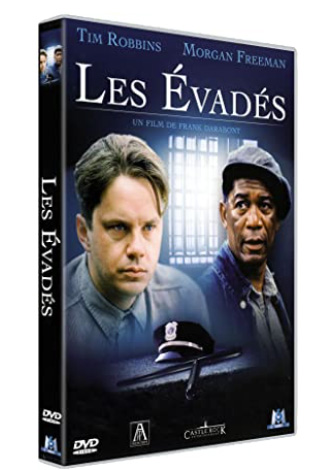
The Shawshank Redemption
Synopsis
Andy Dufresne, a successful banker, is sentenced to life imprisonment for the murder of his wife and her lover, despite maintaining his innocence. He is sent to Shawshank State Penitentiary, where he must adapt to a brutal environment controlled by corrupt officials and violent inmates. Over the years, Andy develops an unlikely friendship with Ellis Boyd Redding, known as Red, a prisoner who has learned to survive through caution and experience. Andy uses his financial expertise to help the prison authorities while secretly preparing for a different future. His intelligence, patience, and determination gradually transform the lives of several prisoners. What begins as a story of injustice becomes a powerful tale about hope, freedom, and the human capacity to endure.
The Film's Origins
The Shawshank Redemption is based on Stephen King's novella Rita Hayworth and Shawshank Redemption, originally published in 1982 in the collection Different Seasons. Frank Darabont discovered the story and recognized its potential for a character-driven prison drama. He obtained the rights from King and adapted the novella into a screenplay that preserved its central themes while expanding certain relationships. Darabont was particularly interested in the friendship between Andy Dufresne and Red. The project marked his feature directorial debut, although he had already established himself as a screenwriter. Producer Liz Glotzer and the team at Castle Rock Entertainment helped bring the adaptation to the screen. The filmmakers wanted to create a realistic portrayal of prison life without sacrificing the story's emotional and philosophical dimension. The film was shot primarily in Ohio, using the historic Ohio State Reformatory as its principal prison location.
Critical Reception
Professional Reviews: The Shawshank Redemption received generally favorable reviews when it was released, with critics praising its performances, screenplay, and emotional depth. Tim Robbins and Morgan Freeman were particularly admired for the chemistry between their characters. Roger Deakins' cinematography and Thomas Newman's score also received considerable recognition. Some contemporary critics felt that the film was overly sentimental or relied on familiar dramatic conventions. Nevertheless, its storytelling and exploration of hope were widely appreciated. Over time, its critical reputation became considerably stronger.
Audience Reception: The film initially struggled at the box office despite its positive reviews and several award nominations. Its popularity increased significantly through television broadcasts, home-video releases, and word of mouth. Audiences became deeply attached to Andy and Red, whose friendship remains one of the most celebrated relationships in modern cinema. The film eventually became a major audience favorite and regularly appears near the top of international movie rankings. Its message about perseverance and hope continues to resonate with viewers around the world.
Awards and Recognition: The film received seven Academy Award nominations, including Best Picture, Best Actor for Morgan Freeman, and Best Adapted Screenplay. It also earned nominations for cinematography, editing, sound, and original score. Although it did not win an Oscar, its recognition at the Academy Awards helped establish its artistic credentials. Morgan Freeman received particular acclaim for his performance. The film subsequently received numerous honors and retrospective recognitions. Its enduring popularity has made it one of the most celebrated films of the 1990s.
Behind-the-Scenes Stories
Director's Inspirations: Frank Darabont wanted to adapt Stephen King's novella without losing its quiet emotional power. He was particularly interested in the contrast between the prison's oppressive environment and the characters' internal freedom. The director emphasized friendship, dignity, and the ability to maintain hope under extreme circumstances. He also wanted the prison to feel like a complete world with its own rules and social hierarchy. The result combines realistic prison drama with a more universal reflection on human resilience.
Production Challenges: The production took place largely at the abandoned Ohio State Reformatory, which provided an authentic and imposing environment. The building required preparation to accommodate the cast and crew while preserving its distinctive appearance. The Ohio weather created additional difficulties, with periods of extreme heat and unpredictable conditions. The famous sewage-pipe sequence was particularly demanding for Tim Robbins because of the unpleasant conditions involved. The production also had to coordinate large numbers of extras for the prison scenes. Completing the film within its production schedule required careful organization.
Memorable Scene: The scene in which Andy plays an opera recording over the prison loudspeakers is among the film's most celebrated moments. For a brief period, the prisoners experience something beyond the restrictions of their daily existence. Their reactions demonstrate how music can create a feeling of freedom even in an environment designed to suppress individuality. The scene also reveals Andy's determination to share beauty with people who have been deprived of ordinary pleasures. It captures the film's central message more effectively than a conventional speech could.
Originally Considered Casting: Tim Robbins was ultimately selected to play Andy Dufresne, while Morgan Freeman became the ideal choice for Red. The character of Red is described differently in Stephen King's novella, but the filmmakers decided to cast Freeman in the role. His presence also influenced the development of the character's voice and personality. The supporting cast includes Bob Gunton, William Sadler, Clancy Brown, and James Whitmore. Although several actors were discussed during the project's development, the final ensemble became one of the film's greatest strengths.
Themes Explored
The Shawshank Redemption examines hope, friendship, injustice, institutional power, freedom, and personal dignity. Andy represents the ability to preserve one's identity even when surrounded by cruelty and corruption. His friendship with Red demonstrates how trust can gradually develop between people who have learned to protect themselves from disappointment. The prison symbolizes an institution capable of destroying individuality by making confinement seem normal. The film also explores the psychological consequences of long-term imprisonment through characters who struggle to imagine life outside prison walls. Andy's love of books, music, and education becomes a form of resistance against dehumanization. The story contrasts the corruption of authority with the importance of personal integrity. Ultimately, it argues that hope can survive even in the darkest circumstances.
Ending Explained
Andy's escape reveals the extent of his intelligence and patience. For years, he secretly excavates a tunnel behind a poster in his cell while helping the prison authorities conceal their financial crimes. When he finally escapes through the sewage pipe, he also takes evidence exposing Warden Norton's corruption. His disappearance triggers an investigation that brings the prison administration's abuses to light. Red eventually receives parole and begins adjusting to life outside Shawshank. However, he struggles with the freedom he once imagined. Remembering Andy's instructions, he travels to a field in search of a buried letter and money. The letter encourages him to leave his fears behind and continue living. The final meeting between Andy and Red on a beach in Mexico symbolizes the fulfillment of their shared dream. Their reunion represents friendship, liberation, and the possibility of beginning again.
Meaning of the Title
The title The Shawshank Redemption combines the name of the prison with the idea of redemption. Shawshank represents the oppressive environment in which Andy and Red spend much of their lives. Redemption refers to the possibility of recovering dignity, freedom, and a sense of purpose despite past suffering. The title also reflects the different journeys undertaken by the characters. Andy seeks to escape an unjust sentence, while Red gradually learns to recover his ability to hope. Their stories suggest that redemption is not necessarily granted by an institution but can emerge through courage, friendship, and personal transformation.
Original Soundtrack
Thomas Newman composed the original score, creating one of the film's most recognizable musical identities. His music combines delicate piano passages, orchestral textures, and restrained emotional themes. The score supports the film's contemplative atmosphere without overwhelming its performances. The opera sequence is particularly memorable because it uses Mozart's music as a symbol of beauty and freedom within the prison. The soundtrack also features classical compositions that contrast with the harshness of everyday prison life. Newman's work received an Academy Award nomination for Best Original Score.
Similar Movies
Films exploring comparable themes include Cool Hand Luke, which examines rebellion and individuality within the prison system. The Green Mile, also based on a Stephen King story, combines prison drama with friendship, injustice, and human compassion. Escape from Alcatraz focuses on the determination required to escape a seemingly secure prison. Papillon explores endurance and the desire for freedom under brutal conditions. Dead Poets Society shares the importance of hope, individuality, and intellectual independence. These films offer different perspectives on the struggle to preserve human dignity in restrictive environments.