

 Français
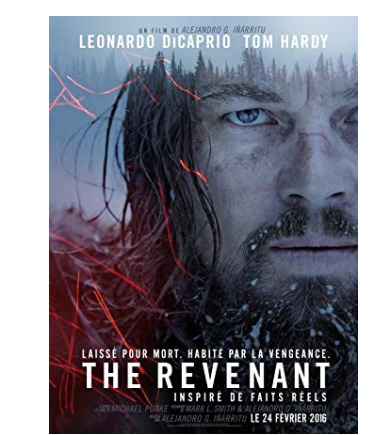
The Revenant
Synopsis
In the freezing American frontier of 1823, veteran frontiersman and fur trapper Hugh Glass is brutally mauled by a grizzly bear while scouting uncharted wilderness for his expedition party. Believing he will not survive his horrific wounds, a treacherous and greedy trapper named John Fitzgerald robs Glass, murders his young pawn son before his eyes, and leaves him buried alive in a shallow grave in the snow. Driven by an unbreakable will to survive and an absolute thirst for vengeance, Glass crawls out of his grave and embarks on a grueling, hundreds-of-mile trek across frozen mountains to hunt Fitzgerald down. This harrowing cinematic masterpiece explores survival, human endurance, and raw revenge.
The Making of the Film
Director and co-writer Alejandro González Iñárritu developed the film adapting elements from Michael Punke's 2002 historical novel based on the true legend of frontier trapper Hugh Glass. Iñárritu wanted to create an immersive, visceral survival epic that relied entirely on natural lighting and continuous camera movement to place the audience directly inside the freezing wilderness. Producers Leonardo DiCaprio and Arnon Milchan backed the ambitious auteur vision. New Regency and 20th Century Fox invested heavily in the technically groundbreaking production.
Critical Reception
Professional critics showered the film with widespread universal critical acclaim, praising its breathtaking cinematography, relentless visceral tension, and Leonardo DiCaprio's fearless, career-defining physical performance. Reviewers lauded Emmanuel Lubezki's pioneering natural-light cinematography for capturing the haunting beauty and brutal cruelty of the American frontier. Tom Hardy received universal praise for his sneering, complex villainy.
Public reception was a massive global box office blockbuster triumph, astonishing industry observers by turning a bleak, R-rated survival art-film into a mainstream phenomenon. Audiences were mesmerized by the harrowing bear attack sequence and the staggering visual scale. It cemented its status as a modern classic of survival cinema.
Awards and recognition included three Academy Awards for Best Actor for Leonardo DiCaprio, Best Director for Alejandro González Iñárritu, and Best Cinematography for Emmanuel Lubezki, alongside 12 total Oscar nominations. Leonardo DiCaprio won his long-awaited first Academy Award. The film remains a towering milestone in filmmaking history.
Filming Anecdotes
The director drew inspiration from classic wilderness survival epics, 19th-century frontier history, and painterly visual art. Production famously utilized only natural available sunlight, shooting in freezing remote locations across Canada, Argentina, and Montana over nine grueling months. Stunt coordinators and animal wranglers constructed an ultra-realistic, CGI-enhanced grizzly bear attack sequence that took weeks to film.
Production challenges were legendary and historic: the extreme weather changes, melting snow packs forcing the crew to relocate shoots to the southern hemisphere, and freezing temperatures testing equipment and human endurance. Cast and crew members suffered through grueling physical conditions, eating raw bison liver and swimming in freezing rivers. The insistence on natural magic-hour lighting window restricted shooting to mere minutes per day.
A memorable anecdote involves Leonardo DiCaprio enduring genuine hypothermia risks, sleeping inside an animal carcass, and eating raw bison meat on camera to capture absolute authenticity. Tom Hardy muttered his dialogue through heavy prosthetic facial scars while battling freezing winds. The extreme physical hardship forged an unbreakable bond among the cast and crew.
The casting process secured Leonardo DiCaprio to anchor the physically demanding, nearly silent lead role of Hugh Glass. Tom Hardy was cast as the treacherous antagonist John Fitzgerald. Rising stars Will Poulter and Domhnall Gleeson rounded out the doomed trapping expedition. The ensemble delivered career-best performances under brutal conditions.
Themes Explored
The themes explored include survival, vengeance, human endurance, paternal grief, and man versus untamed wilderness. The story examines how a broken man can conquer death itself through sheer willpower and the ghost of love. It also highlights the ruthless exploitation of indigenous lands and fur-trapping economies.
Explanation of the Ending
The ending shows Hugh Glass finally cornering John Fitzgerald along a snowy riverbank after an agonizing cross-country pursuit, engaging in a brutal, bloody knife fight to the death. Just as Glass prepares to deliver the final killing blow, he remembers that vengeance belongs to God, and pushes Fitzgerald downriver into the waiting hands of revenge-seeking Arikara warriors, who eliminate him. Mortally wounded and at peace, Glass has a hallucinatory vision of his deceased wife smiling down at him in the snow. The film closes on a haunting close-up of Glass staring directly into the camera lens, symbolizing survival at an unimaginable soul-deep cost.
Title Significance
The title 'The Revenant' refers literally to a person who has returned, especially from the dead, perfectly describing Hugh Glass crawling out of his shallow grave to seek vengeance. It captures the ghostly, supernatural endurance of the protagonist. The name sets a dark, poetic tone for a survival epic.
Original Soundtrack
The film features a haunting, atmospheric musical score composed by Ryuichi Sakamoto, Alva Noto, and Bryce Dessner, blending sparse ambient drones and minimalist orchestral cues to evoke the chilling isolation of the wilderness.
The film is celebrated globally as a monumental masterpiece of cinematic survival, frequently analyzed for its groundbreaking cinematography and Leonardo DiCaprio's iconic performance.
The Last of the Mohicans, The Revenant, Cast Away, The Deer Hunter