

 Français
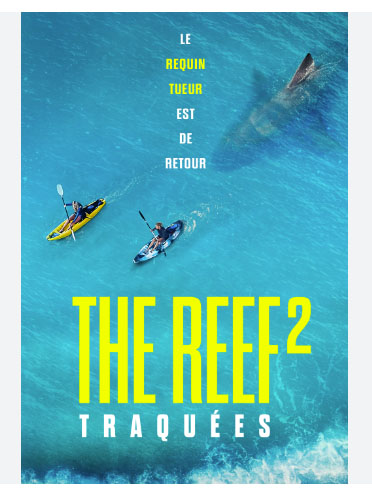
The Reef: Stalked
Synopsis
Seeking a healing getaway following a horrific personal trauma, a young woman named Nic embarks on a remote kayaking and diving expedition in the Pacific with her three friends. Their idyllic tropical island adventure turns into a terrifying nightmare when a massive, aggressive great white shark begins stalking their watercraft. Cut off from civilization and stranded in the open ocean, the women must muster every ounce of courage and physical endurance to survive. As paranoia and exhaustion set in, they realize they must work together or become prey.
The Making of the Film
Writer and director Andrew Traucki returned to his signature survival-horror roots, serving as a sequel/companion piece to his acclaimed 2010 indie hit The Reef. The production was designed to utilize minimal CGI, relying instead on authentic open-ocean shooting and real footage of marine predators to maximize genuine terror. Filmmakers sought to capture the paralyzing vulnerability of being stranded miles away from land in deep water. The project was built to deliver pulse-pounding aquatic suspense.
Critical Reception
Critics offered mixed-to-positive reviews, praising the film's commitment to practical aquatic tension, realistic shark behavior, and strong female survival dynamics. Reviewers commended Andrew Traucki's efficient direction, which avoids excessive jump scares in favor of sustained, slow-burn open-ocean dread. Some critics noted that the character trauma backstories felt somewhat conventional, yet acknowledged its effectiveness as a lean B-movie thriller. It was regarded as a solid modern creature feature.
Audiences who enjoy aquatic horror and survival thrillers embraced the movie for its intense pacing, realistic ocean scenery, and nail-biting suspense. Viewers found the open-water isolation and the terrifying presence of the great white shark deeply unsettling. The film performed well on streaming platforms and VOD markets worldwide. Many praised it as a worthy successor to the original survival film.
While major mainstream film academies bypassed the indie horror feature, it earned warm appreciation within genre-specific film festivals and horror streaming communities. Its technical achievement in filming real open-water sequences received quiet praise. The movie successfully cemented Traucki's reputation as a master of aquatic survival cinema.
Behind-the-Scenes Stories
Director Andrew Traucki wanted to replicate the raw, realistic terror of his earlier survival films by avoiding excessive digital monster creations and focusing on genuine open-water dread. He utilized actual footage of marine sharks blended with practical stunt work in deep water locations. The production team prioritized real ocean settings to ensure authentic natural lighting and wave motion.
Shooting open-water aquatic sequences in remote tropical locations presented extreme physical challenges, including seasickness, unpredictable currents, and marine safety protocols. Managing actors on floating kayaks while coordinating hidden camera rigs demanded rigorous stunt planning. Maintaining high tension without relying on excessive gore required precise editorial control.
During the intense water attacks, the actresses performed their grueling physical stunts in deep ocean water, battling real exhaustion and cold currents. The safety diving crew maintained constant vigilance around the cast during all swimming sequences. These practical conditions brought authentic panic to the survival scenes.
Teressa Palmer led the cast as Nic, supported by Annabel Wolfe, Kate Lister, and Saskia Archer. The casting process focused on finding athletic actresses who could project genuine physical endurance and emotional trauma. The resulting ensemble delivered a convincing survival dynamic.
Themes Explored
The film explores survival against apex predators, overcoming psychological trauma, female solidarity, and endurance. It examines how shared crisis can help individuals conquer past grief and guilt. The narrative ultimately champions collective willpower over despair.
Ending Explained
After enduring relentless stalkings and tragic losses among their group, Nic manages to outsmart the giant shark using a desperate, aggressive maneuver near a shallow reef. She washes ashore on a remote island beach, exhausted, battered, but profoundly alive and emotionally healed from her past trauma. A final lingering shot of the dark ocean waters hints that nature remains indifferent to human survival. The ending offers a tense, satisfying resolution to the aquatic nightmare.
Meaning of the Title
The title "The Reef: Stalked" directly connects the film to its 2010 predecessor while emphasizing the predatory, hunting nature of the shark pursuing the kayakers. It highlights the claustrophobic nature of the open ocean serving as a deadly trap. The concise title sets a lean survival-horror tone.
Latest News
- The film continues to stream successfully as a popular choice for fans of minimalist open-ocean creature features.
Similar Films
Fans of aquatic survival horror will enjoy The Reef (2010), Open Water (2003), The Shallows (2016), and 47 Meters Down (2017), all exploring shark attacks.