

 Français
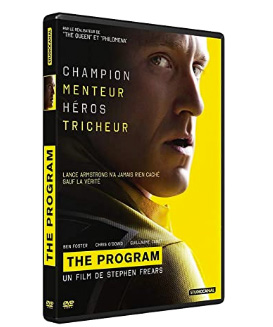
The Program
Synopsis
In the mid-1990s, an ambitious Irish sports journalist named David Walsh becomes increasingly suspicious of legendary American cyclist Lance Armstrong's unprecedented, miraculous dominance and consecutive victories in the Tour de France following his recovery from testicular cancer. Convinced that Armstrong's unbelievable physical stamina must be fueled by sophisticated, systemic blood doping rather than pure athletic training, Walsh embarks on a relentless, lonely investigative crusade to expose the truth. Despite facing aggressive lawsuits, public backlash, and intense sports media hostility, Walsh uncovers a massive web of cheating that shatters cycling history. This biographical drama explores sports corruption and journalistic integrity.
The Making of the Film
Director Stephen Frears adapted the biographical drama from David Walsh's 2012 investigative book Seven Deadly Sins: My Pursuit of Lance Armstrong. Screenwriter John Hodge crafted a gripping script charting the rise and fall of the most notorious doping scandal in sports history. StudioCanal and Working Title Films backed the prestige biographical production. The project was designed as an uncompromising exposé of athletic fraud.
Critical Reception
Professional critics gave generally positive reviews, praising Ben Foster's terrifyingly committed, magnetic lead performance as Lance Armstrong, taut pacing, and cynical exploration of sports corruption. Reviewers noted that the film captured the psychological mania of high-stakes competitive doping without glorifying the cheater. Chris O'Dowd received strong praise for his portrayal of investigative journalist David Walsh.
Public reception was moderate at the box office, finding an audience among sports fans and drama enthusiasts fascinated by the real-life scandal. Audiences were gripped by the detailed explanations of blood bags, EPO, and sports-science deception. It carved out a respected reputation in biographical cinema.
Awards and recognition included independent film nominations and festival recognition. Ben Foster earned global critical acclaim for his physical transformation. The film remains celebrated as a sharp sports exposé.
Filming Anecdotes
- Inspirations: The director drew inspiration from real-life sports investigative journalism, historical Tour de France archival footage, and classic whistle-blower dramas.
- Difficulties: Production challenges included staging authentic, high-speed cycling race sequences across challenging European mountain roads in France and Italy while maintaining historical accuracy in 90s bicycle gear and medical doping technology.
- Anecdote: A memorable anecdote involves Ben Foster actually experimenting with legal fitness regimens and studying Lance Armstrong's aggressive psychological persona to capture his intense competitive drive. Chris O'Dowd brought grounded journalistic integrity to his role. The crew maintained a focused, serious atmosphere.
- Casting: The casting process secured Ben Foster to anchor the lead cycling role, alongside Chris O'Dowd, Jesse Plemons, Guillaume Canet, and Dustin Hoffman. Jesse Plemons played teammate Floyd Landis. The ensemble brought heavy dramatic weight to the script.
Themes Explored
The themes explored include sports corruption, journalistic integrity, whistle-blowing, psychological obsession, and public deception. The story examines how corporate sponsorship and hero worship can blind the public to systemic athletic cheating. It also highlights the courage of solitary truth-seekers.
Explanation of the Ending
The ending shows Lance Armstrong finally confessing to his systemic doping operation during a heavily watched televised interview with Oprah Winfrey years after being stripped of his seven Tour de France titles, confirming everything David Walsh fought for. Intercut with archival news footage of Armstrong's downfall, the film highlights Walsh's vindication as an investigative journalist who stood firm against athletic tyranny. The film concludes on a sobering, reflective note.
Title Significance
The title 'The Program' refers directly to the meticulously organized, highly sophisticated medical doping and blood-transfusion regimen masterminded by Lance Armstrong and his team physicians to cheat international drug tests. It is ominous and clinical. The name sets a biographical-thriller tone.
Original Soundtrack
Featuring an energetic, pulsing rock and orchestral musical score composed by Michael Andrews, the sonic landscape captures the fast-paced mania of international cycling races.
The film is frequently discussed in retrospectives analyzing major sports scandals and whistle-blower journalism.
Spotlight, The Insider, Moneyball, I, Tonya