

 Français
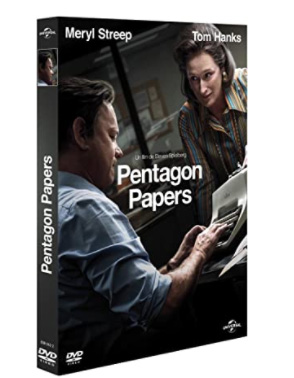
The Post
Synopsis
In 1971, Katharine Graham, the first female publisher of a major American newspaper (The Washington Post), and her driven editor Ben Bradlee race to catch up with The New York Times in exposing a massive, decades-long government cover-up regarding the Vietnam War known as the Pentagon Papers. Facing severe financial ruin, board opposition, and direct threats of criminal prosecution from the Nixon administration, Graham must make the defining decision of whether to publish classified documents. Their courageous journalistic stand triggers a landmark Supreme Court battle for freedom of the press. Their triumph protects the foundational pillars of American democracy.
The Making of the Film
Screenwriter Liz Hannah wrote the initial spec script after discovering the crucial role Katharine Graham played in the publication of the Pentagon Papers, feeling the story had urgent contemporary relevance regarding freedom of the press. Director Steven Spielberg fast-tracked the production upon reading the script, recognizing immediate parallels between 1971 political pressures and modern media scrutiny. The filmmakers wanted to honor investigative journalism and women breaking corporate glass ceilings. The production was assembled with remarkable speed to capture timely cultural discussions.
Critical Reception
Professional critics gave the film overwhelmingly positive reviews, praising Meryl Streep and Tom Hanks for their powerhouse lead performances and Spielberg's urgent, energetic direction. Reviewers lauded the film's thrilling pacing inside the newsroom, capturing the tactile clatter of typewriters and the high stakes of investigative reporting. Some critics noted it followed classical historical drama formulas, but celebrated its inspiring political relevance.
Public reception was enthusiastic, turning the film into a box-office success and earning praise from historians and journalists alike. Audiences appreciated the thrilling defense of democracy and the empowering character arc of Katharine Graham. It became a celebrated modern classic of journalistic cinema.
The film earned numerous accolades, including two Academy Award nominations for Best Picture and Best Actress for Meryl Streep, cementing its status as an essential historical drama.
Anecdotes_du_tournage
Director Steven Spielberg drew inspiration from classic 1970s investigative thrillers like All the President's Men and historical newsroom archives.
Production was organized with extreme speed, with Spielberg completing the film in just nine months from script acquisition to theatrical premiere.
During the filming of the tense newsroom printing press sequences, authentic 1970s printing machinery was utilized to maximize tactile realism.
The casting process successfully paired screen legends Meryl Streep and Tom Hanks for their first-ever cinematic collaboration.
Core Themes Explored
The film explores freedom of the press, female corporate leadership, government transparency, journalistic integrity, and democracy.
Themes Explored
Investigative journalism, Pentagon Papers, freedom of the press, gender equality in business, and government secrecy.
The conclusion shows the Supreme Court ruling in favor of the newspapers, allowing the historic publication of the Pentagon Papers to continue unimpeded. Katharine Graham walks out of the courthouse vindicated, while a night watchman at the Democratic National Committee headquarters notices suspicious break-in activity—foreshadowing the upcoming Watergate scandal.
The title refers to The Washington Post newspaper, highlighting its historic institutional courage during the crisis.
The film features a triumphant, driving musical score composed by John Williams, blending suspenseful investigative motifs with inspiring orchestral themes.
All the President's Men, Spotlight, The Insider, Frost/Nixon