

 Français
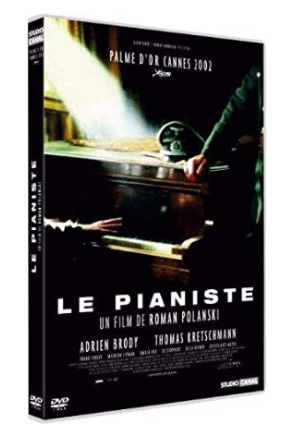
The Pianist
Synopsis
In 1939, Władysław Szpilman is a celebrated Jewish pianist working for Polish Radio in Warsaw when the German army invades his country. As the Nazi regime imposes increasingly brutal restrictions on Jews, he and his family are forced into the Warsaw Ghetto. After his family is deported, he manages to escape and spends years hiding in the ruins of the city. Alone and starving, he survives only through luck, courage and the unexpected kindness of others.
The Making of the Film
The Pianist is based on the memoir of the same name by Władysław Szpilman, published shortly after the war and later rediscovered. Roman Polanski, who survived the Kraków Ghetto as a child and lost his mother at Auschwitz, felt a deep personal connection to the story. The screenplay was written by Ronald Harwood, who adapted Szpilman's account with great restraint. Adrien Brody was cast in the lead role and underwent a dramatic physical and emotional transformation. The film was shot in Poland and Germany, with meticulous recreations of wartime Warsaw. It premiered at the Cannes Film Festival in 2002.
Reviews and Reception
Summary of Professional Reviews
Critics acclaimed the film as one of the most powerful works about the Holocaust ever made. They praised Polanski's unflinching direction and the intimacy of a story told through one man's eyes. Adrien Brody's performance was widely considered extraordinary. The film's restraint, avoiding melodrama and sentimentality, was often highlighted as its greatest strength.
Audience Reception
Audiences around the world were deeply moved by the film, which became both a critical and commercial success. Many viewers described it as a harrowing but essential experience. It is frequently used in schools and discussions about the history of the Second World War. Its piano performances, in particular, left a lasting impression on viewers.
Awards Received
The film won the Palme d'Or at the Cannes Film Festival in 2002. It received seven Academy Award nominations and won three: Best Director for Roman Polanski, Best Actor for Adrien Brody and Best Adapted Screenplay for Ronald Harwood. Brody became the youngest actor to win the Best Actor Oscar at the time. The film also won the BAFTA Award for Best Film and several César Awards in France, including Best Film and Best Director.
Filming Anecdotes
Director's Inspirations
Polanski drew on his own childhood memories of the Kraków Ghetto to give the film its feeling of authenticity. Certain scenes, such as a mother being taken from her family, reflect events he lived through. The experience gave him a unique ability to portray the daily terror of life under occupation. He treated the film as the most personal work of his career.
Production Challenges
Adrien Brody prepared for the role by losing a significant amount of weight and learning to play the piano. To enter the mindset of his character, he reportedly gave up his apartment and car and lived in extreme isolation. The shoot required massive sets recreating the destruction of Warsaw. These efforts contributed to the film's striking realism.
Themes Explored
The film is a testimony of survival in the face of unimaginable horror. It explores the loss of dignity, family and identity under a brutal regime. Music appears as a symbol of humanity and as a last refuge of the soul. The story also highlights the moral ambiguity of survival, in which luck and the kindness of strangers play decisive roles. Rather than glorifying heroism, it shows an ordinary man who endures simply because he must. It ultimately serves as a reminder of the importance of memory.
Ending Explained
In the final act, Szpilman is discovered by a German officer, Captain Wilm Hosenfeld, who asks him to play the piano. Moved by the music, the officer helps him survive by bringing him food and a coat. After the war, Szpilman returns to the stage and plays again, but learns that the officer died in captivity. The ending is a quiet reflection on gratitude and the fact that kindness can appear even in the darkest circumstances.
Meaning of the Title
The title identifies the main character by his profession, which is also the source of his survival. It reduces a man to his art, reflecting how the war stripped him of everything else. It is also the title of the memoir on which the film is based.
Soundtrack
The film's music is built around the works of Frédéric Chopin, played on screen by Brody and recorded by Polish pianist Janusz Olejniczak. The Ballade No. 1 in G minor, performed in the scene with the German officer, is especially memorable. Music serves as both a source of beauty and a symbol of resistance against barbarism.
Similar Films
- Schindler's List (1993): a masterpiece about the Holocaust.
- Life Is Beautiful (1997): a story of a father protecting his son during the war.
- Son of Saul (2015): a harrowing portrayal of the camps.
- The Boy in the Striped Pajamas (2008): a child's-eye view of the Holocaust.