

 Français
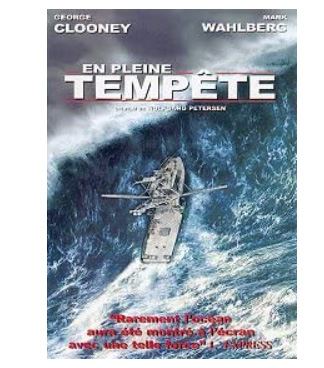
The Perfect Storm
Synopsis
In October 1991, the commercial fishing boat Andrea Gail sails from Gloucester, Massachusetts, into the treacherous waters of the North Atlantic. Captain Billy Tyne and his weary crew hope to catch a late-season bounty of swordfish despite ominous weather reports. Unbeknownst to them, three massive weather systems converge to create a historic, once-in-a-century meteorological nightmare. Battling monstrous hundred-foot waves and fierce winds, the fishermen fight an epic battle for survival against the unstoppable fury of nature.
The Making of the Film
- The film was adapted from Sebastian Junger's best-selling 1997 non-fiction book of the same name, which documented the real-life tragedy of the Andrea Gail. Director Wolfgang Petersen was drawn to the project by the raw power of the human struggle against insurmountable natural forces. Inspiration was also derived from historical maritime accounts of deep-sea fishing and legendary North Atlantic storms. Warner Bros. greenlighted the production with a massive budget to pioneer state-of-the-art digital water effects and massive physical tank sets.
Critical Reception
Professional critics gave the film mixed-to-positive reviews, praising its breathtaking visual effects, thrilling maritime action sequences, and the harrowing depiction of nature's fury. Many reviews commended the strong ensemble performances by George Clooney and Mark Wahlberg as hardworking Gloucester fishermen. Reviewers noted that while the character development outside the storm felt formulaic, the technical achievement of the storm sequences was undeniable. Overall, it was received as a gripping and visceral disaster epic.
Public reception was very strong, turning the movie into a major box office success during the summer blockbuster season. Audiences were awed by the terrifying scale of the CGI waves and the authentic portrayal of dangerous deep-sea fishing. Word-of-mouth recommendations highlighted the emotional weight of the crew's final voyage and the tribute to real-life mariners. Spectators frequently cited the terrifying atmospheric tension as a major highlight.
The film earned two Academy Award nominations for Best Visual Effects and Best Sound, recognizing its groundbreaking technical accomplishments. Industrial Light & Magic received widespread industry praise for revolutionizing digital water simulation in cinema. It also received recognition from various maritime organizations for honoring the sacrifices of commercial fishermen.
Filming Anecdotes
The director drew heavy inspiration from classic maritime survival epics, historical documentaries about New England fishermen, and disaster cinema classics. He wanted the visual style to capture both the quaint, gritty charm of Gloucester harbor and the terrifying, chaotic majesty of the open ocean. Cinematic influences ranged from classic seafaring literature to gritty blue-collar dramas highlighting working-class perseverance. These artistic choices helped establish an authentic and immersive atmosphere.
Production presented monumental technical challenges, requiring the construction of massive water tanks and hydraulic gimbel ship models on the Warner Bros. backlot. Actors spent weeks enduring freezing high-pressure water cannons and violent motion simulator rigs to replicate the punishing conditions of a hurricane. George Clooney and Mark Wahlberg performed many of their own stunts in turbulent water tanks, requiring trained divers on standby at all times. The physical toll on the cast and crew was immense, but it resulted in remarkably convincing performances on screen.
One particularly memorable sequence involved the Andrea Gail attempting to climb a sheer vertical wall of water before capselling at the peak of the storm. This complex sequence required a seamless blend of full-scale physical ship mockups, stunt doubles, and cutting-edge digital water effects. The crew spent weeks perfecting the timing of the hydraulic rigs to achieve the terrifying weight and momentum of a rogue wave. Crew members often recalled this sequence as the most physically grueling and technically complex part of the entire shoot.
The initial casting process sought actors who could authentically portray rugged, hardworking blue-collar fishermen with grit and emotional depth. George Clooney was cast as Captain Billy Tyne, bringing natural leadership and commanding presence to the role. Mark Wahlberg joined as crew member Bobby Shatford, adding emotional stakes tied to his life back on land. Supporting roles filled by John C. Reilly, William Fichtner, and Diane Lane rounded out the authentic New England atmosphere.
Themes Explored
- Humanity versus nature and the humbling realization of our fragility.
- The dangerous allure and sacrifices of blue-collar maritime professions.
- Comradeship, loyalty, and courage in the face of certain doom.
- Fate and the unpredictable convergence of natural forces beyond human control.
Ending Explained
The climax depicts the Andrea Gail caught in the catastrophic convergence of weather systems, fighting desperately to survive a massive hundred-foot rogue wave. Despite Captain Billy Tyne's heroic steering efforts, the ship is violently capsized and plunged into the abyss, sealing the crew's tragic fate. A final epilogue shifts back to the grieving families in Gloucester, reflecting on the profound loss and the eternal danger faced by those who harvest the sea. The film concludes as a solemn, respectful tribute to all fishermen lost at sea.
Title Significance
The title refers to the rare and devastating meteorological term used by meteorologists to describe the unprecedented convergence of the Halloween Nor'easter, a dying hurricane, and a cold front in 1991. It encapsulates both the literal weather phenomenon and the inescapable trap faced by the doomed crew.
Original Soundtrack
The soundtrack features a soaring, emotional orchestral score composed by James Horner that masterfully captures the majesty and terror of the sea. Haunting choral arrangements and powerful brass themes elevated the dramatic tension during the film's most harrowing storm sequences. The music remains celebrated as one of Horner's most evocative maritime compositions.
Similar Films
- Master and Commander: The Far Side of the World (2003)
- In the Heart of the Sea (2015)
- Titanic (1997)
- The Guardian (2006)
- Cast Away (2000)