

 Français
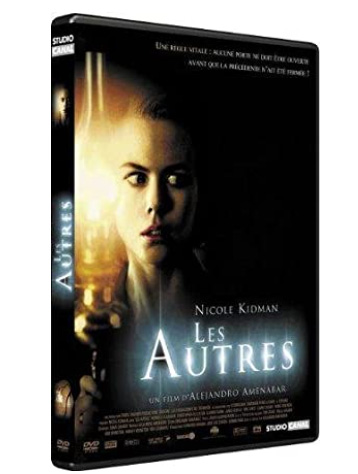
The Others
Synopsis
In 1945, Grace Stewart lives with her two children in an isolated mansion on the island of Jersey. Her children suffer from a rare condition that makes exposure to direct sunlight extremely dangerous, forcing the family to keep the house in darkness. When three new servants arrive, strange occurrences begin to disturb the household. Doors seem to open by themselves, mysterious voices are heard, and the children become convinced that someone else is living in the house. Grace desperately tries to preserve order while protecting her family from what she believes are supernatural intruders. As the mystery deepens, the boundaries between the living and the dead become increasingly uncertain.
The Film's Origins
Alejandro Amenábar developed The Others from his fascination with supernatural horror, childhood fears, and classic ghost stories. He wanted to create a film that relied more on atmosphere, suspense, and psychological tension than on spectacular visual effects. The idea was to place a family inside an isolated house where ordinary domestic rules gradually become sources of terror. The screenplay also explores grief, guilt, religious conviction, and the difficulty of accepting painful truths. Amenábar wrote the film specifically with a strong central female character in mind. The project attracted international attention when Tom Cruise became involved as an executive producer. Cruise had previously acquired the rights to Amenábar's earlier film Open Your Eyes, which helped establish a professional relationship between them. The production brought together Spanish, French, Italian, and American partners. The result was Amenábar's first major English-language feature and an international success.
Critical Reception
Professional Reviews: Critics praised The Others for its carefully constructed atmosphere and intelligent approach to supernatural horror. Nicole Kidman received particularly strong reviews for her portrayal of Grace, a woman whose strictness conceals deep emotional suffering. Many reviewers appreciated Alejandro Amenábar's ability to create suspense through silence, shadows, and carefully controlled revelations. The cinematography and production design were also widely admired. Some critics compared the film to classic haunted-house stories while emphasizing its psychological complexity. Its ending attracted particular attention for the way it transforms the audience's understanding of everything that came before.
Audience Reception: The film became an international box-office success and demonstrated that a supernatural thriller could attract a broad audience without relying on excessive violence. Viewers were especially impressed by its unexpected conclusion and the performances of its cast. The mysterious atmosphere encouraged discussions and repeated viewings, as audiences attempted to identify the clues hidden throughout the story. Its reputation grew through word of mouth and home-video releases. Today, it remains one of the best-known supernatural thrillers of the early 2000s.
Awards and Recognition: The Others received numerous nominations and awards, particularly in Spain, where it achieved considerable recognition. Nicole Kidman received several nominations for her performance, including recognition from major international awards organizations. The film also earned important honors at the Goya Awards, including awards for direction and cinematography. Its technical achievements and artistic direction were widely appreciated. It was also nominated for the European Film Award for Best Film. Its international success helped reinforce Amenábar's reputation as an important contemporary filmmaker.
Behind-the-Scenes Stories
Director's Inspirations: Alejandro Amenábar drew inspiration from classic ghost films and the atmosphere of traditional Gothic literature. He was particularly interested in the fear produced by what cannot be seen or understood. Rather than showing supernatural creatures frequently, he preferred to let sounds, shadows, and the reactions of the characters suggest their presence. The filmmaker also explored the relationship between religious beliefs and psychological denial. His intention was to create a horror story whose emotional meaning would become clearer after the final revelation.
Production Challenges: The production required an extensive period of preparation to create the atmosphere of an old mansion isolated from the outside world. The house needed to appear both beautiful and oppressive, with lighting carefully controlled throughout the film. Because much of the story takes place indoors, the cinematography and production design had to maintain visual variety without breaking the feeling of confinement. The child actors also had to perform convincingly in scenes involving fear and supernatural phenomena. Maintaining the secrecy of the screenplay's central revelation was another important consideration.
Memorable Scene: The sequence involving the mysterious figures in the house is particularly effective because it gradually transforms the family's understanding of their surroundings. The moment when Grace discovers the truth about the people she has been trying to protect herself from gives the story an entirely different meaning. Amenábar carefully prepared the audience for this revelation through visual details and seemingly insignificant conversations. The final confrontation is memorable because it replaces conventional horror with emotional tragedy.
Originally Considered Casting: Nicole Kidman became the defining choice for the role of Grace Stewart, bringing considerable international recognition to the project. The young actors Alakina Mann and James Bentley were cast as Anne and Nicholas. Fionnula Flanagan, Christopher Eccleston, and Eric Sykes completed the principal ensemble. Although alternative casting discussions took place during development, there is no sufficiently documented complete list of actors who were seriously considered for every principal role.
Themes Explored
The Others explores grief, guilt, motherhood, religious authority, denial, and the boundary between life and death. Grace's strict rules initially appear to be an expression of maternal protection, but they also reveal her inability to confront painful realities. The children represent vulnerability and innocence in a world dominated by fear and uncertainty. The mansion becomes a psychological space in which the characters struggle to understand their own existence. The film also questions how personal beliefs can distort someone's perception of reality. Its supernatural elements gradually reveal a deeper meditation on death and acceptance. The relationship between parents and children remains central to its emotional impact. Ultimately, the story suggests that confronting the truth can be more painful than remaining trapped in an illusion.
Ending Explained
The ending reveals that Grace and her children are actually dead, and that the mysterious people they believed were haunting the mansion are living occupants attempting to communicate with the spirits. Grace eventually remembers that she suffocated her children before taking her own life. Her inability to accept what happened has trapped the family in a state of denial. The supposed intruders are therefore not supernatural threats but ordinary people who have discovered the presence of the dead in their home. The revelation transforms earlier scenes and explains the strange behavior of the servants and the children. Grace must finally accept that her family belongs to another world. However, the ending does not simply present her as a monster. It portrays a deeply troubled mother who cannot reconcile herself with the consequences of her actions. The final moments suggest that the family will remain together in the mansion, unable to move beyond their tragedy.
Meaning of the Title
The title The Others refers to the mysterious people whom Grace believes are secretly occupying her house. Throughout most of the story, these individuals appear to represent a supernatural threat to her family. The final revelation reverses this perception and shows that Grace and her children are actually the ones who belong to the world of the dead. The title therefore expresses the uncertainty surrounding identity and perspective. The word others also emphasizes the distance between people who occupy different states of existence. It becomes a subtle reference to the way fear can make ordinary human beings appear threatening.
Original Soundtrack
Alejandro Amenábar composed the original score himself, creating music that reinforces the film's Gothic atmosphere. The soundtrack uses delicate orchestral passages, unsettling textures, and moments of silence to maintain suspense. Rather than constantly announcing danger, the music often creates a feeling of melancholy and emotional isolation. Its restrained approach perfectly complements the mansion's dark interiors and the characters' psychological distress. The score is particularly important because the film relies heavily on atmosphere rather than visual horror effects.
Similar Movies
Films with comparable atmospheres include The Sixth Sense, which also builds a supernatural mystery around a revelation that changes the meaning of earlier events. The Others also shares elements with The Innocents, a classic psychological ghost story involving children and an isolated household. The Orphanage explores childhood trauma and supernatural mysteries within a family environment. Shutter Island examines guilt, psychological denial, and the difficulty of distinguishing reality from illusion. The Changeling also uses an old house and unexplained events to create an atmosphere of suspense. These films combine mystery, emotional conflict, and supernatural elements.