

 Français
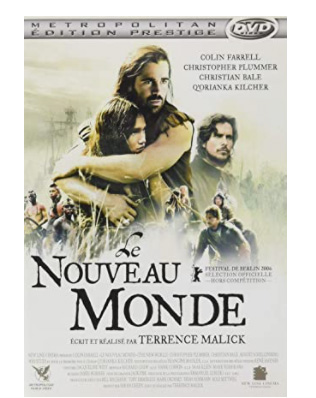
The New World
Synopsis
Set in the early 17th century, the film chronicles the foundational encounter between English explorers and the Native American Powhatan confederacy in Virginia. Against the backdrop of the struggling Jamestown settlement, an intense romance blossoms between the adventurer Captain John Smith and the spirited Indigenous princess Pocahontas. As political tensions escalate and the clash of civilizations turns violent, both Smith and Pocahontas are forced to navigate impossible loyalties, heartbreak, and cultural transformation. The narrative ultimately follows Pocahontas as her journey extends far beyond her homeland, reshaping her identity forever.
The Making of the Film
Director Terrence Malick nurtured the concept for 'The New World' for decades, driven by a fascination with the American foundational myth of Pocahontas and John Smith. Malick wanted to strip away romanticized Disney-esque tropes to present a deeply sensory, historically grounded, and philosophical interpretation of the first contact between European settlers and Native Americans. His inspiration stemmed from historical accounts, journals, and a desire to explore humanity's relationship with pristine nature and untamed wilderness.
Critical Reception
Professional critics were sharply divided upon release, with many praising Malick's visual poetry, Emmanuel Lubezki's breathtaking natural-light cinematography, and the film's meditative pacing. Reviewers admired its bold departure from traditional Hollywood historical epics, viewing it as a mesmerizing sensory experience rather than a standard narrative drama. However, detractors found the deliberate pacing excessively slow and the plot frustratingly opaque.
The general public response was muted, as mainstream audiences expecting a fast-paced action-adventure or a conventional romantic epic were often perplexed by Malick's impressionistic and poetic style. Nevertheless, the film gradually cultivated a dedicated following among cinephiles and art-house enthusiasts who valued its unique artistic vision and philosophical depth.
The film earned critical accolades, most notably an Academy Award nomination for Best Cinematography for Emmanuel Lubezki's groundbreaking naturalistic camera work. It also received recognition from various international film critics associations and guilds for its artistic direction, costume design, and atmospheric musical score.
Filming Anecdotes
Terrence Malick drew heavy inspiration from romantic landscape paintings, historical journals, and transcendentalist literature to evoke the untouched beauty of the 17th-century American continent. He encouraged natural performances, often having actors improvise or react spontaneously to the environment.
Production faced immense difficulties due to unpredictable weather, remote Virginia marshland locations, and the logistical challenge of constructing historically accurate replica settlements. Maintaining the visual purity of the natural environment without modern intrusions required meticulous scouting and editing.
During the filming of the forest scenes, Malick frequently utilized natural sunlight and magic hour lighting, prompting the crew to wait hours for the exact atmospheric conditions desired by the director.
Before casting newcomer Q'orianka Kilacher as Pocahontas, various young actresses were considered, but Malick was immediately captivated by Kilacher's natural grace and intense screen presence during auditions.
Themes Explored
The film explores the clash between civilization and the natural world, the purity of innocent love against political corruption, and the spiritual awakening that comes from experiencing a completely alien culture.
Ending Explanation
The film concludes with an older Pocahontas, having traveled to England and embraced a European court life, peacefully accepting her mortality in a foreign land. Her final moments reflect a serene reconciliation with her spiritual connection to nature, transcending the geopolitical conflicts of her past.
Title Significance
The title 'The New World' refers both to the geographical discovery of the American continent by European powers and to the internal, spiritual rebirth experienced by the characters as they confront an entirely different way of existing in the universe.
Similar Films
Days of Heaven, The Thin Red Line, The Last of the Mohicans, Dances with Wolves