

 Français
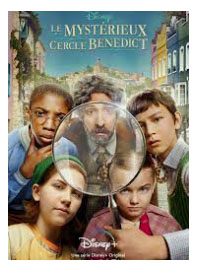
The Mysterious Benedict Society
Synopsis
Gathered together by an eccentric, wealthy benefactor who runs tests requiring extraordinary intelligence rather than brute force, four gifted yet deeply troubled orphan children are recruited for a covert secret agent mission. Their objective is to infiltrate a prestigious boarding school known as The Institute run by a sinister mastermind broadcasting subliminal messages that threaten global psychological control. Utilizing their unique skills in codes, logic, and empathy, the young prodigies form an unbreakable chosen family while outsmarting adult authorities. The whimsical mystery series delivers clever puzzles and nostalgic adventure charm.
The Making of the Film
Developers Phil Hay and Matt Manfredi adapted the acclaimed television series from Trenton Lee Stewart's best-selling children's mystery novel series of the same name. The inspiration stemmed from celebrating intellectual curiosity, neurodivergence, and the power of found family among misunderstood children. The production team invested heavily in elaborate mid-century modern set designs, whimsical costume styling, and authentic location shoots in Vancouver. The script was meticulously structured to balance complex deductive riddles with warm emotional resonance.
Critical Reception
Professional critics widely acclaimed the television series for its charming Wes Anderson-esque aesthetic, intelligent writing, and phenomenal performances by Tony Hale in dual roles alongside a stellar young ensemble cast. Reviewers lauded the show for respecting young viewers' intelligence with sophisticated plotting and heartfelt themes. Public reception was overwhelmingly enthusiastic among family and YA audiences on streaming platforms, turning it into a beloved cult favorite. The series earned Children's and Family Emmy Award recognition.
Behind-the-Scenes Stories
Creators Phil Hay and Matt Manfredi drew visual inspiration from 1960s espionage aesthetics, whimsical children's literature illustration, and classic puzzle design. Production took place on location across soundstages and historic schools in Vancouver, British Columbia, constructing detailed mid-century sets. During the filming of intricate code-breaking sequences, the young lead actors worked closely with puzzle consultants to master their props. Tony Hale brought incredible comedic timing to playing both the benevolent genius and his villainous twin.
Themes Explored
The themes explored include found family, intelligence versus conformity, neurodivergence as a strength, fighting institutional control, and loyalty.
Ending Explained Ending Explained The clever climax sees the orphans successfully decoding the subliminal broadcast system and dismantling the villain's mind-control machine, securing safety for the school and the world.
Meaning of the TitleMeaning of the Title The title refers directly to the clandestine organization founded by the eccentric Mr. Benedict to train the gifted orphan recruits.
Original Soundtrack Theodore Shapiro composed a whimsical, eccentric orchestral score featuring vintage harpsichord and playful brass motifs that anchored the spy-mystery adventure.
Similar Films A Series of Unfortunate Events, Enola Holmes, The Mysterious Benedict Society