

 Français
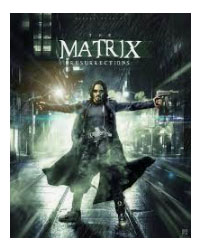
The Matrix Resurrections
Synopsis
This mind-bending, meta-fictional sci-fi action blockbuster sequel follows Thomas Anderson, who is once again living a seemingly ordinary life as a successful video game developer in San Francisco, haunted by recurring fragments of memories that he channels into his blockbuster game trilogy 'The Matrix'. Unaware that his reality is merely a newly engineered, psychological simulation controlled by the machines, his life is upended when a resistance faction led by a resurrected Bugs and a new version of Morpheus offers him the red pill to free his mind. Reunited with Trinity—who also lives trapped inside the simulation with no memory of her past—Neo must fight his way back into the real world. It is a wildly ambitious, romantic return to the digital rabbit hole.
The Making of the Film
The project originated from co-writer and director Lana Wachowski's deeply personal desire to find comfort and process grief following the tragic passing of both her parents and a close friend, imagining characters bringing loved ones back to life through art. Wachowski was initially hesitant to revisit the iconic franchise until personal loss inspired a powerful emotional framework centering Neo and Trinity's eternal bond. Inspiration was drawn from quantum physics, philosophical meta-commentary on franchise reboots, and classic cyber-punk tropes. The creative team aimed to produce a visionary, romantic sci-fi epic.
Critical Reception
Critics offered polarized, mixed reviews, praising the film's daring meta-commentary on Hollywood reboots, its central poignant romance between Neo and Trinity, and Keanu Reeves and Carrie-Anne Moss's chemistry, while critiquing its messy action choreography and overly convoluted exposition. Reviewers noted that Lana Wachowski bravely subverted expectations by turning a blockbuster action sequel into a tender romantic drama and self-aware critique of corporate IP milking. While some fans missed the sleek, groundbreaking martial arts choreography of the 1999 original, its bold originality won over admirers of auteur cinema.
Audience reception was heavily divided upon its simultaneous theatrical and HBO Max streaming release during the holiday season of 2021. Viewers on public platforms praised the emotional romance payoff, stunning visual callback moments, and Neil Patrick Harris's creepy villain turn as the Analyst. Fans of the franchise debated its unconventional satirical tone. Word-of-mouth sustained steady home video and streaming viewership.
Awards season brought minor recognition from various science fiction and visual effects award ceremonies, honoring the film's striking digital aesthetic and production design. Critics' associations praised Lana Wachowski for her fearless, personal directorial vision. These accolades cemented its status as a fascinating, controversial chapter in sci-fi cinema.
Behind-the-Scenes Stories
The director drew visual inspiration from classic cyber-punk anime, philosophical art installations, and bright daylight action cinematography to deliberately contrast with the green-tinted aesthetic of the original trilogy. Every set, from Thomas Anderson's sleek San Francisco loft to the upgraded digital simulation pods, was designed to reflect a modern, evolved Matrix. The production team collaborated with stunt coordinators to execute practical wire-work and vehicular stunts. These artistic choices created a unique visual identity.
Production presented intense logistical and technical hurdles, requiring Keanu Reeves and Carrie-Anne Moss to undergo rigorous physical training to perform their own motorcycle stunts and action choreography. Lana Wachowski returned to direct solo, fostering a deeply collaborative, family-like atmosphere on set with returning cast members. Shooting on location in San Francisco and Berlin exposed the crew to complex night shoots. Furthermore, maintaining strict secrecy around plot twists demanded obsessive security protocols.
During the filming of the breathtaking rooftop jump sequence, Keanu Reeves and Carrie-Anne Moss performed their practical leap of faith with real safety wires and building setups. To maintain emotional gravity, Wachowski grounded every sci-fi concept in the authentic emotional love story between Neo and Trinity. The crew utilized natural daylight for action scenes to break traditional sci-fi tropes. This rigorous dedication resulted in standout cinematic moments.
Casting was anchored by successfully reuniting iconic leads Keanu Reeves and Carrie-Anne Moss, whose effortless romantic chemistry drove the entire emotional core of the film. Supporting roles featured exciting new talent including Yahya Abdul-Mateen II as Morpheus, Jessica Henwick as Bugs, and Jonathan Groff as the new Smith. This star-studded casting strategy was the absolute heartbeat of the film's emotional success.
Themes Explored
The narrative deeply explores themes of romantic love transcending simulation, personal choice, and breaking free from corporate and algorithmic control. It examines grief, memory, waking up from societal conditioning, and the power of human connection. Additionally, it highlights artificial intelligence, evolution, and reclaiming one's agency. Ultimately, the film reflects on love, rebirth, and the eternal triumph of hope over despair.
Ending Explained
Neo and Trinity successfully defeat the Analyst and escape the redesigned Matrix during a breathless San Francisco rooftop standoff, flying into the sky together as fully empowered equals who now control both digital reality and physical flight. In the final triumphant scene, they visit the Oracle's successor to declare that they are going to reshape the entire world into whatever they desire. The romantic resolution celebrates boundless freedom and eternal partnership.
Meaning of the Title
The title directly references the resurrection of Neo and Trinity from their digital pods, alongside the franchise's grand resurrection after nearly two decades.
Similar Films
Films sharing similar cyber-punk reality-bending, simulation, and sci-fi action themes include The Matrix (1999), Inception (2010), and Blade Runner 2049 (2017).