

 Français
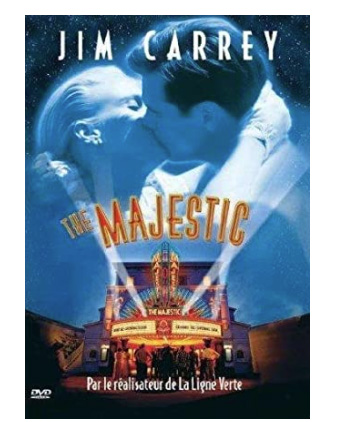
The Majestic
Synopsis
In 1951, Peter Appleton is a young Hollywood screenwriter who is suddenly blacklisted after being accused of communist sympathies. After a car accident, he washes up in a small California town with no memory of who he is. The townspeople mistake him for Luke Trimble, a war hero who disappeared during the Second World War, and welcome him as a son. As he helps restore the town's old movie theater, the Majestic, his true identity and the past he left behind begin to resurface.
The Making of the Film
The Majestic was directed by Frank Darabont, who had already made "The Shawshank Redemption" and "The Green Mile". The screenplay was written by Michael Sloane and is steeped in nostalgia for classic Hollywood and the small-town America of the 1950s. It is also a tribute to the films of Frank Capra, in particular "Mr. Smith Goes to Washington". The story is set against the backdrop of the McCarthy era, when the House Un-American Activities Committee investigated alleged communists in the entertainment industry. Jim Carrey took the lead role, in one of his most serious performances after "The Truman Show" and "Man on the Moon". The cast includes Martin Landau, Laurie Holden, David Ogden Stiers and Bob Balaban. The film was released at the end of 2001.
Reviews and Reception
Summary of Professional Reviews
Critics gave the film a mixed to negative reception. Many admired its sincerity and its love of cinema, but found it too long and too sentimental. Jim Carrey's dramatic turn was generally appreciated, although some reviewers felt the Capra-style tone was hard to sustain. Martin Landau was often singled out for his warm and touching supporting performance.
Audience Reception
The film was a commercial disappointment, earning far less than its sizable budget. Audiences who expected a Jim Carrey comedy were often surprised by its gentle and earnest tone. Over time, it has gained some defenders who appreciate its old-fashioned charm. It is now regarded as an overlooked but heartfelt tribute to the movies.
Themes Explored
The film is a love letter to cinema and to the power of shared stories. It deals with identity and memory, asking who we are once the past has been erased. The story takes a stand against political persecution and the suppression of free thought during the Red Scare. Community and belonging are central, as the town finds comfort in the idea that a lost son has returned. Grief and the long shadow of war run through the characters' lives. In the end, it is a plea to defend freedom of speech and the ideals on which a country is built.
Ending Explained
When Peter recovers his memory, he must choose between hiding from his past and facing the consequences. He is called to testify before the committee, where he delivers a heartfelt defense of the Constitution and the right to think freely. The speech turns the film into a statement about civil liberties. Afterward, he returns to the town that welcomed him, and the Majestic theater becomes a symbol of renewal and memory.
Meaning of the Title
"The Majestic" is the name of the old movie theater at the heart of the town. The grand name reflects the glory days of cinema, when theaters were palaces of dreams. It also suggests the dignity of ordinary people and the hope that something worn down can be restored.
Similar Films
- Mr. Smith Goes to Washington (1939): the classic story of idealism against corruption.
- It's a Wonderful Life (1946): a heartfelt tale of community and meaning.
- Cinema Paradiso (1988): a love letter to movie theaters.
- Good Night, and Good Luck (2005): a drama set during the McCarthy era.