

 Français
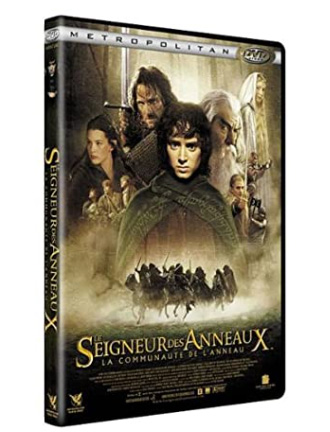
The Lord of the Rings: The Fellowship of the Ring
Synopsis
In the peaceful Shire, the young hobbit Frodo Baggins inherits a mysterious ring from his uncle Bilbo. The wizard Gandalf reveals that it is the One Ring, forged by the Dark Lord Sauron to rule all of Middle-earth. To destroy it, Frodo must carry it to the fires of Mount Doom in the land of Mordor. He sets out accompanied by eight companions, forming the Fellowship of the Ring, while the forces of darkness close in on them.
The Making of the Film
Peter Jackson had loved J.R.R. Tolkien's novel since his youth, and the 1978 animated adaptation by Ralph Bakshi left him hungry for a live-action version. In the mid-1990s, he and his partner Fran Walsh began developing the project, initially with Miramax, who wanted to condense the story into two films. When the studio pushed for even further cuts, Jackson refused and took the project elsewhere. New Line Cinema, led by Bob Shaye, made the bold decision to finance three films shot back to back. Jackson, Fran Walsh and Philippa Boyens wrote the screenplay, making many adaptation choices to keep the story coherent on screen. The entire production was based in New Zealand, whose landscapes became the face of Middle-earth. The studio's gamble was enormous, since a failure would have been disastrous for New Line. Jackson's passion and meticulous planning helped to convince everyone that the risk was worth taking.
Reviews and reception
Professional critics' summary
Critics were enthusiastic, praising the film's ambition, its visual splendour and its faithful spirit toward Tolkien's book. Many highlighted the cast, particularly Ian McKellen's Gandalf and Viggo Mortensen's Aragorn. Reviewers admired the seamless blend of practical effects, miniatures and digital technology. A few noted that the film moves slowly at times, but they agreed that the world-building was extraordinary.
Audience reception
The public embraced the film with huge enthusiasm, and it became a global phenomenon in December 2001. It earned more than 880 million dollars worldwide, making it one of the highest-grossing films of the year. Fans of the books were relieved to see their beloved story treated with such respect. The film also introduced a new generation to Tolkien's universe.
Awards
The Fellowship of the Ring received thirteen Academy Award nominations, including Best Picture and Best Director. It won four Oscars, for Best Cinematography, Best Visual Effects, Best Makeup and Best Original Score. Howard Shore's music was particularly acclaimed. The film also won several BAFTA Awards, including Best Film.
Filming anecdotes
Director's inspirations
Peter Jackson drew heavily on the illustrations of Alan Lee and John Howe, who joined the production as conceptual designers. He wanted Middle-earth to feel lived in and historically real, as if it had existed for thousands of years. His earlier films, such as Heavenly Creatures, taught him how to mix fantasy and emotion. He also brought his horror background to the darker moments, such as the Balrog and the Ringwraiths.
Production difficulties
Shooting all three films at the same time was a monumental challenge, lasting 438 days in total. Hundreds of sets, costumes and weapons had to be created, and Weta Workshop in Wellington became a major creative hub. Jackson used forced perspective and scale doubles so that actors of different heights could appear together. The production also faced tough weather conditions on location, particularly in the mountains of New Zealand.
Anecdote about a particular scene
The scene in which Gandalf faces the Balrog on the Bridge of Khazad-dum is widely regarded as one of the greatest moments of the trilogy. The line "You shall not pass!" has become a global cultural reference. Another famous detail is that the Black Riders were designed to be frightening without being fully visible, giving them a haunting presence. The film also made use of thousands of extras and prosthetic hobbit feet, which took hours to apply every day.
Originally planned casting
Stuart Townsend was initially cast as Aragorn but was replaced by Viggo Mortensen just days into filming. Sean Connery was reportedly offered the role of Gandalf but declined. Christopher Lee, a true Tolkien enthusiast, had hoped to play Gandalf but was finally cast as Saruman. Daniel Day-Lewis was also approached to play Aragorn but turned it down.
Themes explored
The central theme is the corrupting power of absolute authority, embodied by the One Ring. The film shows how even good people can be tempted by power and how ordinary individuals can resist it. Friendship and loyalty are essential, shown in the unbreakable bond between Frodo and Sam. The story celebrates courage in unexpected places, as small and humble hobbits carry the fate of the world. It also explores the clash between technology and nature, represented by the industrial ambitions of Saruman. Sacrifice runs through the narrative, from Gandalf's fall to Boromir's last stand. The film examines the idea of fellowship, showing how different peoples must unite against a common threat. At its heart, it is a story about hope in the darkest hours.
Ending explained
After the Fellowship is shattered by the attack of the Uruk-hai, Boromir dies defending Merry and Pippin, who are captured. Frodo realises that the Ring is corrupting his companions, and he decides to continue the journey alone. Sam refuses to let him go and follows him across the river, proving his unwavering loyalty. The two hobbits set out toward Mordor, determined to destroy the Ring. Meanwhile, Aragorn, Legolas and Gimli choose to pursue the captured hobbits. The film ends on this note of separation and perseverance, leaving the story open for the next chapter. It sets up the hope that the small and faithful can change the course of history. The final shot of Frodo and Sam gazing toward Mordor is a powerful image of determination.
Meaning of the title
The Lord of the Rings refers to Sauron, the Dark Lord who created the One Ring to rule over all the others. It is a reference to his claim of dominion over all peoples of Middle-earth. The subtitle The Fellowship of the Ring points to the group of nine companions who set out to destroy the Ring. The word fellowship highlights the importance of unity and friendship in the face of evil. The title therefore contrasts the tyranny of a single master with the cooperation of free peoples. It also gives the first film its own identity within the larger trilogy. Together, the words capture the epic conflict between domination and alliance.
Original Soundtrack
Howard Shore composed the monumental score, which won the Academy Award for Best Original Score. His themes for the Shire, the Fellowship and Rivendell are some of the most memorable in film history. Enya contributed the song May It Be, which won recognition and an Oscar nomination. The soundtrack remains a landmark of fantasy film music.
News
The world of Tolkien continues to expand, with the animated film The War of the Rohirrim released in 2024. A new live-action film, The Hunt for Gollum, is in development with Andy Serkis directing and Peter Jackson producing, and it is announced for 2027. The television series The Rings of Power also explores earlier events in Middle-earth.
Similar Films
The Two Towers and The Return of the King complete the original trilogy. The Hobbit trilogy, also directed by Peter Jackson, returns to Middle-earth with an earlier tale. The Chronicles of Narnia and the Harry Potter saga offer other great fantasy adventures. Willow and Dragonheart are other earlier fantasy films worth discovering.