

 Français
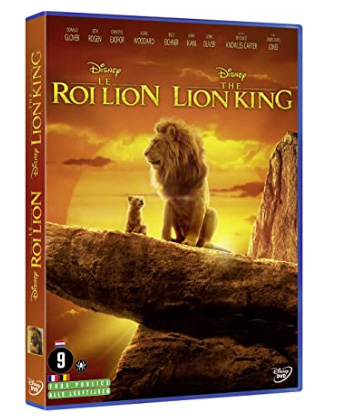
The Lion King
Synopsis
Young lion Simba is destined to become king of the Pride Lands, but his life changes dramatically after the death of his father, Mufasa. Manipulated by his uncle Scar, Simba believes he is responsible for the tragedy and runs away from home. He grows up far from the kingdom, living with the carefree Timon and Pumbaa. When his past catches up with him, Simba must decide whether to remain in exile or return to reclaim his rightful place and restore balance to the Pride Lands.
The Making of the Film
The 2019 version of The Lion King is a photorealistic reimagining of Disney's celebrated 1994 animated feature. The project was directed by Jon Favreau, who had previously experimented with digital filmmaking on The Jungle Book. Disney wanted to revisit one of its most successful animated stories using advanced computer-generated imagery and virtual production techniques. The screenplay retains the central narrative of Simba's journey while introducing visual and tonal adjustments. The production brought together an international voice cast, including Donald Glover as Simba, Beyoncé as Nala and James Earl Jones returning as Mufasa. The filmmakers also sought to recreate the African landscapes and wildlife with a high degree of visual realism. Hans Zimmer returned to compose the score, maintaining a musical connection with the original film. New musical material and updated performances were incorporated alongside familiar songs. The result combines nostalgia for the 1994 classic with a technological approach designed to make animated animals appear almost photographic.
Critical Reception
Professional Reviews: Critics praised the film's technical achievement, particularly the highly detailed digital animals and natural environments. The voice cast and musical elements also received positive attention. However, many reviewers felt that the photorealistic approach reduced the expressive facial animation that had made the original film emotionally powerful. Some considered the remake visually impressive but less emotionally engaging than its predecessor.
Audience Reception: The film attracted enormous worldwide interest, particularly from viewers who had grown up with the 1994 original. Its familiar songs, characters and story made it a major family entertainment event. The production achieved exceptional commercial success and became one of the highest-grossing films of 2019. Audience reactions were nevertheless divided over whether the new visual style improved or weakened the emotional impact of the story.
Awards: The Lion King received nominations and recognition for its visual effects, music and technical achievements. Its photorealistic animation attracted particular attention from visual-effects organisations. The film did not win the major Academy Awards for which it was considered, but its technical accomplishments were widely acknowledged. Its box-office success and global visibility were among its most significant achievements.
Behind-the-Scenes Facts
Director's Inspirations: Jon Favreau approached the project as an opportunity to combine the emotional structure of the original animated film with the visual realism of contemporary digital cinema. His previous experience on The Jungle Book helped establish the technical approach used for realistic animals and environments. The director wanted audiences to feel as though they were observing wildlife in a natural setting while still following a dramatic and musical story. The production also sought to preserve the cultural and musical identity of the original film.
Production Challenges: Creating believable animals that could sing and communicate human emotions was one of the production's greatest challenges. The visual-effects teams had to reproduce realistic fur, movement, lighting and landscapes while ensuring that the characters remained recognisable. The virtual production process allowed the filmmakers to explore digital environments as if they were physical sets. Maintaining emotional expression within the photorealistic style required careful work on character animation and voice performances.
A Particular Scene: The opening sequence featuring the presentation of young Simba was recreated as a visual tribute to the famous opening of the 1994 film. The filmmakers carefully reproduced its composition while using the new digital environments and realistic animal animation. The sequence also features the familiar song Circle of Life, which immediately connects the remake with its predecessor. Its visual and musical references were designed to evoke recognition and nostalgia.
Casting: James Earl Jones returned to voice Mufasa, reprising the role he had performed in the original animated film. Donald Glover was selected as Simba, while Beyoncé voiced Nala. Chiwetel Ejiofor played Scar, and Seth Rogen and Billy Eichner provided the voices of Pumbaa and Timon. The production brought together actors and musicians whose performances helped give the familiar characters a new interpretation.
Themes Explored
The circle of life is the film's central philosophical idea, expressing the relationship between all living creatures and the natural balance of the Pride Lands. Responsibility is another major theme, as Simba must learn that leadership requires more than personal ambition or inherited status. The loss of Mufasa forces him to confront grief, guilt and the consequences of manipulation. Family relationships shape the story, particularly through the influence of parents, mentors and the memory of loved ones. Courage is presented as the willingness to face painful truths rather than simply demonstrate physical strength. The contrast between Scar's selfish rule and Mufasa's responsible leadership explores the difference between power and legitimate authority. Friendship also plays an essential role, as Timon and Pumbaa help Simba survive and rediscover happiness. The story examines identity and the difficulty of accepting one's past. Ultimately, The Lion King celebrates responsibility, balance, belonging and the courage to become the person one is meant to be.
Ending Explained
Simba eventually returns to the Pride Lands after learning that Scar's version of the past was false and that he was not responsible for Mufasa's death. His return represents the moment when he stops running away from grief and accepts his responsibilities. The final confrontation exposes Scar's betrayal and reveals the truth to the other lions. Simba defeats his uncle and takes his rightful place as king, restoring the natural balance that had been destroyed under Scar's rule. The Pride Lands begin to recover as the consequences of Scar's destructive leadership disappear. The final presentation of Simba and Nala's cub echoes the opening of the story and completes the narrative circle. This repetition suggests that life continues through successive generations. Simba has become the responsible leader that Mufasa hoped he would be. The ending therefore combines personal reconciliation with the restoration of a wider natural and social order.
Meaning of the Title
The title The Lion King refers to the royal position occupied by the ruler of the Pride Lands. It also identifies Simba's journey from a young and inexperienced cub to a mature leader. The word Lion represents strength, courage and the natural world in which the story takes place. King refers not only to inherited authority but also to the responsibility required to protect a community. The title therefore describes both the central character and the political structure of the fictional kingdom. It also evokes the classic themes of succession, family legacy and rightful leadership. Simba must understand that being king is not simply a matter of birth but a duty toward the entire ecosystem. The title is direct and memorable, reflecting the timeless structure of the story. It connects the animal adventure with a universal narrative about maturity and responsibility.
Original Soundtrack
Hans Zimmer returned to compose the music for the 2019 film, building on the orchestral identity he created for the original animated feature. The score combines familiar musical themes with new arrangements designed to accompany the photorealistic presentation. Elton John and Tim Rice's songs remain central to the soundtrack, including Circle of Life, Hakuna Matata and Can You Feel the Love Tonight. Beyoncé contributed new musical material, including Spirit, which became one of the film's most prominent songs. The soundtrack also incorporates African musical influences and vocal performances that reinforce the setting. Zimmer's work provides continuity with the original film while giving the remake a broader cinematic scale.
Similar Films
- The Lion King (1994), the original animated film on which the remake is based.
- The Jungle Book (2016), Jon Favreau's earlier photorealistic Disney adaptation.
- Tarzan (1999), an animated adventure exploring family and belonging in the natural world.
- Spirit: Stallion of the Cimarron (2002), an animated story about freedom and the relationship between humans and nature.