

 Français
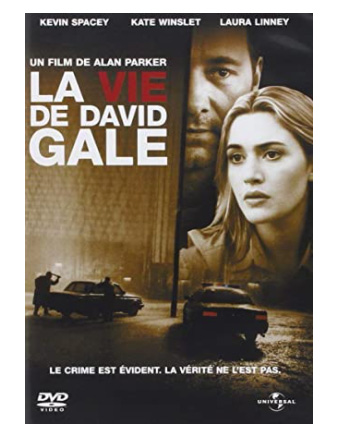
The Life of David Gale
Synopsis
David Gale was once a respected philosophy professor and a leading activist against the death penalty. Now he is on death row in Texas, convicted of raping and murdering a fellow campaigner. Just days before his execution, he grants an exclusive interview to a journalist named Bitsey Bloom, hoping to prove his innocence. As she investigates his story, Bitsey begins to doubt the evidence and races against the clock to uncover the truth.
The Making of the Film
The Life of David Gale was directed by Alan Parker from a screenplay by Charles Randolph, who would later win an Academy Award for "The Big Short". The film stars Kevin Spacey as David Gale, Kate Winslet as the journalist and Laura Linney as the activist who becomes a victim. It was shot largely in Texas, which provided a convincing backdrop for a story about capital punishment. Parker was known for politically and socially engaged films such as "Mississippi Burning" and "Midnight Express". The film was released in 2003 and tackled the death penalty with a thriller structure.
Reviews and Reception
Summary of Professional Reviews
Critics were largely negative about the film. Many felt that its message about the death penalty overpowered the story and that its twist was contrived. Others noted that the performances of Spacey and Winslet were strong despite the weak script. The film was often described as heavy-handed and implausible.
Audience Reception
The film performed modestly at the box office. Some viewers appreciated its attempt to combine a thriller with a social message, while others were put off by its melodramatic twists. It generated debate about the death penalty, which was one of the filmmakers' goals. Today, it is remembered mostly for its controversial final reveal.
Themes Explored
The film is a thriller that takes a firm stand against capital punishment. It explores the possibility that an innocent person might be executed and the irreversible nature of such a mistake. Truth and perception are central, as the journalist discovers that appearances can be deceiving. The story also examines the ethics of activism and how far someone might go for a cause. Guilt and sacrifice play important roles, especially in the film's final revelation. Ultimately, it is a drama about the human cost of a justice system.
Ending Explained
The film's final twist reveals that the woman supposedly murdered by Gale was in fact terminally ill and had planned her own death with his help. They had staged the scene to look like a murder so that an innocent man would be sentenced, in order to expose the flaws of the death penalty. Bitsey uncovers the truth too late to stop the execution. The ending is intended as a bleak and provocative statement about the risk of executing the innocent.
Meaning of the Title
The title presents the film as the story of a man's life, told from the vantage point of his final days. It invites the audience to examine the whole of his existence rather than only his alleged crime. It also carries a tragic irony, since the film ultimately shows how a life can be defined by a single event.
Similar Films
- Dead Man Walking (1995): a powerful drama about the death penalty.
- The Green Mile (1999): a story about death row and injustice.
- The Thin Blue Line (1988): a documentary about a wrongful conviction.
- A Time to Kill (1996): a courtroom drama about moral conflict.