

 Français
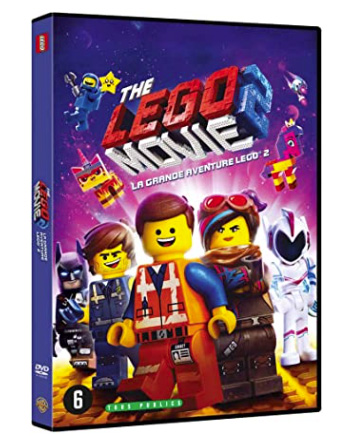
The Lego Movie 2: The Second Part
Synopsis
Five years after the events of the first film, Bricksburg has been transformed into the rugged wasteland of Apocalypseburg after an invasion by aliens from the Duplo world. When General Mayhem and her friends are kidnapped and taken to the Systar System, the cheerful Emmet sets out on a dangerous rescue mission. Along the way he meets the tough and mysterious Rex Dangervest, who promises to help him. As the mission unfolds, Emmet discovers that being optimistic might not be enough to save his friends.
The Making of the Film
The first Lego Movie was a surprise success in 2014, thanks to its inventive humour and its clever twist about a boy playing with his father's collection. Warner Bros. naturally wanted a follow-up as soon as possible, and Phil Lord and Christopher Miller agreed to write and produce it. They were busy at the time with Spider-Man: Into the Spider-Verse, so the directing duties passed to Mike Mitchell, who had worked on Trolls and Shrek Forever After. The writers chose to explore what happens when the child who owns the toys grows up and his little sister starts playing too. This idea allowed them to bring conflict and reconciliation between siblings into the story. The title itself plays with the notion of sequels, a joke the script keeps coming back to. They also wanted to poke fun at darker, grittier reboots in popular culture, hence the sudden arrival of Apocalypseburg. The aim was to preserve the original's spirit of satire while telling a more emotional story.
Reviews and reception
Professional critics' summary
Critics generally praised the film's wit, its energy and its ability to poke fun at its own franchise. Many felt that it did not quite match the freshness of the original, but still delivered clever jokes and a warm message. The songs and the voice work were singled out as highlights. A few reviews said the story was a bit more chaotic than its predecessor, though never boring.
Audience reception
The public liked the film, but box office results were noticeably lower than the first, which disappointed the studio. Families enjoyed the humour and the catchy music, while younger viewers loved the colourful new characters. Over time, the film has gained a more favourable reputation among fans who appreciate its meta humour. Many consider the song Everything Is Awesome and its follow-up Catchy Song to be some of the most memorable parts.
Awards
The film received nominations in several animation and music categories. Its songs in particular attracted attention for their humour and their inventive arrangements. The movie's main reward was the affection of fans of the Lego brand.
Filming anecdotes
Director's inspirations
Mike Mitchell took inspiration from post-apocalyptic films like Mad Max, reimagined with plastic bricks. He also wanted to reference science fiction and musical comedies, which gave the film a distinctive visual and comedic identity. The script's idea of a conflict between two children playing with toys mirrors real-life sibling rivalries. Mitchell kept the hand-built Lego look of the first film, even though everything was made in computer animation.
Production difficulties
The animators had to create every element in the film as though it were made of real Lego bricks, down to the scratches and fingerprints. This meant that each background and character had to follow rules of how bricks could actually fit together. The team collaborated with Lego designers to ensure that their creations would be possible in the real world. The result was a painstaking process that took years of work.
Anecdote about a particular scene
One of the best-known moments is the song Catchy Song, written by Tegan and Sara with The Lonely Island, which is meant to get stuck in your head. The film makes fun of itself by showing the characters struggling to get rid of the tune. Another memorable scene involves Batman's reaction to the new, glossier world around him. The film also contains many self-aware jokes about sequels and the conventions of storytelling.
Originally planned casting
Chris Pratt returned as Emmet and also voiced Rex Dangervest, a character who parodies the macho action heroes the actor has played. Elizabeth Banks, Will Arnett and Tiffany Haddish joined the cast of returning and new voices. Haddish voiced the shape-shifting Queen Watevra Wa'Nabi, a villain whose true intentions remain hidden for much of the story.
Themes explored
The film talks about growing up and the sometimes painful changes that come with it. It explores the conflict between brother and sister, and how imagination can both separate and unite them. Another theme is the idea of optimism versus cynicism, represented by Emmet's cheerfulness and Rex's hardened attitude. The movie also pokes fun at the pressure to become darker and tougher in order to be taken seriously. At a deeper level, it argues that you do not have to give up kindness to face the world. It also reflects on the importance of compromise, as the children learn to share their toys. Friendship and loyalty are central to Emmet's adventure. The film ends up being a gentle reminder that creativity thrives when people play together.
Ending explained
The film reveals that Rex Dangervest is actually a future version of Emmet, who became cynical after waiting for his friends in a destroyed world. He travelled back in time to try to prevent the same fate, but his plan would erase the very joy that makes Emmet who he is. Emmet chooses to remain himself and rescues his friends without giving in to bitterness. The real-world story shows that the conflict between Finn and his sister Bianca is resolved when they decide to play together. This reconciliation is mirrored by the way the Duplo invaders and the Lego citizens become friends. Rex fades out of existence, but his sacrifice leads to a more hopeful timeline. The final scenes show Emmet and Lucy together in a hopeful world where everything is awesome again. The film closes on a note that is optimistic and bittersweet at the same time.
Meaning of the title
The title The Second Part is a joke about the idea of sequels, since the film is openly aware of itself as a continuation. It also hints at the film's dual nature, with a second part of the story in the brick world and a second stage in the children's lives. The expression "second part" can also refer to the second half of a relationship or a stage in growing up. In this case, the title signals that things are about to change for Emmet and his friends. The film repeatedly mocks Hollywood conventions, and its title is the first of many such gags. Lego fans also see it as a reference to the growing complexity of the sets and stories. Despite its lightness, the name hides a thoughtful reflection on what it means to follow up a success.
Original Soundtrack
Mark Mothersbaugh composed the score, building on his inventive work for the first film. The film features original songs, including the unforgettable Catchy Song by Tegan and Sara, and a new version of Everything Is Awesome. The songs are filled with humour and cleverness and work as satirical elements in the story.
Similar Films
The first The Lego Movie is the obvious companion, along with The Lego Batman Movie and The Lego Ninjago Movie. Toy Story is another classic about toys and the children who play with them. Cloudy with a Chance of Meatballs, also written and directed by Phil Lord and Christopher Miller, shares a similar offbeat humour. Wreck-It Ralph and Sing are other animated films with an energetic, comedic spirit.