

 Français
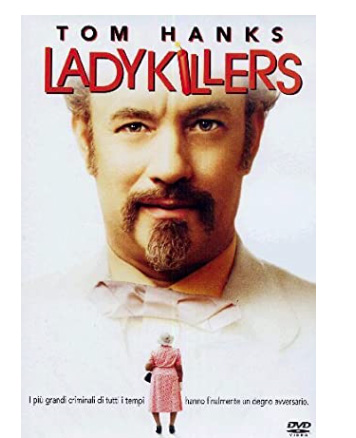
The Ladykillers
Synopsis
In the American South, the eccentric and verbose Professor Goldthwait Higginson Dorr rents a room in the home of the devout elderly widow Marva Munson. He claims to be a musician who needs a quiet cellar to rehearse with his band of Renaissance music. In reality, he and his bizarre gang are planning to rob a riverboat casino by tunnelling from her basement. When Mrs. Munson discovers the truth, the criminals decide there is only one solution: get rid of the sweet old lady.
The Making of the Film
The Ladykillers is a remake of the classic 1955 British comedy of the same name, directed by Alexander Mackendrick for Ealing Studios. In the original, Alec Guinness played the sinister criminal mastermind who is outsmarted by a sweet old lady. Joel and Ethan Coen, who had long admired the film, saw an opportunity to transport its dark humour to a very different setting. They moved the action from London to the Deep South, adding gospel music, church culture and a Southern dialect to the story. The brothers rewrote much of the script, keeping the original premise but reshaping the characters and jokes to suit their taste for eccentric dialogue. Tom Hanks was attached early on and relished the chance to play a verbose, theatrical villain. The film also gave the Coens a chance to work with a more mainstream star after the success of Intolerable Cruelty. In the end, the project was a mix of tribute and reinvention.
Reviews and reception
Professional critics' summary
Critics were divided, with many agreeing that the film was one of the Coens' lesser works. Several reviewers enjoyed the performances, particularly that of Tom Hanks and Irma P. Hall, but felt that the script was less sharp than usual. Comparisons with the original British film were frequent, and most considered the earlier version superior. Some, however, appreciated the film's Southern gothic atmosphere and its strange sense of humour.
Audience reception
The public's response was lukewarm, and the film performed modestly at the box office in comparison with the filmmakers' best-known works. It earned back its budget thanks to international sales and home video. Over the years, it has gained a small following among fans who enjoy its offbeat characters and gospel soundtrack. It remains one of the Coens' more polarising films.
Awards
The film was presented in competition at the Cannes Film Festival in 2004. Irma P. Hall's performance as Marva Munson was widely singled out as the film's highlight. It was not a major awards contender, but its soundtrack drew attention from music critics. The gospel compilation was particularly praised.
Filming anecdotes
Director's inspirations
The Coens drew from the 1955 original, but they also borrowed from Southern literature, especially the work of Edgar Allan Poe, whose lines are quoted by Professor Dorr. They wanted the story to feel like a dark fable with biblical overtones. The gospel music was inspired by their love of the American roots tradition. The result is a blend of Ealing comedy and Southern gothic humour.
Production difficulties
The film was shot in a hot and humid Southern setting, which made life difficult for the cast and crew during the summer months. Building the tunnel and interior sets required careful coordination to keep the comedy believable. The script's highly stylised dialogue demanded exact delivery from the actors. The Coens maintained their usual precision, requiring numerous takes to achieve the perfect rhythm.
Anecdote about a particular scene
One of the most memorable moments is the group's attempt to dispose of their bodies from a bridge, executed with comedic and macabre timing. Professor Dorr's odd laugh, reminiscent of a high-pitched wheeze, became a talking point among viewers. The scenes in the church showcase real gospel performances, adding authenticity and energy. Tom Hanks has said that creating Dorr's elaborate speech patterns was one of the most challenging parts of his career.
Originally planned casting
Tom Hanks was cast as Professor Dorr, a role originally played by Alec Guinness in the 1955 film. Marlon Wayans, J.K. Simmons and Tzi Ma were chosen to play members of the gang. Irma P. Hall, a veteran stage and screen actress, was selected to portray Marva Munson with warmth and dignity.
Themes explored
The film plays with the contrast between innocence and criminality, showing how a pious old woman can defeat a gang of professionals. It also explores the nature of faith, with Mrs. Munson's religious devotion standing in opposition to the thieves' greed. The story mocks the pretensions of intellectuals, as Professor Dorr hides his crimes behind flowery speech. Southern identity is another key theme, shown through the film's language, music and religious culture. The movie also addresses racial and generational differences, with comedic tension between the characters. Greed and moral punishment are central, since each criminal meets an ironic fate. The script suggests that justice can arrive in strange and comical ways. In the Coens' typical fashion, the film pairs absurdity with a sense of cosmic order.
Ending explained
The gang members, one by one, meet gruesome and absurd ends, each as a result of their own scheming. Dorr is the last survivor, but he is struck by a statue in a final comic twist, as if fate itself were punishing him. Mrs. Munson, who has remained oblivious to the extent of the gang's plan, ends up with the stolen money. She then decides to donate it to a university, an act that has an ironic and religious tone. The sheriff and the community see her as a woman blessed by providence. The ending reinforces the film's sense of divine justice, administered through coincidences. It also serves as a final jab at the criminals who underestimated an elderly widow. The film closes with a feeling of gospel redemption, tinged with dark humour.
Meaning of the title
The title The Ladykillers plays on the double meaning of the word. In popular language, a ladykiller is a charming man who seduces women. Here, however, the title points to the criminals' plan to murder the old woman who stands in their way. The irony is that it is the old lady who ends up defeating the gang. The title also carries over from the 1955 original, creating a link between the two versions. Since the Coens kept the title unchanged, they invited comparison and acknowledged their debt to the classic. It sets the tone for a film that mixes affection, menace and comedy.
Original Soundtrack
The soundtrack, produced by T Bone Burnett, is a showcase of gospel music, with performances by artists such as The Soul Stirrers and Blind Boys of Alabama. The songs are woven into the narrative and give the film its distinctive musical identity. The album was well received and was praised in gospel music circles.
Similar Films
The original The Ladykillers from 1955 is the essential comparison. Other Coen brothers films, such as Fargo, Raising Arizona and Burn After Reading, share the same darkly comic sensibility. Arsenic and Old Lace is a classic comedy where sweet old ladies hide a murderous secret. Intolerable Cruelty and O Brother, Where Art Thou? are also worth exploring.