

 Français
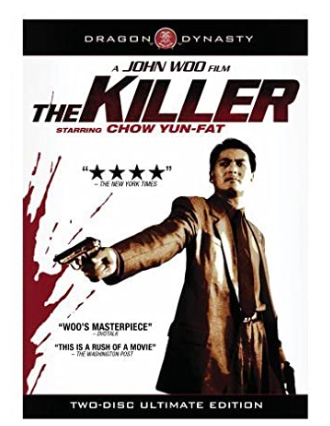
The Killer
Synopsis
A professional assassin named Ah Jong accidentally injures a nightclub singer, Jennie, during a shooting that leaves her blind. Overwhelmed by guilt, he decides to accept one final assignment to pay for an operation that could restore her sight. His plan becomes increasingly complicated when a determined police inspector begins closing in on him. As the two men become entangled in a dangerous pursuit, unexpected similarities emerge between them, challenging their ideas of justice, loyalty and honor.
Film Origins
John Woo developed The Killer after establishing his reputation in Hong Kong action cinema with A Better Tomorrow. He wanted to create a tragic crime story in which spectacular action would be inseparable from genuine human emotion. The director drew inspiration from French crime films, particularly Jean-Pierre Melville's Le Samouraï, as well as traditional Chinese stories about honorable warriors and self-sacrifice. These influences helped shape the central character, a professional killer whose personal code conflicts with the violence of his profession. Woo also wanted to explore the relationship between two men who initially appear to be enemies but gradually develop mutual respect. The screenplay was written by Woo himself, allowing him to combine melodrama, crime fiction and highly choreographed action. Chow Yun-fat was chosen for the leading role, bringing a charismatic and vulnerable presence to the character. The project became one of the defining examples of the Hong Kong heroic bloodshed movement.
Critical Reception
The film received considerable praise from critics who admired its ambitious combination of action, tragedy and emotional intensity. Reviewers frequently highlighted John Woo's visual imagination, particularly his use of slow motion, carefully composed gunfights and expressive camera movements. Chow Yun-fat's performance was widely appreciated for giving the assassin both elegance and emotional depth. Some critics considered the film excessively melodramatic and its violence deliberately extravagant. Nevertheless, its distinctive style helped establish Woo as one of the most influential action directors of his generation.
The film developed a strong following among international audiences, especially among viewers interested in Hong Kong action cinema. Its reputation grew considerably after its release outside Asia, where its combination of spectacular action and tragic storytelling attracted filmmakers and film enthusiasts. Chow Yun-fat became an international action icon partly through the popularity of this film. The movie is now frequently cited as one of John Woo's greatest achievements. Its influence can be seen in numerous later action films, particularly those featuring stylized gunfights and morally conflicted heroes.
Although it did not receive major recognition from the Academy Awards or the Golden Globes, the film earned an important place in the history of international genre cinema. Its reputation has been strengthened by retrospectives, restorations and its subsequent recognition by influential film institutions. John Woo's direction and Chow Yun-fat's performance remain central to discussions of the film. Its enduring influence is arguably more significant than its original awards record.
Behind the Scenes
John Woo's principal inspiration was the contrast between the brutality of an assassin's profession and his capacity for compassion. He wanted the action sequences to express the characters' emotions rather than function merely as spectacular entertainment. The director also drew on the visual traditions of Western crime films and Chinese martial arts cinema. His approach transformed the gunfight into a dramatic form of choreography.
The production took place in Hong Kong, where the filmmakers had to coordinate complex action sequences in streets, buildings and other confined locations. The film's elaborate shootouts required careful planning, precise timing and extensive coordination between performers and stunt teams. Woo's ambitious visual approach demanded considerable control over camera movements, lighting and the positioning of actors. The result was a production whose action scenes were unusually elaborate for Hong Kong cinema at the time.
The church sequence is among the film's most memorable passages. It brings together religious imagery, desperate violence and the emotional bond developing between the central characters. Woo uses the location to create a striking contrast between a place associated with peace and the destructive world inhabited by his protagonists. The white doves appearing in the sequence became one of the director's most recognizable visual signatures.
Chow Yun-fat was an essential part of the project from its development. John Woo had already worked with him on A Better Tomorrow and understood how effectively the actor could combine physical confidence with emotional vulnerability. Danny Lee was selected to play Inspector Li, providing a strong counterpoint to Chow Yun-fat's assassin. Sally Yeh completed the central trio as Jennie, the singer whose fate gives the story its emotional foundation.
Themes
The film explores the possibility of redemption in a world governed by violence. Ah Jong is a professional killer, yet his feelings of guilt and compassion reveal a moral conscience that contradicts his occupation. His attempt to help Jennie becomes a way of seeking forgiveness for an irreversible mistake. The story also examines honor, loyalty and the importance of keeping promises, even when doing so requires personal sacrifice.
The relationship between the assassin and Inspector Li challenges the traditional division between criminals and representatives of the law. Although they occupy opposite sides of the justice system, both men possess a personal code and a strong sense of responsibility. Their growing respect suggests that moral character cannot always be judged through professional identity. Friendship emerges in an unexpected place, shaped by danger and mutual understanding.
Religion and sacrifice are also important elements of the film. Churches, doves and other Christian images provide a symbolic contrast to the violence surrounding the characters. The film repeatedly asks whether an individual can escape the consequences of past actions. Its tragic atmosphere suggests that redemption may be possible spiritually, even when the physical world offers no easy escape.
Ending Explained
The final confrontation brings the film's central relationships to their tragic conclusion. Ah Jong, Inspector Li and Jennie are caught in a situation where loyalty and violence become impossible to separate. The assassin's efforts to protect the woman he injured have already placed him in direct conflict with powerful criminals. Inspector Li, who has gradually come to understand his adversary, must confront the limits of his own position as a police officer. The final moments emphasize the devastating cost of the world in which these characters live. Ah Jong's fate is deliberately tragic, turning his attempt at redemption into an act of ultimate sacrifice. Jennie's future remains emotionally uncertain, while the surviving characters are left to face the consequences of their choices. The ending reinforces the film's central idea that honor and compassion can exist even in a profoundly corrupt environment.
Meaning of the Title
The title The Killer refers directly to Ah Jong, the professional assassin at the center of the story. At first, it appears to define him entirely through his occupation and the violence he commits. As the narrative develops, however, the character becomes more complex than this simple label suggests. He is also a man capable of love, remorse, loyalty and self-sacrifice. The title therefore creates an intentional contrast between the identity society assigns him and the humanity that remains beneath it.
Similar Films
- A Better Tomorrow (1986), John Woo's influential crime drama about loyalty, brotherhood and redemption.
- Hard Boiled (1992), another spectacular Hong Kong action film directed by John Woo.
- Le Samouraï (1967), Jean-Pierre Melville's minimalist portrait of a solitary professional killer.
- Bullet in the Head (1990), a tragic John Woo film exploring friendship, violence and moral collapse.