

 Français
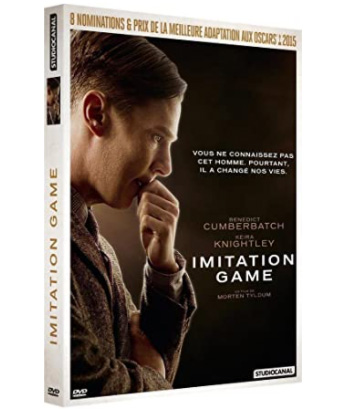
The Imitation Game
Synopsis
During the darkest days of World War II, a brilliant British mathematician, cryptanalyst, and eccentric genius named Alan Turing is recruited by MI6 to lead a top-secret team at Bletchley Park tasked with cracking the supposedly unbreakable German Enigma cipher. Working in secret against impossible odds and government skepticism, Turing designs a revolutionary electromechanical machine to decode enemy messages, ultimately saving millions of lives and shortening the war by years. Despite his historic wartime contribution, Turing faces devastating persecution from the British government due to his homosexuality. The biographical historical drama honors a brilliant mind.
The Making of the Film
Director Morten Tyldum adapted the film from Andrew Hodges' biography Alan Turing: The Enigma, drawn to the powerful historical tragedy and wartime triumph of the mathematician. The inspiration stemmed from wanting to bring Turing's classified Bletchley Park achievements and his tragic post-war persecution to global cinematic prominence. The production team worked closely with historical consultants and visited Bletchley Park to ensure authentic reproduction of the cryptographic machines. The script was structured to balance tense wartime codebreaking with Turing's poignant personal struggles.
Critical Reception and Reviews
Professional critics widely acclaimed the film for its gripping screenplay, elegant direction, and Benedict Cumberbatch's powerhouse lead performance as Alan Turing. Reviewers lauded Cumberbatch for capturing Turing's brilliant intellect, social awkwardness, and inner vulnerability. Critics also highlighted Keira Knightley's stellar supporting turn as fellow cryptanalyst Joan Clarke. Public reception was overwhelmingly enthusiastic worldwide, turning it into a major box-office success. The film won the Academy Award for Best Adapted Screenplay.
Filming Anecdotes
Director Morten Tyldum drew visual inspiration from classic WWII historical dramas, vintage espionage thrillers, and archival Bletchley Park photographs. Production took place on location across historic English estates and Sherborne School, utilizing authentic period cryptanalytic equipment replicas. During the filming of tense codebreaking workshop scenes, Benedict Cumberbatch studied mathematics and Turing's personal writing habits extensively. The replica of Turing's Enigma-breaking machine was constructed with meticulous historical precision.
Themes Explored
The film explores wartime cryptography, government secrecy, LGBTQ+ persecution, genius versus societal conformity, and historical recognition.
The poignant epilogue details Turing's tragic forced chemical castration by the British government following his conviction for homosexuality, leading to his untimely death.
Meaning of the Title
The title refers doubly to Alan Turing's philosophical test for artificial intelligence (the Turing test) and the deceptive cryptographic game played against Nazi Germany.
Original Soundtrack
Alexandre Desplat composed an extraordinary, Oscar-nominated orchestral score featuring ticking clock motifs and rapid piano arpeggios that mirrored the frantic codebreaking machine pacing.
The film remains a celebrated historical masterpiece honored for restoring Alan Turing's legacy to global consciousness.
The Theory of Everything, Darkest Hour, Oppenheimer