

 Français
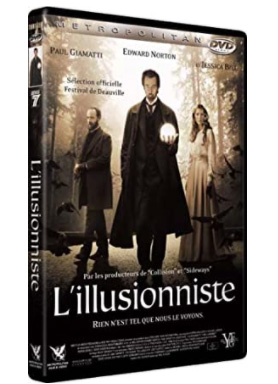
The Illusionist
Synopsis
Set in late 19th-century Vienna, the film follows Eisenheim, a mysterious and immensely talented stage magician who captivates the public with seemingly impossible paranormal feats. His growing fame attracts the attention of the arrogant Crown Prince Leopold, who is engaged to Sophie, Eisenheim's childhood sweetheart and forbidden love. As Eisenheim uses his illusions to challenge the oppressive political regime and reconnect with Sophie, a cunning chief inspector launches an intense investigation to expose him as a fraud. When tragedy strikes, a complex game of cat-and-mouse ensues, blurring the line between magic and reality.
The Making of the Film
Writer-director Neil Burger adapted the screenplay from Steven Millhauser's acclaimed short story 'Eisenheim the Illusionist'. Burger was fascinated by the historical backdrop of fin-de-siècle Vienna, a period marked by rapid technological change, political unrest, and a cultural obsession with spiritualism and stage magic. He wanted to craft a sophisticated period mystery where magic serves as both a theatrical spectacle and a subtle tool for political and romantic subversion.
Critical Reception
Professional critics praised the film for its elegant atmosphere, intricate plotting, stellar performances by Edward Norton and Paul Giamatti, and Philip Glass's mesmerizing musical score. Reviewers admired how the film maintained a classic Hollywood storytelling elegance while keeping audiences guessing until the final twist.
The general public warmly embraced the movie, appreciating its romantic core, clever deception mechanics, and sophisticated period aesthetics, making it a strong box office success for an independent drama.
The film received an Academy Award nomination for Best Cinematography, recognizing Dick Pope's sepia-toned, magical photography that evoked early photography and vintage optical illusions.
Filming Anecdotes
Director Neil Burger drew inspiration from 19th-century stage magicians like Robert-Houdin, vintage magic posters, and historical accounts of Viennese court politics. He hired professional magicians to train Edward Norton so that all stage magic tricks were performed practically on set without digital CGI trickery.
Production faced tight budgetary constraints and a compressed shooting schedule in historic Czech locations, requiring the cast and crew to work efficiently to capture the authentic architectural grandeur of old Europe.
During the shooting of the complex orange tree illusion scene, Norton had to execute precise sleight-of-hand movements while maintaining intense dramatic eye contact with the audience extras.
Initially, various actors were scouted for the lead roles before Edward Norton and Paul Giamatti were cast, bringing incredible gravitas and intellectual sparring to the central cat-and-mouse dynamic.
Themes Explored
The film explores the nature of illusion versus truth, the corrupting influence of absolute political power, enduring childhood love defying social class barriers, and the psychological need for wonder in a cynical world.
Ending Explanation
The ending reveals through a clever flashback that Eisenheim and Sophie staged her fake murder as part of an elaborate, long-con illusion to escape the corrupt Crown Prince, leaving Inspector Uhl to quietly appreciate the greatest magic trick ever played upon the state.
Title Significance
The title 'The Illusionist' refers not only to the protagonist's profession as a master stage magician but also metaphorically to the fragile nature of political authority and social hierarchy in imperial Vienna.
Similar Films
The Prestige, The Illusionist, Sherlock Holmes, Now You See Me