

 Français
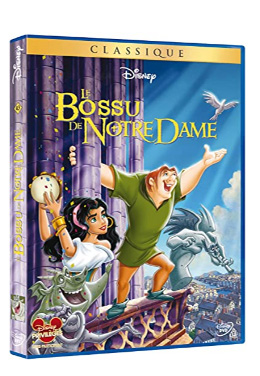
The Hunchback of Notre Dame
Synopsis
Set in Paris during 1482, Quasimodo is a kind-hearted, deformed bellringer who has been locked away inside the towers of Notre Dame Cathedral by his cruel master, Archdeacon Claude Frollo. Yearning to experience the outside world, Quasimodo sneaks down to attend the annual Festival of Fools, where he is befriended by a compassionate Romani dancer named Esmeralda. Frollo launches a fanatical crusade to destroy the Romani people and claims Esmeralda for himself, forcing Quasimodo to risk his life to protect her. Through courage and self-sacrifice, Quasimodo helps save the city and finds acceptance among humanity.
The Making of the Film
Directors Gary Trousdale and Kirk Wise adapted the animated musical feature loosely from Victor Hugo classic 1831 Gothic novel. Walt Disney Animation Studios embarked on this ambitious project following their massive success with Beauty and the Beast and Aladdin, aiming to tackle darker, more mature thematic material. The production combined groundbreaking computer-generated crowd animation with traditional hand-drawn artistry.
Critical Reception
Critics universally acclaimed The Hunchback of Notre Dame upon its release for its daring dark themes, stunning artistic ambition, and operatic musical score by Alan Menken and Stephen Schwartz. Reviewers praised Disney for tackling complex subjects like religious hypocrisy, xenophobia, and lust without talking down to family audiences. The film was celebrated as a majestic masterpiece of animation.
Public reception was very strong, turning the animated musical into a major global box-office blockbuster. Audiences were awed by the breathtaking choral music, towering cathedral visuals, and emotional resonance. It remains one of Disneys most daring and mature animated classics.
The film earned an Academy Award nomination for Best Original Musical or Comedy Score by Alan Menken and Stephen Schwartz, alongside Golden Globe nominations. Its choral soundtrack is widely regarded as one of Disneys finest musical achievements. Its artistic legacy endures.
Filming Anecdotes
Directors Gary Trousdale and Kirk Wise drew inspiration from Victor Hugos literary masterpiece, French Gothic architecture, and classic universal monster films. They visited Paris and Notre Dame Cathedral extensively during pre-production to study lighting, gargoyles, and stone masonry. Animators utilized revolutionary digital software to render thousands of cheering medieval citizens during festival scenes.
Production faced unique challenges balancing Disneys traditional family-friendly tone with the dark, mature religious themes of Hugos original novel. Tony Jay brought terrifying, operatic menace to Judge Frollo through his unforgettable vocal performance. Tom Hulce infused Quasimodo with gentle vulnerability and emotional depth.
A memorable sequence involves Quasimodo swinging across the cathedral facade to rescue Esmeralda from the pyre while shouting sanctuary over the chanting crowd. The scene combines thundering choral music with breathtaking visual scale. The emotional release remains unforgettable.
The casting process brought together talented Broadway and voice actors to capture the operatic scope of the music. Tom Hulce was cast as Quasimodo for his emotive vocal range. Demi Moore provided Esmeralda speaking voice, while Heidi Moreshead provided her singing vocals. Tony Jay was chosen for Frollo.
Themes Explored
The film explores religious fanaticism, xenophobia, prejudice against outsiders, inner beauty versus exterior appearance, and redemption. It critiques institutional corruption and hypocrisy. True monstrosity comes from cruelty rather than physical deformity.
NULL
Title Significance
The title refers to the iconic cathedral setting and its tragic, bellringing resident Quasimodo. It highlights the architectural and emotional centerpiece of Victor Hugos historical novel.
NULL
NULL
Similar Films
Other similar films include Beauty and the Beast, The Phantom of the Opera, and The Hunchback of Notre Dame (1939).