

 Français
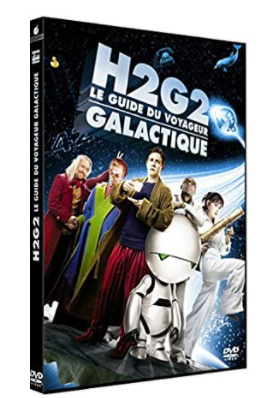
The Hitchhiker's Guide to the Galaxy
Synopsis
Arthur Dent, a perfectly ordinary Englishman, has the worst morning of his life when his house is about to be demolished. Moments later, his friend Ford Prefect reveals that he is an alien and that the Earth itself is about to be destroyed to make way for a hyperspace bypass. The two hitch a ride on a passing spaceship and set off on a wildly absurd journey across the galaxy with the help of a very peculiar electronic book. Along the way, they meet a two-headed president, a depressed robot and the secrets of the meaning of life.
The Making of the Film
The film is based on the beloved science-fiction comedy franchise created by Douglas Adams, which began as a BBC radio series in 1978 and grew into novels, a television series and more. Adams spent years trying to bring the story to the big screen and co-wrote the screenplay with Karey Kirkpatrick, but he died in 2001 before the film was completed. Garth Jennings, who came from the world of music videos, directed the film in his feature debut. Martin Freeman played Arthur Dent, with Mos Def as Ford, Sam Rockwell as the egocentric Zaphod Beeblebrox and Zooey Deschanel as Trillian. Alan Rickman voiced the gloomy robot Marvin, while Stephen Fry provided the voice of the Guide. The film was released in the spring of 2005.
Reviews and Reception
Summary of Professional Reviews
Critics gave the film a mixed to positive reception. Many enjoyed its British wit, inventive design and the charm of its cast, particularly Martin Freeman and Sam Rockwell. Others felt that it struggled to capture the unique humor of the books and that its pacing was uneven. Alan Rickman's voice work as Marvin was widely praised.
Audience Reception
The film earned over 100 million dollars worldwide, a respectable if not spectacular result. Fans of the original books were divided, with some delighted to see their favorite characters and others missing the subtlety of Adams's writing. It has since become a cult favorite among science-fiction comedy fans. Many viewers remember it for its playful opening number and its quirky sense of humor.
Filming Anecdotes
Production Challenges
Adapting a story that exists in several different forms, each with its own variations, was a major challenge. The filmmakers chose to build many of the alien characters and sets with practical effects, including puppets created by the Jim Henson's Creature Shop. The character of Marvin was brought to life by a performer in a suit, with Alan Rickman supplying the voice separately.
Themes Explored
The film is a comic exploration of the absurdity of existence and humanity's tiny place in the universe. It pokes fun at bureaucracy, with the alien Vogons as the ultimate symbol of pointless paperwork. The search for meaning is treated with irony, most famously through the supercomputer that calculates the answer to life, the universe and everything. Friendship and love also play a role, as Arthur slowly finds courage and connection. Technology is presented as both helpful and ridiculous, as the Guide itself shows. Above all, it is a story that celebrates curiosity and not panicking.
Ending Explained
By the end of the film, Arthur has learned that the Earth was a giant computer designed to find the question to the ultimate answer, which turns out to be 42. After the Earth is rebuilt, he and Trillian choose to continue traveling together. The ending leaves the door open for further adventures, in keeping with the book series. It closes on the film's characteristic mix of absurdity and warmth.
Meaning of the Title
The title refers to the Guide, a wildly popular electronic book that offers advice to travelers across the galaxy. The word "hitchhiker" suggests Arthur's unplanned journey, as he literally catches a ride off the planet. The title perfectly sums up the film's sense of adventure and randomness.
Soundtrack
The film opens with the song "So Long, and Thanks for All the Fish", a cheerful musical number performed by dolphins as they leave the Earth. The score was composed by Joby Talbot, who blends playful orchestral writing with quirky sound effects. The music fits the humor of the story while giving it a touch of wonder.
Similar Films
- Spaceballs (1987): a parody of science-fiction adventure.
- Galaxy Quest (1999): a comic tribute to space opera.
- Hot Fuzz (2007): another British comedy with a sharp sense of humor.
- Monty Python and the Holy Grail (1975): a classic absurdist British comedy.