

 Français
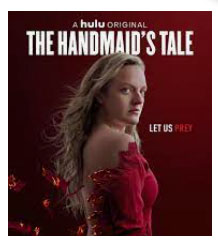
The Handmaid's Tale
Synopsis
Note: Alternative English slug format / Series premiere year 2017. Set in the dystopian totalitarian regime of Gilead—formerly the United States—society is reorganized under a religious fundamentalist dictatorship following a fertility crisis. Stripped of their rights, jobs, and financial independence, the few remaining fertile women are subjugated as Handmaidens assigned to bear children for the ruling elite. Forced into institutionalized sexual servitude, a woman named June Osborne fights desperately to survive, protect her memories, and find her stolen daughter. Operating under her assigned slave name Offred, she secretly joins an underground resistance network. Ultimately, this harrowing dystopian masterpiece explores female resilience, state oppression, and the urgent fight for freedom.
The Making of the Film
Creator and showrunner Bruce Miller adapted Margaret Atwood's iconic 1985 dystopian masterpiece to create a visually stunning, deeply disturbing prestige television series. The project was conceived as a chilling warning against the fragility of democracy and women's rights, gaining renewed cultural resonance upon its release. Miller drew inspiration from historical totalitarian regimes, religious fundamentalism, and Atwood's timeless text. The production prioritized striking crimson-and-white costume design, symmetrical cinematic framing, and Elisabeth Moss's powerhouse lead performance.
Critical Reception
Critics offered overwhelming critical acclaim upon release, praising its chilling prescience, cinematic brilliance, and Elisabeth Moss's towering lead performance. Reviewers lauded the series for translating Margaret Atwood's literary classic into a visceral, deeply immersive television nightmare that felt uncomfortably urgent. The performances of Ann Dowd, Yvonne Strahovski, and Samira Wiley received universal acclaim for embodying complex, morally compromised characters. It established itself instantly as a towering triumph of modern prestige television.
Audiences were completely captivated and emotionally devastated by the harrowing dystopian drama, turning it into a massive global cultural phenomenon. Viewers worldwide praised the iconic visual symbolism of the Handmaids' red cloaks, the searing emotional stakes, and the relentless fight for survival. It became a powerful cultural touchstone referenced globally in political protests for women's rights. Many hailed it as a defining television masterpiece of the 2010s.
The Handmaid's Tale won eight Primetime Emmy Awards in its first season alone, including Outstanding Drama Series, Outstanding Lead Actress for Elisabeth Moss, and Outstanding Supporting Actress for Ann Dowd. It also triumphed at the Golden Globe Awards, winning Best Television Series – Drama. The show's striking cinematography, directing, and writing swept every major global honor. These prestigious accolades cemented its legacy as an immortal television milestone.
Behind-the-Scenes Stories
Bruce Miller and executive producer Warren Littlefield were deeply inspired by Margaret Atwood's novel, treating the adaptation as an urgent historical document of a possible future. They wanted to ensure the visual world of Gilead felt tactile, beautiful, and terrifyingly plausible rather than a cheap sci-fi wasteland. The visual style utilized iconic crimson capes, blinding white bonnets, symmetrical Kubrick-esque framing, and haunting pop music needle drops. The creators also consulted with human rights experts to ensure the depiction of state oppression felt realistic.
Shooting on location across historic neighborhoods in Toronto presented immersive urban production textures for the prestige crew. The production team designed meticulously detailed interior sets that mirrored the sterile, oppressive architecture of Gilead. Elisabeth Moss subjected herself to grueling emotional and physical conditions to portray June's unrelenting defiance. Despite the harrowing nature of the subject matter, the cast and crew maintained a deeply collaborative and supportive working environment.
During the filming of the intense silent protest and resistance sequences, Elisabeth Moss brought fierce, unflinching intensity to her close-up reaction shots. Ann Dowd brought chilling complexity to the tyrannical Aunt Lydia, humanizing a monstrous character. Crew members reported feeling profoundly moved by the solidarity and resilience demonstrated by the female ensemble on set. The profound dedication of the cast gave the series its unforgettable emotional power.
Casting directors secured an elite prestige television ensemble to anchor the dystopian nightmare. Elisabeth Moss was secured for the lead role of June Osborne, delivering a career-defining, Emmy-winning performance. Ann Dowd, Yvonne Strahovski, and Joseph Fiennes were cast as the formidable antagonists and allies. The supporting cast featuring Alexis Bledel and Samira Wiley added vital emotional heart.
Themes Explored
The film heavily explores state-sponsored misogyny, religious fundamentalism, and the systematic dismantling of women's bodily autonomy. It examines resistance, trauma, survival, and the fierce maternal instinct to protect children at all costs. Another core motif is complicity, institutional terror, and the fragility of democratic institutions. It also touches upon hope, rebellion, and underground solidarity.
Ending Explained
The long-running series explores June's ongoing transformation from an oppressed Handmaiden into a fierce leader of the Mayday resistance, orchestrating daring rescue missions for children out of Gilead. As the totalitarian regime begins to fracture from internal civil war and international pressure, June relentlessly fights to dismantle Gilead once and for all. The narrative balances harrowing personal trauma with the thrilling hope of ultimate liberation. This epic overarching finish celebrates the unbreakable human spirit and the certainty that tyranny will eventually fall.
Meaning of the Title
The title refers directly to the assigned societal role and status of fertile women in Gilead, who are stripped of their human names and reduced to reproductive vessels for the ruling commanders. It highlights the institutionalized misogyny at the heart of the fundamentalist regime. The provocative phrasing sets a chilling, literary tone for the dystopian drama. It encapsulates the core subjugation fought against by the protagonist.
Similar films and shows include Children of Men, The Handmaid's Tale (1990 film), Station Eleven, and The Man in the High Castle, which feature dystopian societies, totalitarian regimes, and survival resistance.