

 Français
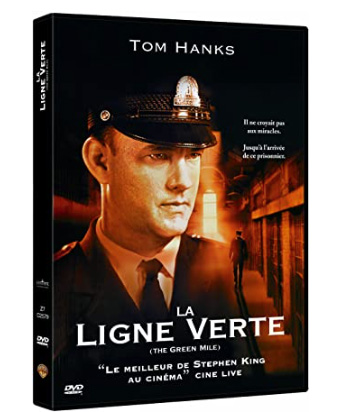
The Green Mile
Synopsis
In a Louisiana prison during the 1930s, death-row supervisor Paul Edgecomb remembers an extraordinary prisoner named John Coffey. Coffey is a physically imposing man convicted of murdering two young girls, yet his gentle behavior seems completely at odds with the accusation. Paul soon discovers that the prisoner possesses a mysterious ability to heal people and animals. As the guards become increasingly aware of Coffey's unusual nature, they begin to question whether the justice system has condemned an innocent man. The story explores compassion, faith and the terrible consequences of an irreversible punishment.
The film is based on Stephen King's novel The Green Mile, originally published in six installments in 1996. Frank Darabont adapted the story for the screen after previously directing The Shawshank Redemption, another acclaimed adaptation of King's work. The novel attracted attention for combining a prison drama with elements of fantasy, mystery and moral reflection. Darabont was interested in the emotional relationships between prison guards and prisoners, as well as the contrast between the apparent simplicity of John Coffey and the extraordinary nature of his gift. The screenplay preserves the story's historical setting and its gradual revelation of Coffey's powers. The project also offered an opportunity to explore questions of justice, innocence and spiritual responsibility through a large ensemble cast. The film became one of the most successful and emotionally remembered Stephen King adaptations.
The film received generally favorable reviews, with critics praising its performances, emotional storytelling and production design. Tom Hanks was widely appreciated for his restrained portrayal of Paul Edgecomb, while Michael Clarke Duncan received particular praise for bringing tenderness and dignity to John Coffey. Some critics felt that the film was overly sentimental or too long, but many viewers considered its emotional approach one of its greatest strengths. The audience response was exceptionally strong, and the film became a major box-office success. Its reputation has grown over time, especially among viewers who value character-driven dramas with moral and supernatural elements. The film received four Academy Award nominations, including Best Picture, Best Supporting Actor for Duncan and Best Adapted Screenplay. It also received recognition from several critics' organizations and award bodies. Its lasting popularity reflects the power of its performances and its exploration of justice and compassion.
Frank Darabont chose to preserve much of the novel's episodic structure, allowing the relationships among the guards and prisoners to develop gradually. The production recreated a 1930s death-row environment with carefully designed cells, corridors and institutional details. Michael Clarke Duncan's casting was especially important because the role required a performer who could combine imposing physical presence with extraordinary gentleness. The actors spent time developing the routines and relationships of the prison staff so that the environment would feel believable. The mouse Mr. Jingles became one of the production's most memorable elements and required careful work with trained animals and visual effects. The film also used lighting and sound to distinguish the ordinary prison environment from the mysterious events surrounding Coffey. Its long running time allowed the filmmakers to retain many of the novel's emotional details.
Themes Explored
The film examines justice, innocence and the moral limits of punishment. John Coffey's kindness challenges the assumptions made about him because of his appearance and the crime for which he has been convicted. The story also explores compassion, faith and the possibility of miracles in a harsh and imperfect world. Racism and prejudice influence the way characters are judged and treated. The death penalty becomes a central moral question because the prison guards must carry out a sentence even when they begin to doubt the prisoner's guilt. The film ultimately asks whether human beings have the wisdom to decide who deserves to live or die.
Ending Explained
John Coffey is unable to escape execution, despite Paul and the other sympathetic guards discovering the truth about his innocence. Coffey has the power to heal, but he is also deeply exhausted by the suffering and cruelty he perceives in the world. He refuses to continue living because he no longer wishes to experience so much pain. Paul and his colleagues carry out the execution, knowing that they are condemning an innocent man. In the framing story, the elderly Paul reveals that he has lived far longer than an ordinary human being, suggesting that Coffey's gift has extended his life. This longevity is presented not as a blessing but as a burden, because Paul must continue living with the memory of the execution. The ending connects immortality with guilt and grief rather than with happiness.
Meaning of the Title
The Green Mile is the name given by the prison guards to the corridor leading to the execution chamber. Its green floor marks the final route taken by prisoners sentenced to death. The expression therefore refers to the last journey before execution. It also carries a symbolic meaning: the corridor represents the boundary between life and death, justice and injustice, and human authority and moral responsibility. For John Coffey, the Green Mile becomes the path toward a fate that the people around him know is undeserved.
Original Soundtrack
The score was composed by Thomas Newman, whose restrained orchestral writing is an essential part of the film's emotional atmosphere. Gentle piano, strings and subtle instrumental textures reinforce the contrast between the prison's harsh routines and the compassion shown by its central characters. The music avoids excessive dramatic effects, allowing the performances and the story to carry much of the emotional weight. Newman's score received significant attention and contributes to the film's distinctive sense of melancholy and wonder.
Fans of emotionally powerful prison and redemption dramas may also enjoy The Shawshank Redemption, Dead Man Walking, The Elephant Man, A Beautiful Mind, Of Mice and Men and The Curious Case of Benjamin Button. These films explore compassion, injustice, human dignity and the meaning of life in difficult circumstances.