

 Français
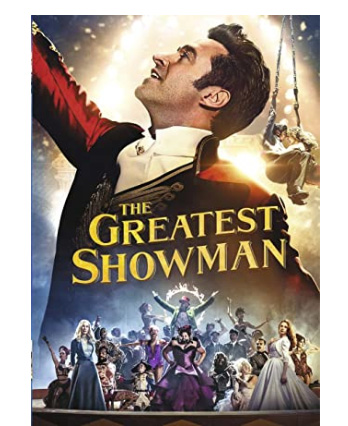
The Greatest Showman
Synopsis
Set in 19th-century America, P.T. Barnum is an ambitious, impoverished visionary who uses his boundless imagination and showmanship to create a revolutionary theatrical spectacle featuring unique, marginalized individuals, acrobats, and performers. Despite facing fierce snobbery from high-society elites and violent protests from local bigots, Barnum's circus grows into a phenomenal worldwide success that celebrates diversity and outsider pride. Along the way, he collaborates with playwright Phillip Carlyle and introduces Swedish opera sensation Jenny Lind to American audiences, risking his marriage and family for fame. When a devastating fire destroys the circus tent, Barnum learns that true wealth lies in his family and his performers rather than hollow applause.
The Making of the Film
Developed over seven years by producer Hugh Jackman, the original musical film was inspired by the life of P.T. Barnum and the birth of modern show business. Director Michael Gracey, a former visual effects artist making his feature directorial debut, sought to craft an exuberant, contemporary pop-musical extravaganza rather than a traditional biographical period piece. Songwriters Benj Pasek and Justin Paul composed the sensational chart-topping musical numbers. The production utilized massive soundstages in New York.
Critical Reception
Critical reception for the film was initially mixed, with reviewers praising its electrifying musical score, powerhouse vocal performances, and dazzling choreography, while criticizing its superficial biographical sanitization of Barnum's real-life controversies. However, audiences fell completely in love with the movie, turning it into a historic global box office phenomenon with massive legs and record-breaking soundtrack sales. It became one of the most successful original movie musicals in history, earning an Academy Award nomination for Best Original Song.
Behind-the-Scenes Stories
Hugh Jackman suffered a severe skin hemorrhage on his nose while rehearsing the high-energy musical number "The Greatest Show" for the studio executives, yet insisted on singing live. Keala Settle, who portrayed the bearded lady, struggled with profound stage fright and insecurity during auditions, inspiring her powerful vocal delivery of the anthem "This Is Me." The cast underwent months of intensive dance and acrobatic rehearsals before principal photography. Zac Efron and Zendaya performed many of their own romantic trapeze stunts.
Themes Explored
The film explores inclusivity, outsider acceptance, ambition, showmanship, self-worth, and celebrating diversity. It highlights family priorities, overcoming social snobbery, and the transformative power of performance. Circus showmanship drives the musical narrative. It also touches upon redemption.
Ending Explained
Barnum realizes that his relentless pursuit of high-society acceptance and fame nearly cost him his loving wife Charity and his circus family. After the circus tent burns down, Barnum steps away from touring limelight to rebuild his life and circus as an open-air tent, prioritizing his family above all else. Phillip Carlyle and the performers welcome him back, embracing their enduring community of misfits. The conclusion provides a triumphant, tear-jerking musical finale.
Meaning of the Title
The title refers directly to the protagonist's show business ambition and title as the ringmaster of the circus: "The Greatest Showman." It symbolizes spectacle and ambition. The phrase sets a biographical musical drama tone.
Benj Pasek, Justin Paul, and John Debney composed an electrifying, chart-topping pop-musical soundtrack featuring iconic anthems like "This Is Me" and "A Million Dreams."
La La Land, Moulin Rouge!, Les Misérables, The Greatest Showman (Stage Adaptation)