

 Français
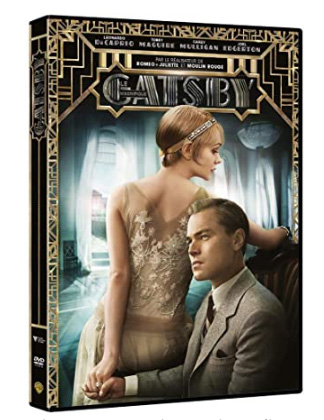
The Great Gatsby
Synopsis
In the summer of 1922, Nick Carraway moves to Long Island and becomes fascinated by his mysterious neighbour, Jay Gatsby, a wealthy man known for hosting extravagant parties. Gatsby is secretly in love with Daisy Buchanan, who is now married to the wealthy and arrogant Tom Buchanan. Through Nick, Gatsby attempts to reconnect with Daisy and recreate the romance they shared years earlier. As their relationships become increasingly complicated, the glamour of the Jazz Age gives way to jealousy, deception and tragedy.
The Making of the Film
Baz Luhrmann adapted the film from F. Scott Fitzgerald's celebrated 1925 novel The Great Gatsby. The director had long been attracted to the book's combination of romance, social criticism and spectacular imagery. He saw the story as an opportunity to explore the contrast between the American Dream and the moral emptiness that can lie beneath wealth and social prestige. Luhrmann approached the material with his characteristic visual extravagance, aiming to make the Roaring Twenties feel immediate and energetic for contemporary audiences. The screenplay was developed with Craig Pearce, his longtime creative collaborator, while retaining the novel's central characters and tragic structure. Leonardo DiCaprio was cast as Gatsby, bringing an air of charm and vulnerability to the mysterious millionaire. The filmmakers used elaborate production design, modern musical influences and digital effects to recreate the excesses of the period. Filming took place primarily in Australia, where large sets and visual effects helped recreate the world of New York and Long Island. The result was a highly stylised adaptation that interpreted Fitzgerald's classic through a distinctly modern cinematic language.
Critical Reception
Professional critical response: Reviews were mixed, with many critics praising the film's visual ambition and production design. Leonardo DiCaprio's performance was frequently highlighted for its combination of charm, intensity and emotional fragility. Some reviewers admired Luhrmann's energetic interpretation of the Jazz Age, while others felt that the visual spectacle sometimes overshadowed the novel's quieter emotional and literary qualities. The use of contemporary music also divided opinion. Nevertheless, the film was widely recognised as a distinctive and ambitious adaptation.
Audience reception: The film attracted a large international audience and performed strongly at the box office. Its colourful parties, lavish costumes and romantic storyline appealed to viewers interested in the glamour of the 1920s. Many spectators appreciated the emotional tragedy beneath the spectacular imagery. The soundtrack also helped the film reach a younger audience unfamiliar with the original novel. Its visual style and interpretation of Gatsby's dream generated considerable discussion.
Awards and recognition: The Great Gatsby won two Academy Awards, for Best Production Design and Best Costume Design. It also received nominations in other technical categories, reflecting the scale of its visual production. The costumes and sets were particularly praised for their craftsmanship and attention to detail. The film received several additional nominations and awards from international film and design organisations. Its technical achievements remain among the most widely recognised aspects of the production.
Behind-the-Scenes Stories
Director's inspirations: Baz Luhrmann wanted to communicate the emotional intensity of Fitzgerald's novel through a contemporary visual language. He viewed the Jazz Age as a period of extraordinary excitement, but also one marked by inequality, superficiality and moral uncertainty. The director used modern music to create a connection between the 1920s and contemporary popular culture. His interpretation emphasises the contrast between the spectacular world Gatsby creates and the loneliness hidden beneath it.
Production challenges: Recreating the extravagant world of the novel required extensive sets, costumes and digital environments. The production had to combine practical locations with computer-generated versions of New York and Long Island. Large party sequences involved numerous performers, detailed choreography and complex camera movements. The costumes were designed to evoke the period while remaining visually striking for modern audiences. The filmmakers also had to find a balance between historical atmosphere and Luhrmann's deliberately theatrical style.
A memorable scene: Gatsby's first appearance at one of his famous parties is designed as a spectacular introduction to his mysterious world. The camera moves through enormous crowds, fireworks and elaborate decorations before revealing the host himself. The sequence uses energetic editing and contemporary music to transform a historical setting into an almost modern celebration. Its extravagance also establishes the artificial nature of Gatsby's social identity. Beneath the glamour, the scene hints at the loneliness that defines the character.
Originally considered casting: Leonardo DiCaprio ultimately played Jay Gatsby, while Tobey Maguire was cast as Nick Carraway. Carey Mulligan portrayed Daisy Buchanan and Joel Edgerton played Tom Buchanan. The casting brought together performers with very different screen personalities, helping distinguish Gatsby's romantic idealism from Tom's inherited confidence and power. The final ensemble was central to the film's emotional balance.
Themes Explored
The Great Gatsby explores the American Dream, wealth, social class and the destructive power of nostalgia. Gatsby believes that money and determination can restore the happiness he once experienced with Daisy, but his dream is based on an idealised version of the past. The film contrasts newly acquired wealth with the established privilege of families such as the Buchanans. It also examines the moral emptiness concealed by luxury, showing how powerful people can avoid responsibility for the consequences of their actions. Love, ambition, identity and the passage of time are all connected to the characters' inability to distinguish genuine happiness from social appearances.
Explaining the Ending
After Myrtle Wilson is killed by Gatsby's car, Gatsby accepts responsibility in order to protect Daisy, who was actually driving. Tom exploits the situation by directing Myrtle's husband, George Wilson, towards Gatsby. Believing Gatsby to be responsible for his wife's death and convinced that he has also been involved with her, George shoots Gatsby before taking his own life. Gatsby dies still waiting for Daisy, unaware that she has chosen to remain with Tom. Nick is left to confront the moral emptiness of the wealthy society he has observed. He realises that Gatsby's dream was beautiful in its intensity but ultimately impossible because it depended on recreating an idealised past. The final reflections connect Gatsby's personal tragedy with the wider human tendency to pursue dreams despite the obstacles created by time and reality. His death exposes the indifference of those who benefited from his generosity and ambition.
The Meaning of the Title
The title The Great Gatsby combines the character's name with a word suggesting greatness, mystery and spectacle. Gatsby appears to be extraordinary because of his wealth, parties and mysterious past. Yet the adjective also carries an ironic meaning, since his apparent greatness conceals insecurity, deception and emotional vulnerability. The title invites viewers to question whether Gatsby is truly great or simply a man whose extraordinary dream has become larger than his real identity.
The soundtrack combines period influences with contemporary artists and producers, including Jay-Z, who served as an executive music producer. The mixture of jazz-inspired sounds, hip-hop and modern pop reflects the director's intention to connect the 1920s with present-day culture. Lana Del Rey's Young and Beautiful became one of the most recognisable musical elements of the film. The soundtrack plays an important role in establishing its romantic and extravagant atmosphere.
Similar films include Moulin Rouge!, also directed by Baz Luhrmann, which combines romance and visual extravagance; The Age of Innocence, directed by Martin Scorsese, which examines social class and forbidden love; Atonement, directed by Joe Wright, which explores memory and the consequences of romantic idealism; and The Talented Mr. Ripley, directed by Anthony Minghella, which portrays wealth, identity and social ambition.