

 Français
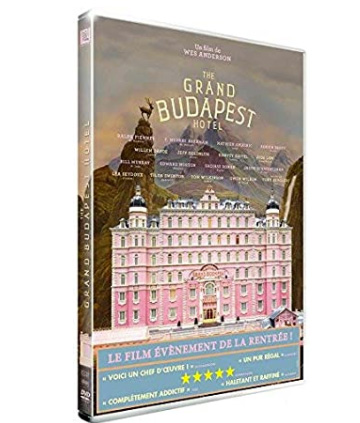
The Grand Budapest Hotel
Synopsis
Set in the fictional European Republic of Zubrowka between the World Wars, the film recounts the legendary adventures of Gustave H., a famously meticulous concierge at a famed luxury mountain resort, and Zero Moustafa, the lobby boy who becomes his most trusted friend. When one of Gustave's wealthy elderly lover patrons dies mysteriously and leaves him a priceless Renaissance painting, Gustave finds himself framed for murder by the woman's hostile, vengeful family. Fleeing across snowy borders with Zero by his side, Gustave navigates prison breaks, secret brotherhoods, and shifting European fascism. This whimsical cinematic masterpiece is a visual feast of deadpan comedy and poignant nostalgia.
The Making of the Film
Writer and director Wes Anderson conceived the film inspired by the distinct, melancholic European novels and memoirs of Austrian writer Stefan Zweig, particularly his observations of pre-war continental culture. Anderson wanted to create a grand, theatrical caper that combined fast-paced farce with the tragic shadow of 20th-century European totalitarianism. The production was designed as an intricate miniature world utilizing handcrafted models, matte paintings, and changing aspect ratios to represent different historical eras. Fox Searchlight backed the prestigious auteur project.
Critical Reception
Professional critics showered the film with widespread universal acclaim, hailing it as one of Wes Anderson's finest artistic achievements. Reviewers praised its staggering visual symmetry, exquisite production design, lightning-fast comedic dialogue, and Ralph Fiennes' career-best tour-de-force performance as concierge Gustave H. The film was celebrated as both a hilarious farce and a bittersweet elegy for a lost European era.
Public reception was a phenomenal global box office success, becoming Anderson's highest-grossing film worldwide and captivating audiences with its storybook charm. Viewers were enchanted by the pastel color palettes, quirky characters, and rich historical detail. It cemented its status as a modern cinematic classic.
Awards and recognition included four Academy Awards for Best Original Score, Best Production Design, Best Costume Design, and Best Makeup, alongside nine total Oscar nominations. Ralph Fiennes won a BAFTA nomination and widespread critical praise. The film remains celebrated as a pinnacle of production artistry.
Filming Anecdotes
The director drew heavy inspiration from 1930s Hollywood comedies, silent films, European literature, and archival postcards of grand Alpine hotels. Production utilized an abandoned department store in Görlitz, Germany, to construct the massive pink Grand Budapest Hotel set, alongside intricate miniature models built by expert craftsmen. The aspect ratio changed dynamically across three different historical periods to reflect cinematic history.
Production challenges included managing an unprecedentedly massive ensemble cast of Hollywood superstars who agreed to tiny supporting roles just to work with Wes Anderson. The stop-motion chase sequences through snowy mountain passes required meticulous miniature animation coordination. Maintaining strict color palettes and symmetrical framing demanded absolute precision from the cinematography crew.
A memorable anecdote involves Ralph Fiennes memorizing miles of lightning-fast comedic dialogue without missing a single syllable, bringing tireless theatrical energy to every take. Tony Revolori was discovered through an open casting call to play the young Zero Moustafa, holding his own brilliantly alongside veteran actors. The entire cast lived together in a small German hotel during filming, fostering a joyful summer-camp camaraderie.
The casting process brought together an incredible roster of acting royalty, including Ralph Fiennes, F. Murray Abraham, Adrien Brody, Willem Dafoe, Saoirse Ronan, Jude Law, and Bill Murray. Every role, no matter how brief, was filled by a recognizable star. The ensemble chemistry drove the film's whimsical comedic momentum.
Themes Explored
The themes explored include friendship, loyalty, civility in the face of barbarism, nostalgia, and the tragic erasure of European culture by war. The story examines how human kindness and artistic beauty can survive even the darkest totalitarian regimes. It also highlights mentorship and storytelling across generations.
Explanation of the Ending
The ending reveals through an aging Zero Moustafa's narration that after surviving the war and totalitarian purges, Gustave H. was ultimately executed by fascist soldiers on a train while defending Zero, leaving Zero the owner of the grand hotel and vast wealth. However, as the decades pass, changing political regimes and communism strip the hotel of its glory, leaving it a fading pastel relic. In the final modern framing scene, a young girl reads the author's memoir at a monument dedicated to the legendary lobby boy, ensuring that Gustave's civilized spirit and memory live on forever.
Title Significance
The title 'The Grand Budapest Hotel' refers directly to the magnificent, fictional luxury resort that serves as the geographical and emotional anchor for the entire narrative. It symbolizes a bygone era of European elegance, romance, and hospitality. The name sets an iconic, storybook tone for a grand cinematic caper.
Original Soundtrack
The film features a whimsical, brilliant musical score composed by Alexandre Desplat, utilizing traditional Russian balalaikas and Alpine folk instruments to evoke a quirky, nostalgic continental atmosphere.
The film is celebrated globally as a masterpiece of modern auteur cinema, frequently analyzed in film schools for its peerless production design and symmetrical framing.
Isle of Dogs, Amélie, The Royal Tenenbaums, Knives Out