

 Français
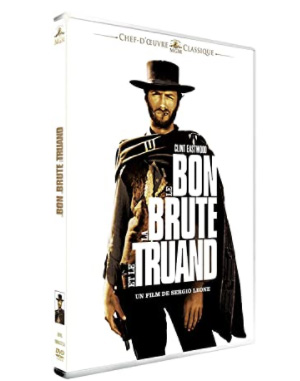
The Good, the Bad and the Ugly
Synopsis
Set against the chaotic backdrop of the American Civil War, three ruthless gunslingers cross paths while hunting for a hidden fortune of Confederate gold buried in a remote cemetery. Blondie 'The Good' is a laconic bounty hunter; Angel Eyes 'The Bad' is a sadistic, cold-blooded mercenary; and Tuco 'The Ugly' is a comical, resilient bandit. Formed in an uneasy, shifting alliance of convenience, they must navigate shifting battle lines, double-crosses, and desert wastes. This epic spaghetti western is a towering masterpiece of style and tension.
The Making of the Film
Director Sergio Leone sought to cap off his groundbreaking 'Dollars Trilogy' starring Clint Eastwood with an ambitious, grand-scale epic that exposed the senseless brutality of the American Civil War. Co-writers Luciano Vincenzoni and Agenore Incrocci crafted a sprawling picaresque narrative inspired by traditional Italian commedia dell'arte mixed with gritty western tropes. Leone insisted on shooting on location across the sun-baked deserts of Spain, pushing cinematic boundaries with sweeping widescreen cinematography and operatic pacing.
Critical Reception and Reviews
Upon its initial release, the film received mixed reactions from traditional critics who were unsettled by its intense violence and moral ambiguity, though European audiences turned it into an immediate blockbuster. Over time, critical reassessment has completely transformed its reputation, with modern film historians hailing it as one of the greatest and most influential westerns ever made. Reviewers have consistently praised Ennio Morricone's revolutionary musical score, Sergio Leone's visual direction, and the iconic lead performances. It remains a foundational pillar of modern action and crime cinema.
Behind the Scenes Anecdotes
Ennio Morricone composed his legendary musical score before a single frame of the film was shot, allowing Sergio Leone to play the iconic coyote-howl theme on set to inspire the actors. Clint Eastwood famously wore the exact same poncho across all three films in the Dollars Trilogy without ever washing it, treating it as a treasured talisman of his character. Eli Wallach performed several genuinely dangerous stunts during production, including accidentally nearly hanging himself when his horse bolted and nearly being decapitated by a moving train. Sergio Leone pushed for absolute authenticity, leading to grueling shoots under blistering desert heat in Spain.
Major Themes Explored
The film cynically explores the absurdity, horror, and futility of war, contrasting grand political conflicts with petty human greed. It examines transactional morality, survival, and shifting alliances in a lawless frontier landscape. Furthermore, it subverts traditional Hollywood western archetypes by stripping heroes and villains down to self-interested opportunists.
Explanation of the Ending
In the legendary three-way Mexican standoff inside Sad Hill Cemetery, Blondie outwits Angel Eyes and Tuco by revealing that the grave containing the gold actually holds an empty coffin, having secretly divided the loot beforehand. Blondie spares Tuco's life, leaving him tied up precariously on a grave marker with a noose around his neck before riding away into the distance. Tuco screams curses after him as he manages to free himself, providing a darkly humorous and iconic final note to the epic journey.
Significance of the Title
The title The Good, the Bad and the Ugly establishes a brilliant moral taxonomy that categorizes its three primary anti-heroes, though the film quickly subverts these labels to reveal that none of them are truly pure or innocent. The triad structure sets up the iconic interpersonal dynamics and ultimate showdown that drive the narrative. It became an enduring pop-culture phrase encapsulating complex moral ambiguity.
Ennio Morricone's extraordinary musical score is universally regarded as one of the greatest and most influential achievements in film history, revolutionizing the use of whistling, electric guitar, and operatic choir in westerns.
Once Upon a Time in the West, For a Few Dollars More, The Wild Bunch, Django Unchained