

 Français
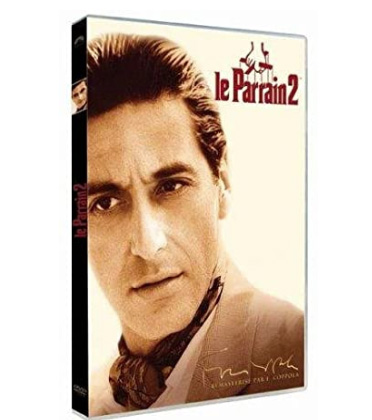
The Godfather Part II
Synopsis
This sequel follows two stories at once. In the 1950s, Michael Corleone tightens his grip on the family empire, expanding into Nevada and Cuba while struggling to protect his family. In flashbacks, the young Vito Corleone flees Sicily and builds a new life in New York's Little Italy. As Michael becomes more ruthless, his marriage and his relationships with his siblings fall apart. The film shows the price of power and the loss of the soul.
The Making of the Film
The Godfather Part II continues the story of Mario Puzo's novel and of the 1972 film. After the enormous success of the original, Paramount asked Francis Ford Coppola to make a sequel, which was almost unheard of at the time for a prestige drama. Coppola and Puzo wrote the screenplay together, using material from the novel for the young Vito, while creating a new story for Michael. The film's structure alternates between past and present, giving it a unique tone. Al Pacino returned as Michael, and Robert De Niro was cast as the young Vito. Robert Duvall, Diane Keaton, John Cazale and Talia Shire also returned, and Lee Strasberg played the aging gangster Hyman Roth. The film was released in December 1974.
Reviews and reception
Summary of professional reviews
Critics widely praised the film as a worthy sequel and often as the equal of the original. They admired the ambitious structure, the performances and the cinematography. Over time, many critics have placed it among the greatest films ever made.
Audience reception
The film was a commercial success, though it earned less than the first one. Audiences were moved by the tragic arc of Michael Corleone. Its reputation has only grown with time. Many fans consider it the best of the trilogy.
Awards and nominations
The film won six Academy Awards, including Best Picture, Best Director, Best Supporting Actor for Robert De Niro and Best Adapted Screenplay. It was the first sequel to win the Oscar for Best Picture. The score by Nino Rota and Carmine Coppola also won an Oscar. In 1993, the film was selected for preservation in the United States National Film Registry.
Filming anecdotes
Director's inspirations
Coppola wanted to portray the rise and fall of two men in parallel: Vito, who builds a family, and Michael, who destroys it. He was inspired by the tragedy of fathers and sons and by the history of immigration. The film's warm, golden look for the past and cold look for the present reinforce this contrast.
Production difficulties
The film was shot in New York, Nevada, Italy and the Dominican Republic, which stood in for Cuba. Re-creating the streets of early twentieth-century New York required a large set and many extras. Coppola faced pressure from the studio but kept creative control.
Anecdote about a particular scene
The scene in which Michael finally confronts his brother Fredo, whom he blames for betraying him, is one of the most devastating in cinema. The New Year's Eve sequence in Havana is another highlight. The kiss of death scene and the last shot of Michael sitting alone at Lake Tahoe are often cited.
Original casting plans
Marlon Brando, who had won an Oscar for the first film, was not available for the sequel, which is why the story focuses on the young Vito. De Niro studied Brando's mannerisms and learned Sicilian for the role. The character of Hyman Roth was inspired by the real gangster Meyer Lansky.
Themes explored
The film is about power, corruption and the destruction of family. It shows how Michael's drive to protect his family leads him to betray it. It explores the immigrant experience, as Vito builds a new life in America. The story also reflects on loyalty, betrayal and the cost of vengeance. The parallels between father and son highlight how different their paths are. Loneliness and moral decay are at the heart of the film.
Ending explained
Michael has his brother Fredo killed after learning of his betrayal, a decision that isolates him completely. In a final flashback, the family is shown in happier times, gathered around the dinner table in 1941. The film ends with Michael alone, remembering a moment in which he chose a different path. His success has cost him everything he valued. The ending is a quiet and haunting portrait of a man who has lost his soul.
Meaning of the title
The title simply denotes the second chapter of the Godfather saga, continuing the story of the Corleone family. The word godfather refers to the patriarch of a crime family, and in this film the mantle is held by Michael. Calling the film Part II highlights its relationship to the first film as well as its independence. It was one of the first major sequels to use this form of title.
Original Soundtrack
Nino Rota and Carmine Coppola composed the music, which won the Academy Award for Best Original Dramatic Score. The haunting main theme returns in new forms, mixing nostalgia and tragedy. The music underscores both the warmth of the past and the coldness of the present.
News
The making of the saga was dramatized in the 2022 series The Offer. The Godfather films have also been restored and re-released in recent years, bringing them to new audiences.
Similar Films
- The Godfather (1972): the first part of the saga.
- Goodfellas (1990): a realistic portrait of life in the mob.
- Once Upon a Time in America (1984): an epic gangster saga across decades.
- Scarface (1983): the rise and fall of a criminal.
- Casino (1995): a story of power and betrayal in Las Vegas.