

 Français
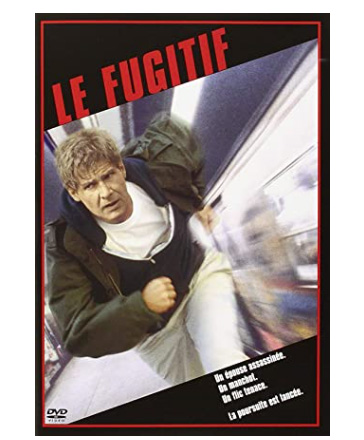
The Fugitive
Synopsis
Dr. Richard Kimble, a respected Chicago surgeon, is wrongly convicted of murdering his wife and sentenced to death. During a prison transfer, a bus accident gives him the chance to escape. While US Marshal Samuel Gerard and his team relentlessly track him across the country, Kimble secretly investigates the real killer, a mysterious one-armed man. Every step brings him closer to a conspiracy that reaches far higher than he imagined.
The Making of the Film
The film is based on the television series of the same name, created by Roy Huggins and broadcast on ABC from 1963 to 1967, with David Janssen in the lead role. The series was a huge success, and its finale was for years one of the most-watched television episodes in American history. Producer Arnold Kopelson spent years trying to bring the story to the big screen, convinced that its suspense would adapt well to modern cinema. Screenwriter Jeb Stuart developed the first scripts, later reworked by David Twohy to strengthen the pace and the characters. Andrew Davis, who had directed Under Siege, was hired to give the film a realistic and physical style. Harrison Ford joined the project after the script gained more depth and emotional stakes. The team decided to create a rivalry between the hunted man and the lawman that would carry the film. The aim was to preserve the paranoid atmosphere of the series while adding the scale of a modern thriller.
Reviews and reception
Professional critics' summary
Critics widely acclaimed the film as one of the best thrillers of the decade, praising its pace, tension and performances. Harrison Ford was lauded for giving Kimble genuine vulnerability, while Tommy Lee Jones received particular acclaim for his dry and relentless Marshal Gerard. Reviewers also highlighted the strong direction of Andrew Davis, especially in the spectacular action sequences. Some noted that the plot twists are not particularly surprising, but they agreed that the execution is flawless.
Audience reception
The film was a major hit, grossing more than 360 million dollars worldwide. Audiences loved the cat-and-mouse game between Kimble and Gerard, which kept them on the edge of their seats. It became one of the most rewatched thrillers on television and home video. Over the years, it has remained a reference for chase films.
Awards
The Fugitive received seven Academy Award nominations, including Best Picture. Tommy Lee Jones won the Oscar for Best Supporting Actor, a recognition that confirmed his rise to stardom. He also won the Golden Globe in the same category. The film also earned nominations for its cinematography, editing, sound and score.
Filming anecdotes
Director's inspirations
Andrew Davis wanted the film to feel as real as possible, using actual locations in Chicago and the American South. He was inspired by the paranoid thrillers of the 1970s, in which the hero fights against a hidden system. The original TV series gave the story its structure, but Davis added contemporary realism. He also used the city of Chicago as a character, showing its streets, hospitals and river.
Production difficulties
The script was still being polished during filming, so the actors received new pages almost every day. Shooting scenes like the train crash required careful planning and a major logistical effort. The production also had to deal with harsh weather conditions in the mountains of North Carolina. Despite these challenges, the finished film feels remarkably smooth and well-constructed.
Anecdote about a particular scene
The famous train crash was filmed using a real locomotive and a bus, which were destroyed for the scene. The spectacular dam jump, in which Kimble leaps from a high spillway, was shot at the Cheoah Dam in North Carolina. Another iconic moment occurs when Kimble tells Gerard that he did not kill his wife, and the Marshal replies, "I don't care." This line was reportedly improvised by Tommy Lee Jones and became the film's most quoted line.
Originally planned casting
Harrison Ford was cast in the lead role after the script gained momentum, bringing his proven appeal to the character. Tommy Lee Jones was selected to play Gerard, and he built the role with his own humour and tenacity. Jeroen Krabbe played the sophisticated Dr. Nichols, while Andreas Katsulas portrayed the one-armed man.
Themes explored
The film is built on the theme of injustice, as an innocent man is condemned by a system that refuses to listen. It also explores the idea of identity, since Kimble must live in hiding and change his appearance to survive. The relationship between Kimble and Gerard is a study of duty and respect between enemies. The story criticises the power of corporations, showing how a pharmaceutical company manipulates the truth for profit. Another key theme is the search for truth in a world where appearances are deceiving. Love and loss play an important role, since Kimble is driven by his desire to find his wife's killer. The film also questions the nature of the law and of moral responsibility. Ultimately, it is a story of courage and perseverance against overwhelming odds.
Ending explained
Kimble discovers that his friend and colleague Dr. Charles Nichols is behind the plot, having falsified research data on a drug in order to protect a lucrative contract. The one-armed man was a hired killer, sent to murder Kimble's wife in order to cover up the conspiracy. Kimble confronts Nichols at a medical conference, and the two men fight in a hotel in Chicago. At the same time, Gerard realises that Kimble is innocent and starts to help him. After the final confrontation on the roof, Nichols is arrested, and Kimble is cleared of all charges. Gerard's attitude changes from relentless pursuit to respect, and he lets Kimble go with a simple gesture. The film ends with a sense of justice restored and a mutual understanding between the two men.
Meaning of the title
The word fugitive refers to a person who flees from the law, which perfectly describes Richard Kimble's situation. The title is taken directly from the original television series, which already used it to evoke a man on the run. The definite article suggests that Kimble is not simply one fugitive among others, but the only one who matters. It also gives the film an almost mythical dimension, since it recalls classic stories about wrongly accused heroes. For the audience, the title immediately sets up the tension between hunter and hunted. It is short, clear and effective, summing up the entire premise in two words.
Original Soundtrack
James Newton Howard composed the score, which was nominated for an Academy Award. His music underlines the tension and suspense with powerful rhythms and bold orchestral themes. The score has remained one of the most celebrated of the 1990s thriller genre.
News
In 2020, a new series adaptation titled The Fugitive was released on the Quibi platform, starring Kiefer Sutherland and Boyd Holbrook. The series reimagined the story for a modern audience, but it was short-lived because the platform shut down later the same year. The 1993 film remains the definitive version of the story for most fans.
Similar Films
U.S. Marshals, with Tommy Lee Jones reprising his role as Gerard, is a direct follow-up. North by Northwest and The 39 Steps are the classics of the wrongfully accused man on the run. The Bourne Identity and Enemy of the State offer modern takes on conspiracy thrillers. Another good companion is Under Siege, which was directed by Andrew Davis.