

 Français
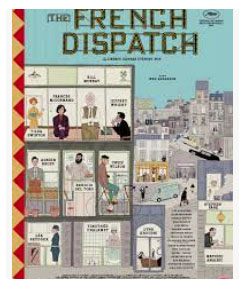
The French Dispatch
Synopsis
The French Dispatch follows the frantic, whimsical editorial staff of an American magazine bureau based in a fictional 20th-century French city as they assemble their final commemorative issue following the sudden death of their beloved founder. Structured as an anthology of distinct, wonderfully eccentric feature articles, the film brings to life an imprisoned artist serving a life sentence for murder and his muse, student revolutionary riots across the city streets, and a high-stakes journalistic kidnapping rescue involving a master chef. The film is a love letter to journalism and art.
The Making of the Film
Written and directed by visionary auteur Wes Anderson, the film was conceived as an elaborate visual and narrative tribute to The New Yorker magazine and expatriate journalists living in mid-century France. The inspiration stemmed from Anderson's lifelong obsession with long-form journalism and French cinema. The production utilized massive soundstages in Angoulême, France, constructing meticulous miniature models, black-and-white sets, and vibrant color-graded compositions.
Critical Reception
Critics universally lauded The French Dispatch as a dazzling visual triumph, praising Wes Anderson's peerless whimsical art direction, lightning-fast comedic dialogue, and an unprecedented all-star ensemble cast. Reviewers highlighted the film's intricate miniature styling, symmetrical framing, and affectionate homage to print journalism. It achieved widespread critical acclaim.
Audiences embraced the movie as a delightful, hyper-stylized cinematic banquet.
The film earned numerous international awards nominations, celebrated for its astonishing production design, costume styling, and Alexandre Desplat's musical score.
Behind-the-Scenes Stories
Wes Anderson drew heavy inspiration from classic The New Yorker articles, French New Wave cinema, and mid-century art history.
Building the complex miniature sets and transitioning effortlessly between black-and-white and vibrant color ratios required months of precise technical pre-planning.
During production, the massive ensemble cast—including Timothée Chalamet, Bill Murray, and Tilda Swinton—reished filming in the quaint French town of Angoulême.
Casting Wes Anderson's regular collaborators alongside international stars brought unprecedented ensemble prestige.
Themes Explored
The film explores journalism, artistic expression, French culture, expatriate life, student revolution, and whimsical storytelling.
Ending Explained
The anthology concludes with the magazine bureau successfully publishing its final commemorative edition, cementing the legacy of its eccentric journalists.
Meaning of the Title
Reference to the fictional publication (The French Dispatch) serving as the narrative umbrella for the interconnected short stories.
Original Soundtrack
The original musical score composed by Alexandre Desplat features whimsical French accordion melodies and jazzy orchestral arrangements that define Anderson's aesthetic.
Similar films include The Grand Budapest Hotel, Moonrise Kingdom, The Life Aquatic, and Midnight in Paris.