

 Français
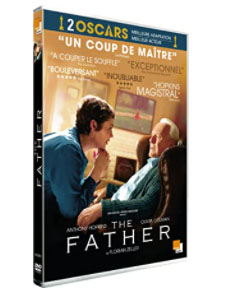
The Father
Synopsis
This devastating, profoundly moving psychological drama masterpiece follows Anthony, an independent elderly Londoner living in his spacious flat who adamantly refuses every single caregiver his devoted daughter Anne tries to introduce. As Anne announces her impending move to Paris with a new partner, Anthony's reality begins to fracture in confusing, disorienting ways: furniture changes positions, familiar faces shift into strangers, and time slips through his fingers. Told entirely from the heartbreaking, subjective perspective of a mind succumbing to advanced dementia, the narrative places the viewer directly inside his terrifying cognitive decline. It is a magnificent, emotionally shattering cinematic achievement.
The Making of the Film
The project originated from acclaimed French playwright Florian Zeller adapting his own award-winning 2012 stage play 'Le Père' into a feature-length cinematic masterpiece, co-writing the screenplay with Christopher Hampton. Zeller specifically wrote the lead role with acting legend Anthony Hopkins in mind, even naming the protagonist Anthony. Filmmakers sought to break away from traditional objective drama by designing the physical set like a labyrinthine puzzle where rooms subtly shift to reflect the protagonist's failing memory. The creative team aimed to produce an unforgettable psychological experience.
Critical Reception
Critics offered widespread, rapturous acclaim, praising Florian Zeller's visionary direction, the ingenious subjective set design, and Anthony Hopkins and Olivia Colman's powerhouse lead performances. Reviewers noted that Zeller successfully avoided exploitative melodrama, instead crafting a thrillingly disorienting psychological puzzle that allowed audiences to viscerally experience the terror of dementia. Hopkins's devastating portrayal of a proud man losing his grip on reality received universal applause as one of the greatest acting achievements in cinema history. It was immediately recognized as an absolute masterpiece.
Audience reception was deeply moved and emotionally overwhelmed, driving the film to strong critical endurance and universal acclaim across global streaming and art-house cinemas. Viewers on public platforms praised the tear-jerking emotional moments, brilliant psychological disorientation, and Anthony Hopkins's raw vulnerability. Fans of dramatic cinema celebrated its supreme empathy and artistic brilliance. Word-of-mouth sustained massive long-term prestige.
Awards season brought historic triumph, securing six Academy Award nominations and winning two major Oscars: Best Actor for Anthony Hopkins (making him the oldest competitive acting winner in history) and Best Adapted Zeller-Hampton screenplay. Hopkins also won the BAFTA Award. These accolades cemented its status as a premier masterpiece of modern drama.
Behind-the-Scenes Stories
The director drew visual inspiration from psychological thrillers, intimate theater staging, and painterly domestic framing to establish a disorienting, shifting aesthetic. In a brilliant production design choice, every time Anthony lost his grip on reality, the flat's furniture, artwork, and wall colors were subtly swapped out by the crew on a revolving stage build to trick the viewer's perception. The production team collaborated with neurological medical experts to ensure that cognitive decline, repetition, and confusion mirrored authentic dementia patient experiences. These artistic choices created a deeply unsettling viewing world.
Production presented fascinating logistical and technical hurdles, requiring Anthony Hopkins to draw upon his own aging vulnerability while delivering dialogue with lightning-fast theatrical precision. Olivia Colman brought profound warmth and heartbreak to the role of the exhausted daughter. Shooting on soundstages in London required careful lighting continuity across shifting room layouts. Furthermore, maintaining emotional authenticity during heavy dramatic sequences demanded obsessive focus from the cast.
During the filming of the devastating final nursery-rhyme crying sequence where Anthony begs for his mother, Anthony Hopkins delivered his raw emotional breakdown in a single unbroken take that brought the entire crew to tears. To maintain authentic tension, Zeller treated the film like a psychological horror movie. The crew utilized soft daylight filtering through tall windows. This rigorous dedication resulted in immortal cinematic moments.
Casting was anchored by securing living legend Anthony Hopkins, whose name was literally written into the script from day one, alongside Oscar-winner Olivia Colman as his daughter. Supporting roles were filled with brilliant British acting talent including Mark Gatiss, Olivia Williams, and Rufus Sewell. This star-studded casting strategy was the absolute secret to the film's emotional success.
Themes Explored
The narrative deeply explores themes of progressive dementia, cognitive decline, and the terrifying loss of personal identity. It examines caregiver burnout, filial duty, and the heartbreaking burden of watching a parent fade away. Additionally, it highlights aging, loneliness, and the desperate human need for comfort. Ultimately, the film reflects on memory, sorrow, and the enduring dignity of the human soul.
Ending Explained
Anthony finds himself confined to a sterile care facility room after Anne can no longer care for him at home, breaking down in tearful despair as he cries that he is losing all his leaves like a tree in autumn, before his kind nurse comforts him with a gentle embrace. In the heartbreaking final shot, Anthony looks out the window at a peaceful London park, finding a fragile, fleeting moment of calm. The devastating resolution underscores the profound tragedy of fading memory.
Meaning of the Title
The title directly references the protagonist ("The Father") and his profound psychological struggle with aging, memory, and parenthood.
Original Soundtrack
The poignant, melancholic musical score by Ludovico Einaudi received high praise for utilizing delicate piano melodies that amplified the film's heartbreaking emotional atmosphere.
Similar Films
Films sharing similar dementia, cognitive decline, and family caregiving drama themes include Still Alice (2014), Away from Her (2006), and The Notebook (2004).