

 Français
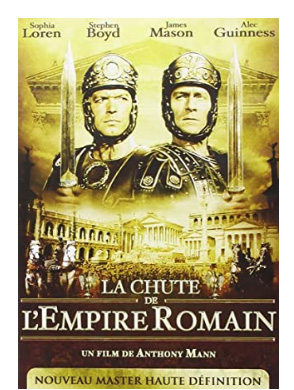
The Fall of the Roman Empire
Synopsis
This sweeping historical epic chronicles the gradual decay and political corruption that led to the collapse of the Roman Empire following the death of Emperor Marcus Aurelius. As the philosophical emperor attempts to pass leadership to his wise adopted son Livius rather than his unstable biological heir Commodus, a bitter struggle for power erupts. Set against majestic imperial palaces, northern frontier battles, and political intrigue, the narrative explores the erosion of civilization from within. It is a grand, visually stunning cinematic monument to classical tragedy.
The Making of the Film
The project originated from producer Samuel Bronston and director Anthony Mann's ambition to create an intelligent, large-scale historical epic that rivaled the biggest studio productions of the era. Filmmakers sought to move beyond simple sword-and-sandal tropes by exploring the philosophical and sociological causes of imperial collapse documented by Edward Gibbon. Inspiration was drawn from classical Roman history, philosophical texts, and historical archeology. The creative team aimed to construct a monumental epic combining grand spectacle with profound political tragedy.
Critical Reception
Critics offered a mixed array of reviews upon release, praising the film's staggering visual scale, brilliant art direction, and philosophical depth while critiquing its slow pacing. Reviewers noted that the production successfully avoided mindless action, instead presenting a thoughtful meditation on the duties of governance and the decay of institutions. The majestic set design—including a full-scale replica of the Roman Forum built in Spain—received universal acclaim. While it struggled commercially at the box office initially, its critical reputation grew enormously over time.
Audience reception was modest during its theatrical run due to its long runtime and cerebral tone, but it cultivated a dedicated following among classic epic enthusiasts. Viewers on home video platforms praised the stunning practical scale, epic battle choreography, and strong dramatic performances. Fans of historical cinema appreciated the film's intelligent engagement with political corruption and imperial decline. It eventually earned recognition as a sophisticated masterclass in historical filmmaking.
Awards season brought notable recognition, including an Academy Award nomination for Dimitri Tiomkin's soaring musical score. Industry guilds praised the massive art direction and set decoration teams for constructing one of the largest physical set pieces in cinematic history. Critics' associations frequently highlighted its ambitious thematic scope and visual grandeur. These accolades cemented its status as a high-water mark of the classic Hollywood historical epic.
Behind-the-Scenes Stories
The director drew aesthetic inspiration from classical Roman architecture, imperial sculpture, and historical art to establish the grand, monumental visual style. Every palace, temple, and street of ancient Rome was painstakingly constructed as a massive full-scale physical set across the plains of Spain. The production team collaborated with historians to ensure that military tactics, senatorial debates, and imperial garments matched historical scholarship. These artistic choices created an astonishingly tangible ancient world.
Production presented monumental logistical and financial hurdles, requiring the construction of a massive city set that covered millions of square feet. Coordinating thousands of background extras, stunt riders, and complex chariot races across rugged terrain demanded meticulous military-style planning. Shooting under the scorching Spanish sun tested the physical endurance of the cast and crew. Furthermore, managing a ballooning budget ultimately strained the production company's financial stability.
During the filming of the massive winter battle sequences on the Germanic frontier, the crew utilized practical snow effects and large-scale stunt rigging to simulate brutal warfare. To maintain emotional gravity amidst the spectacle, the director encouraged restrained, classical performances from the lead actors. The crew utilized wide-angle panavision lenses to emphasize the overwhelming emptiness and geopolitical vulnerability of the empire's borders. This rigorous dedication resulted in breathtaking cinematic imagery.
Casting focused on assembling an international roster of elite dramatic talent who could project imperial dignity and complex psychological depth. The lead actors brought immense gravitas to the roles of philosophers, generals, and corrupt heirs. Supporting casting directors filled out the Roman Senate and military ranks with seasoned European character actors. This thoughtful casting strategy ensured that the sprawling political drama remained grounded in credible human conflicts.
Themes Explored
The narrative deeply explores themes of political corruption, institutional decay, and the fragility of democratic or philosophical governance. It examines the responsibilities of power, imperial overextension, and the corrupting nature of absolute authority. Additionally, it highlights loyalty, personal integrity, and the defense of civilization against barbarism. Ultimately, the film reflects on history, human folly, and the inevitable rise and fall of great civilizations.
Ending Explained
The tragic climax reveals that after Commodus seizes total power, the empire is effectively auctioned off by the corrupt Praetorian Guard to the highest bidder, symbolizing the complete rot of Roman institutions. Livius rejects the crown after a fatal duel with Commodus, walking away from a broken empire plunging into terminal chaos. This bleak resolution underscores that moral failure destroys nations from within.
Meaning of the Title
The title directly denotes the historical thesis of the film, charting the precise geopolitical turning point when the Roman Empire began its irreversible collapse.
Original Soundtrack
The majestic musical score by Dimitri Tiomkin received an Academy Award nomination, utilizing grand orchestral arrangements and ancient modal themes to evoke antiquity.
Similar Films
Films sharing similar historical epic scale and ancient Roman themes include Ben-Hur (1959), Spartacus (1960), and Gladiator (2000).