

 Français
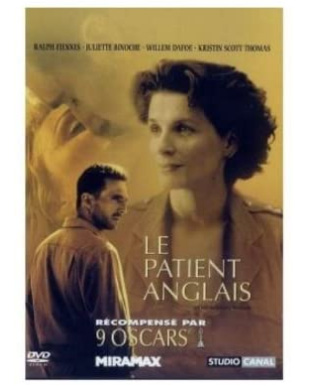
The English Patient
Synopsis
In the final days of World War II in Italy, a severely burned, mysterious man lies dying in a ruined monastery cared for by a compassionate French-Canadian nurse named Hana. As her own emotional trauma unfolds, she listens to the nameless man recount his tragic pre-war memories of mapping the Sahara Desert and a passionate, forbidden affair with a married Englishwoman. His haunting recollections reveal a devastating tale of betrayal, sacrifice, and lost identity. Ultimately, the patient accepts his final release as peace finally overtakes his painful memories.
The Making of the Film
Director and screenwriter Anthony Minghella adapted the film from Michael Ondaatjes Booker Prize-winning 1992 novel of the same name. Producer Saul Zaentz fought for years to bring the complex, non-linear literary masterpiece to the screen. Minghella meticulously restructured the sprawling narrative to focus on the sweeping romance set against the backdrop of North African desert exploration.
Critical Reception
Critics universally acclaimed The English Patient as a magnificent, sweeping cinematic masterpiece of romantic drama. Reviewers praised Anthony Minghellas poetic direction, John Seales breathtaking desert cinematography, and the stellar performances of Ralph Fiennes and Kristin Scott Thomas. The film was celebrated for capturing the epic scale and intimate heartbreak of Ondaatjes novel.
Public reception was phenomenal, making the romantic epic a massive box-office success worldwide. Audiences were captivated by the tragic love story, sumptuous visuals, and haunting musical score. It remains one of the defining cinematic romances of the 1990s.
The film won nine Academy Awards, including Best Picture, Best Director for Anthony Minghella, and Best Supporting Actress for Juliette Binoche. It also earned numerous international accolades and BAFTA honors. Its critical legacy stands tall as a pinnacle of prestige filmmaking.
Filming Anecdotes
Director Anthony Minghella drew inspiration from classic romantic epics and historical exploration accounts in North Africa. He chose to shoot on location in Tunisia and Italy to capture the authentic desolation of the Sahara Desert. His direction encouraged Ralph Fiennes and Kristin Scott Thomas to build intense, restrained emotional chemistry.
Production faced extreme physical challenges filming in harsh Tunisian desert conditions, where blistering heat and sandstorms tested the crew. Ralph Fiennes endured hours of daily prosthetic makeup applications to create the convincing burned appearance of the patient. Coordinating the period aircraft and desert camp logistics required immense military and technical precision.
A memorable sequence features the tragic desert plane crash where the injured Katharine Clifton is left inside the cave of swimmers. The haunting imagery of the painted cave walls combined with deep emotional sorrow created a stunning cinematic moment. Fiennes carried Kristin Scott Thomas across miles of burning sand in a deeply moving performance.
The casting process was rigorous since the central romance required immense star power and emotional gravitas. Demi Moore was initially pushed by studios for the female lead, but Minghella insisted on Kristin Scott Thomas. Ralph Fiennes was chosen for his commanding screen presence and aristocratic restraint.
Themes Explored
The film explores forbidden love, memory, identity, war, and the devastating consequences of betrayal. It examines how national borders pale in comparison to human passion and connection. History and personal grief intertwine across shifting timelines.
NULL
Title Significance
The title refers to the mysterious, amnesiac burn victim who is identified only by his nationality and medical condition. It highlights his lost identity and the central mystery unraveling throughout the story.
NULL
NULL
Similar Films
Other similar films include Out of Africa, Doctor Zhivago, and Cold Mountain.