

 Français
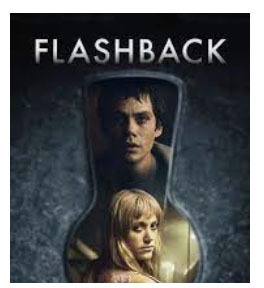
The Education of Fredrick Fitzell
Synopsis
Note: Released internationally as Flashback. As thirty-something Fredrick Fitzell walks down the street, he unexpectedly experiences vivid, terrifying hallucinations of his high school days. Struggling with a mundane corporate job and caring for his ailing mother, he begins investigating the sudden disappearance of a former classmate named Cindy. His journey down memory lane becomes a mind-bending temporal trip as he revisits a mysterious designer drug called Mercury. Ultimately, Fredrick must untangle his fractured memories to discover a hidden truth about his past and his future.
The Making of the Film
Writer and director Christopher MacBride spent years developing the intricate, non-linear psychological script to explore memory, regret, and alternate timelines. The project was conceived as an independent psychological sci-fi mystery that would challenge traditional narrative structures. MacBride drew inspiration from classic philosophical time-travel films, surrealist art, and psychological thrillers. Securing independent financing for such a complex, cerebral concept required immense persistence from the production team before bringing it to the screen.
Critical Reception
Critics offered generally positive reviews upon release, praising its ambitious philosophical scope, stylish editing, and strong lead performances. Reviewers highlighted Dylan O'Brien's compelling psychological vulnerability as he navigates a fracturing reality. Some film critics, however, noted that the dense, non-linear narrative could be difficult to track upon initial viewing. Despite niche distribution, many acknowledged it as a smart and creative contribution to indie sci-fi cinema.
Audiences embraced the mind-bending mystery as a rewarding puzzle that encouraged multiple viewings and deep analytical discussions. Viewers praised the atmospheric cinematography, haunting score, and emotional depth brought by the cast. It found an enthusiastic community of fans on digital streaming platforms among lovers of psychological thrillers. Many appreciated that it prioritized philosophical introspection over cheap jump scares.
Although major mainstream cinematic awards eluded the independent sci-fi release, it received recognition at several regional independent film festivals. Its praise centered primarily on its inventive screenplay, art direction, and editing achievements. Dylan O'Brien's committed lead performance earned high praise from independent film reviewers. These festival accolades helped establish the film as a respected cult title in contemporary psychological sci-fi.
Behind-the-Scenes Stories
Christopher MacBride was heavily inspired by existential philosophy, quantum theories of time, and the subjective nature of human memory. He wanted to explore how a single pivotal choice can ripple across different possible trajectories of a person's life. The visual style utilized shifting color palettes, rapid montage editing, and surreal framing to reflect the protagonist's mental unraveling. The director also drew from personal reflections on nostalgia and the passage of time.
Executing a complex, non-linear script with a modest independent budget required extreme precision from the editing and cinematography teams. Production took place across various urban locations in Canada under tight scheduling constraints. Coordinating the shifting timelines and visual hallucinations demanded meticulous pre-planning from the technical crew. Despite these cerebral and logistical hurdles, the cast and crew delivered a polished and visually striking final product.
During the filming of the disorienting hallway hallucination sequences, Dylan O'Brien performed complex physical movements to match the shifting camera angles. The sound design team utilized layered audio cues to create a dizzying sensory experience during the drug flashback scenes. Crew members reported feeling thoroughly immersed in the surreal atmosphere created by the lighting setups. The intense emotional focus required for the hospital and memory scenes created a deeply connected working environment on set.
Casting directors searched for a versatile young actor who could project both corporate anxiety and deep existential confusion. Dylan O'Brien was secured for the lead role of Fredrick Fitzell because of his proven range in both dramatic and high-concept genre projects. Maika Monroe was cast as Cindy, providing a compelling anchor for the central memory mystery. The supporting cast was chosen to ensure the emotional weight of family illness and lost youth felt completely authentic.
Themes Explored
The film heavily explores the subjective nature of time, memory, and the choices that define a human life. It examines existential regret, nostalgia, and the psychological weight of roads not taken. Another core motif is the impact of mental illness and familial decay on personal identity. It also touches upon alternate realities and the illusion of a fixed linear timeline.
Ending Explained
The film concludes with Fredrick embracing a profound realization about his life, accepting his past choices and stepping fearlessly into an uncertain future. The non-linear puzzle pieces click into place as he finally lets go of his paralyzing nostalgia and grief. He visits his mother with a newfound sense of peace and emotional clarity. The final shot leaves him standing in the sunlight, liberated from the looping corridors of his own fractured memory.
Meaning of the Title
The title reflects the core protagonist's journey of self-discovery, psychological awakening, and coming to terms with his past choices. It highlights the educational nature of confronting one's deepest regrets and lost memories. The alternative international title, "Flashback," points directly to the mind-bending drug and temporal shifts driving the plot. Together, both titles encapsulate the cerebral, transformative nature of the narrative.
Similar films include Primer, Coherence, The Butterfly Effect, and Jacob's Ladder, which feature fractured memories, time loops, and psychological mysteries.