

 Français
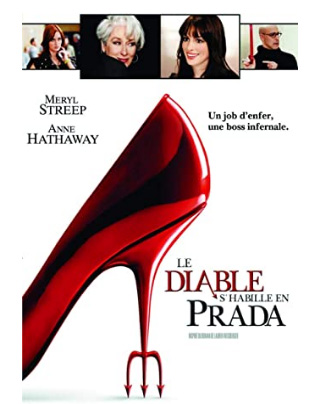
The Devil Wears Prada
Synopsis
Andrea Andy Sachs is an ambitious, unpretentious young college graduate who lands a job as a junior assistant to Miranda Priestly, the terrifying, tyrannical editor-in-chief of a high-fashion magazine. Despite knowing nothing about fashion and enduring endless demeaning demands, Andy struggles to prove her competence to win Mirandas respect. As she climbs the corporate ladder, she undergoes a glamorous physical and professional transformation that slowly alienates her college boyfriend and friends. Ultimately, she must decide whether the glittering world of fashion is worth sacrificing her personal integrity.
The Making of the Film
Director David Frankel adapted the film from Lauren Weisbergers bestselling 2003 roman à clef novel inspired by her real-life experiences working for American Vogue editor Anna Wintour. Producer Wendy Finerman championed the project, and 20th Century Fox financed the sharp fashion satire. Screenwriter Aline Brosh McKenna adapted the book to give Miranda Priestly greater psychological depth and dimension.
Critical Reception
Critics universally acclaimed The Devil Wears Prada as a brilliant, witty, and stylish masterpiece of modern comedy-drama. Reviewers overwhelmingly praised Meryl Streep for her career-defining, layered performance as the fearsome fashion editor, as well as Anne Hathaway and Emily Blunt for their stellar supporting turns. The film was celebrated for its sharp dialogue, gorgeous costume design, and smart workplace satire.
Public reception was phenomenal, turning the fashion comedy into a massive box-office blockbuster worldwide and a modern cultural touchstone. Audiences fell in love with the glamorous Manhattan setting, memorable quotes, and empowering career journey. It remains an all-time favorite pop-culture classic.
The film earned two Academy Award nominations: Meryl Streep for Best Actress and Patricia Field for Best Costume Design. Meryl Streep won the Golden Globe Award for Best Actress in a Motion Picture Musical or Comedy. Its cultural impact on workplace and fashion cinema is monumental.
Filming Anecdotes
Director David Frankel drew inspiration from classic workplace satires, Manhattan high-society culture, and real fashion industry dynamics. He chose authentic New York City locations and real designer showrooms to give the film absolute fashion-world credibility. Costume designer Patricia Field curated millions of dollars in designer clothes to create the iconic wardrobe.
Production went smoothly, though Meryl Streep stayed entirely in character on set throughout the entire shoot to maintain Mirandas terrifying authority over the crew. Anne Hathaway and Emily Blunt displayed genuine nervousness that translated into authentic on-screen intimidation. Streep famously improvised Mirandas revealing vulnerable hotel-room monologue.
A memorable sequence involves Miranda lecturing Andy about how the cheap blue sweater she wears was chosen for her by the multi-billion-dollar fashion industry. The scene brilliantly illustrates the massive cultural influence of high fashion. Streeps icy delivery made the moment legendary.
The casting process had several hurdles as Fox executives initially hesitated to cast Meryl Streep, wanting a younger comedic star before director David Frankel stood firm. Anne Hathaway was chosen for Andy after several other actresses turned down the role. Emily Blunt secured her breakout role through a brilliant audition tape.
Themes Explored
The film explores ambition, workplace toxicity, professional sacrifice, the fashion industry, and staying true to oneself. It highlights how climbing the corporate ladder often demands compromises. Integrity triumphs over superficial success.
NULL
Title Significance
The title refers to the high-fashion magazine Runway and its demanding editor-in-chief Miranda Priestly, who rules her empire like a terrifying devil in designer clothes. It highlights the glamorous yet tyrannical workplace.
NULL
NULL
Similar Films
Other similar films include The Intern, Confessions of a Shopaholic, and Working Girl.