

 Français
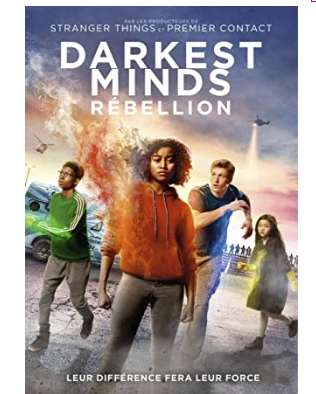
The Darkest Minds
Synopsis
In a dystopian near-future America where a mysterious disease wipes out most of the nation's children, the survivors develop dangerous telekinetic and psychic abilities. Feared by the government, these youths are rounded up into internment camps controlled by a paranoid regime. A powerful sixteen-year-old girl manages to escape her facility and joins a group of fugitive teens fighting for their freedom. Together, they embark on a high-stakes cross-country journey to find a safe haven.
The Making of the Film
Director Jennifer Yuh Nelson transitioned from animated filmmaking to her first live-action feature by adapting Alexandra Bracken's bestselling young adult novel. Producers sought to capture the gripping dystopian atmosphere and emotional intensity of the source material while appealing to a broad cinematic audience. The production team collaborated closely with author Alexandra Bracken to ensure faithful character arcs and thematic resonance. Filming took place across striking southern locations in Georgia to emulate the desolate, sun-bleached roadside aesthetics of a fractured America. The project aimed to explore teenage empowerment against systemic oppression.
Critical Reception
Critics offered largely negative reviews, pointing to familiar young adult dystopian tropes and a perceived lack of narrative originality. However, viewers and fans of the book series praised the film for its faithful adaptation, solid visual effects, and engaging lead performances. Audiences appreciated the earnest exploration of youthful resistance and friendship amidst political corruption. While box office returns were modest, it developed a loyal following on home streaming platforms. It remains a notable entry in the late-2000s young adult sci-fi adaptation wave.
Behind-the-Scenes Stories
Jennifer Yuh Nelson drew heavy inspiration from her extensive background in animation to storyboard complex psychic action sequences and visual effects integration. Amandla Stenberg underwent rigorous stunt training to physically execute the character's telekinetic power manifestations on screen. During production in Georgia, the cast and crew frequently endured sweltering summer heat waves while shooting exterior roadside scenes. The casting process prioritized finding young actors who possessed strong emotional vulnerability alongside athletic action credibility.
Themes Explored
The narrative explores government overreach, the criminalization of youth, state-sponsored paranoia, and the preservation of hope under totalitarianism. It examines how marginalized groups find strength and solidarity in collective resistance. Furthermore, it highlights the heavy moral cost of leadership.
Ending Explained
Ruby makes the heartbreaking decision to surrender herself to the authorities and wipe her beloved Liam's memories to save his life and secure safe passage for the other fugitive teens. The final moments show her joining a covert underground resistance movement to fight the regime from within. A bittersweet, open-ended conclusion sets the stage for future rebellion.
Meaning of the Title
The title refers to the government's strict color-coded classification system used to categorize children based on the extreme danger level of their psychic powers.
Other young adult dystopian adaptations such as The Hunger Games, Divergent, and The Maze Runner.